Sunday, September 27, 2015

How the mid-Atlantic fared at the GABF.

GABF 2015
Presented by the [U.S.] Brewers Association, the Great American Beer Festival (GABF) is the largest commercial beer competition in the world and a symbol of brewing excellence. In its 29th year, the 2015 competition surpassed all previous participation records, exceeding last year’s record-setting competition.

The mid-Atlantic triad of Washington, D.C., Maryland, and Virginia (home to this blog) did well at the GABF this year, grabbing ten medals. Five of those were gold, the region's highest gold medal tally ever. In the three jurisdictions, Virginia breweries won the greatest share by far: nine medals (of which four were gold), placing Virginia eighth best among all states in the nation. Maryland won one medal, a gold; breweries in Washington, D.C., did not win this year, even though they have in the past.


******

The DMV winners at GABF 2015

  • Maryland
    1 medal; 1 gold
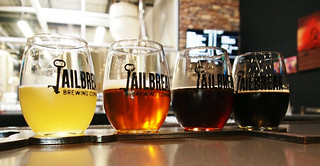
    • Jailbreak Brewing: Laurel, Maryland.
      First-time GABF medalist.
      brewer: Ryan Harvey
      Gold
      Van Dammit
      Category #80: Belgian-Style Strong Specialty Ale (65 entries)

  • What's on tap at Jailbreak (03)

  • Virginia
    9 medals; 4 gold
    • Brothers Craft Brewing: Harrisonburg, Virginia.
      First-time GABF medalist.
      brewer: "the whole team here at Brothers Craft Brewing."
      Gold
      Mild
      Category #61: English-Style Mild Ale (40 entries)

    • Champion Brewing Company: Charlottesville, Virginia.
      brewer: Hunter Smith
      Gold
      Shower Beer
      Category #34: Bohemian-Style Pilsener (62 entries)

    • Devils Backbone Brewing Company - Outpost: Lexington, Virginia.
      brewer: Jason Oliver
      Gold
      Vienna Lager
      Category #39: Vienna-Style Lager (46 entries)

    • Fair Winds Brewing Company: Lorton, Virginia.
      First-time GABF medalist.
      brewer: Charlie Buettner
      Gold
      Siren's Lure
      Category #75: French- and Belgian-Style Saison (132 entries)
      Highest degree of difficulty in the area, based on number of entries.

    • Lickinghole Creek Craft Brewery: Goochland, Virginia.
      First-time GABF medalist.
      brewer: Sean-Thomas Pumphrey
      Silver
      Heir Apparent
      Category #8: Chili Beer (79 entries)

    • Pale Fire Brewing Company: Harrisonburg, Virginia.
      First-time GABF medalist.
      brewer: Jamie Long
      Bronze
      Salad Days American Saison
      Category #22: American-Belgo-Style Ale (71 entries)

    • Port City Brewing Company: Alexandria, Virginia.
      brewer: Jonathan Reeves
      • Silver
        Monumental IPA
        Category #52: English-Style India Pale Ale (42 entries)
      • Silver
        Porter
        Category #83: Robust Porter (102 entries)
      • Bronze
        Optimal Wit
        Category #74: Belgian-Style Witbier (82 entries)

And, oh yes. One more thing!

When Port City Brewing first opened for business in Alexandria, Virginia, in February, 2012, it became the first production brewery in that city (located just across the Potomac River from Washington, D.C.) since 1916.

At this year's GABF, Port City was one of only four breweries nationwide to win three medals (none won more). It was one of 518 breweries, among those producing between 1,000 and 15,000 barrels of beer in a year, competing in the Small Brewery category, the largest number in any of the GABF's seven brewery categories. And, Port City won, recognized by the GABF as the nation's Small Brewery of the Year. It joins Devils Backbone, of Roseland, Virginia, as one of only two breweries in the tri-jurisdiction area so honored.

Congratulations to owner Bill Butcher, lead brewer Jonathan Reeves, and the entire Port City organization.
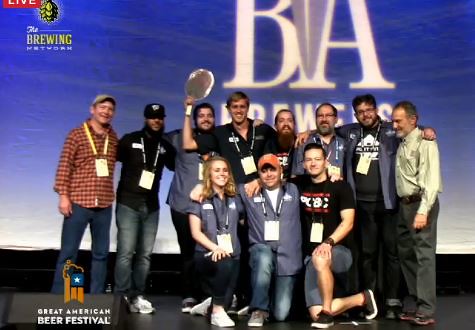
Port City Brew wins "Small Brewery of the Year," at 2015 GABF.


......

How the DMV has fared over the past 5 years

Let's look at how the District of Columbia, Maryland, and Virginia have fared at the GABF over the last five years. There's an interesting trend.


11 medals; 4 gold.


15 medals; 4 gold.


15 medals; 4 gold.


13 medals; 3 gold.

Breweries in Virginia have clearly been dominant. And that supremacy continued this year, as the state captured nine of the area's ten medals, including four of the five gold medals.


10 medals; 5 gold.

Virginia does have more breweries than the other two: at the time of the GABF (24-26 September 2015), there were one-hundred twenty-seven breweries in Virginia, to fifty-four in Maryland and ten in Washington, D.C. But the state's success at the GABF over the past five years might also be attributed, to a large extent, to one particular Virginia-based brewery group.

In its first year of operation, 2009, brewpub Devils Backbone garnered two golds and a silver at the GABF. In 2010, two golds and a bronze. In 2011, the brewpub, now known as the "Basecamp," won one medal. But, then, at the 2012 GABF, it took eight medals, more than half the total of all the breweries in the three area jurisdictions, winning national Small Brewpub of the Year.

In 2013, Devils Backbone won again, as national Small Brewery of the Year, taking six of the region's fifteen medals. Last year, the brewery's production-only facility —which the company calls the 'Outpost'— won Mid-Size Brewery of the Year. Combined, the group won four medals out of the thirteen total for the region.

Devils Backbone won only one medal this year —albeit a gold medal— but, all in all, the brewery has had a magnificent seven-year run: twenty-six GABF medals. Any decrease this year is not a sign of diminishing quality, but rather a matter of numbers, a sign of the changing underlying national structure of the competition.


......

Gauging the increasing difficulty of winning at the GABF

At the festival, the (U.S.) Brewers Association, the host organization, announced that 'craft' beer had reached a milestone in its fifty-year history. There are now four-thousand breweries in the United States, of which the overwhelming majority are considered 'craft' breweries.
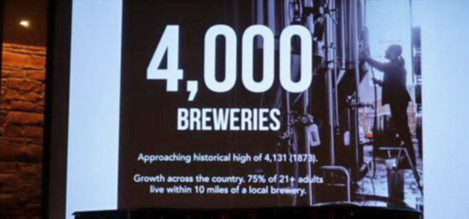
Four thousand breweries in the United States.

Not all participated in the festival and competition, but the sheer numbers that did —and will do so in the competitions to come— ensures a difficult road to victory or dominance for any one brewery, let alone repeat medaling. To name but a few, there were no medals for such heavyweights as Sierra Nevada, Dogfish Head, Lagunitas (no stranger to controversy), New Belgium, and Boston Beer. According to the Association, there were 6,647 entries this year(twenty percent more than in 2014), from 1,552 breweries representing all fifty states and the District of Columbia.

Moving forward, it may be harder for mid-tier population states such as Virginia and Maryland, and small jurisdictions, such as Washington, D.C. to consistently win, show, or place well, or even at all. In 2011, according to the BA, there were 2,033 breweries in the U.S. In 2012: 2,456. In 2013: 2,917 breweries. In 2014: 3464, with 1.5 breweries opening every day.

Likewise for the future of multi-medal winning breweries. The most medals won by any one brewery was only three this year, achieved by only four breweries, nationwide. Compare that to 2012, when Devils Backbone won eight medals (and there are many examples of multi-medal runs by many other breweries in years past).

With a far greater numbers of breweries, and the population to support them, the big three of California, Colorado, and Oregon, will probably remain dominant for the near future, even though Texas is coming up fast, which is why Virginia's showing of ten medals including five golds, as the eighth highest medaling state this year —and its similar showing in the previous four years— is a strong feat. But, to put it in perspective: California garnered sixty-seven awards, almost twice the number of medals as second-place Colorado, and twenty-two gold medals, almost three times the next highest total, of Texas, at nine.


......

The GABF 2015, by the numbers.

This year’s GABF competition saw its biggest panel of judges ever, with 242 beer experts from 15 countries, including the U.S., and 155 competition volunteers. The panel also evaluated 91 Pro-Am entries.

Overall competition highlights included:
  • 38 first-time entering breweries won awards.
  • Top three states by ratio of medals to entries by state:
    • Maine: 21% with 14 entries and three medals
    • Rhode Island: 10% with 10 entries and one medal
    • North Dakota: 8% with 12 entries and one medal

  • Most medals won, with three medals each:
    • Firestone Walker Brewing Co., Paso Robles, Calif. (three medals: two gold, one bronze)
    • Sun King Brewing Co., Indianapolis, Ind. (three medals: one gold, one silver, one bronze)
    • Port City Brewing Co.; Alexandria, Va. (three medals: two silver, one bronze)
    • Left Hand Brewing Co.; Longmont, Colo. (three medals: one gold, two bronze)

  • Award-winning brewers received prestigious gold, silver and bronze medals in 92 beer categories covering 145 different beer styles (including all subcategories).The 2015 competition saw three new style categories:
    • Category 8: Chili Pepper Beer
    • Category 16: Session India Pale Ale
    • Category 24B: Mixed Culture Brett Beer
    • No gold medal was awarded in Category 6: Pumpkin Beer.


......

Final Thoughts

The category with the most entries was #56: American-Style India Pale Ale. No surprise there, with three-hundred thirty-six entries. Props to BNS Brewing & Distilling Company, of Santee, California for winning gold for its Revolver IPA.

Best name for a winning beer? How about Toaster Pastry, from the 21st Amendment Brewery, in San Leandro, California, with which it won silver in Category #59, Double Red Ale.

It was pleasing to see Founders Brewing of Michigan (gold medal), Firestone-Walker of California (5 medals, 2 gold), and 10-Barrel of Oregon (2 medals) —all recently excommunicated by the BA as non-'craft'— all win medals. In fact, Firestone-Walker took Mid-Size Brewing Company of the Year.

No gold awarded for Pumpkin Beer? Yeah! Maybe, no more recognition, ever? How are beers chosen for medals? See the GABF awards philosophy, after the jump.

Thank you to The Brewing Network which provided live streaming of the award ceremony, for the rest of us, not in Denver. It was remarkable, and heartening, to see the large amount of female brewers on stage, receiving awards. Not so, this year, for non-white brewers. That's something 'craft' beer needs to work on if it wishes to sustain growth, let alone reflect American demographics.

The GABF historically has been scheduled in October. It's earlier start this year may have reduced the number of entries in the Fresh or Wet Hop Ale to only thirty-four. Hops hadn't been harvested in time for the festival.

What's up with that crazy inflation of beer 'styles'? One-hundred forty-five style categories (and no cask ale category or subcategory)? Really? Uh ... well, that's a lost battle topic for another day.

Why not publish the judges' scores for all beers? A brewery might not win a medal, but still have a score in the 90s. The GABF is there, in part, to promote 'craft' beer business. Why not give your brewery members their beer-scores as valuable sales tools?

But as today should not be an occasion to dwell on criticism, but to offer praise for good brewing and brewers: congratulations, all!
  • Read more about this year's Great American Beer Festival, at the (U.S.) Brewers Association.
  • See the entire list of winners: here.
-----more-----

Saturday, September 26, 2015

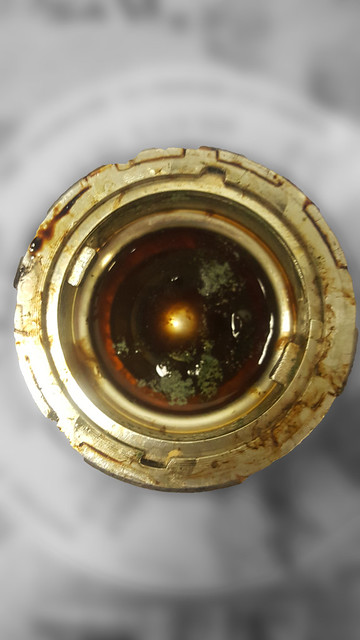
Pic(k) of the Week: Bad keg!

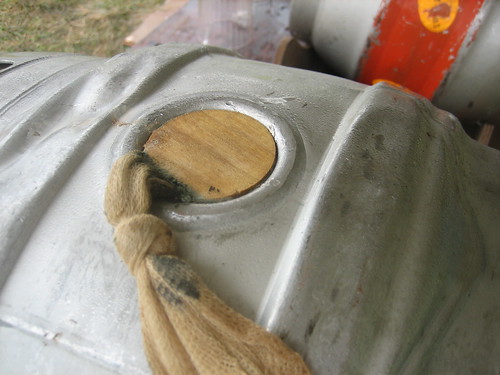
Bad keg!

Would you want to drink a beer poured from this 'craft' beer keg?

After filling the keg at the brewery, the cellarman had apparently neglected to spray out and sanitize the well of the keg spear. This was the result, as seen at a bar, several weeks later, when the publican removed the keg cap. Not good. That green stuff is mold growing on an inch of dried, 'gel-ed', beer. Brewing is 95% cleanliness; everything else follows.

My answer to the question: not me. I would not care to drink a beer poured from this keg. And neither did the bar, which didn't tap it.

The photo has been blurred to protect the guilty. They know who they are.

-----more-----

Monday, September 21, 2015

Clamps & Gaskets: News Roundup for Weeks 36/37, 2015.

Clamps and Gaskets: weekly roundup
A bi-weekly, non-comprehensive roundup
of news of beer and other things.

Weeks 36/37
30 August - 12 September 2015


  • 11 September 2015
    After Heineken/Lagunitas, why more large foreign breweries will be buying American 'craft' breweries.
    —Via Craft Brewing Business.

  • 11 September 2015
    Greg Koch, co-founder of Stone Brewing, to resign from position as CEO, and accept new role as Executive Chairman.
    —Via Craft Beer.com.

  • 10 September 2015
    Another 'craft' brewery acquired by a much larger brewery. MillerCoors purchases a majority interest in two-year-old San Diego, California, brewery, Saint Archer Brewing Company.
    —Via Brookston Beer Bulletin.

  • 9 September 2015
    Beer is "one of few human practices that unites us through time and space. [...] But beer companies? They are organs of commerce, however wonderful the brewers and publicans they employ may be."
    —Via Jeff Alworth, at All About Beer.

  • 9 September 2015
    New York's farm-brewery law requires a farm-brewery to brew its beers with at least 20% New York-grown hops, annually. In 2024, the requirement jumps to 90%.
    —Via CBS News.

  • 8 September 2015
    The 6th largest 'craft' brewery in the U.S., California-based, Lagunitas, sells a 50% stake to international brewing company, Heineken.
    —Via Santa Rosa Press-Democrat.

  • 8 September 2015
    Tony Magee, owner of 'craft' brewery Lagunitas, declares his company to be a peer of international brewing giant, Heineken.
    —Via YFGF.

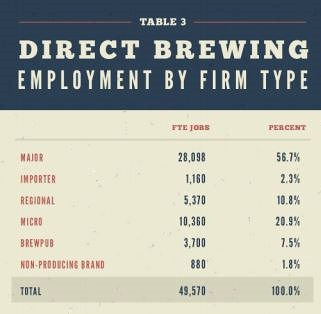
  • U.S. brewing jobs: 2014

  • 7 September 2015
    Statistics on Labor Day.

  • 5 September 2015
    Over seven-thousand refugees fleeing war in Syria arrive in Austria, after Hungary yields in a days-long campaign to turn them back.
    —Via Washington Post.

  • 4 September 2015
    • The impact of beer (and 'craft' beer) in Washington, D.C., in 2014/2015.
      —Via (U.S.) Brewers Association.
    • The impact of beer (and 'craft' beer) in Maryland, in 2014/2015.
      —Via (U.S.) Brewers Association.
    • The impact of beer (and 'craft' beer) in Virginia, in 2014/2015.
      —Via YFGF.


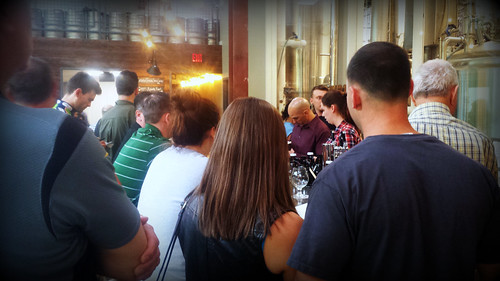
    Full bar @Caboose

  • 2 September 2015
    The volume of beer sold directly in brewery taprooms is up 46.7% over the same period last year: from 287,965 to 422,561 barrels.
    —Via Bryan D. Roth, at This Is Why I'm Drunk.

  • 1 September 2015
    In 1985, there were 188 trademark applications for beer filed in the U.S. Last year, there were more than 4,600 filed.
    —Via Washington City Paper.

  • 31 August 2015
    President Barack Obama re-renames Mount McKinley — the 20,237-foot mountain in Alaska and the tallest in North America — as Denali, as it was originally known by Alaska Natives before it was renamed to honor President William McKinley.
    —Via USA Today.

  • 30 August 2015
    Oregon's Deschutes Brewing eyeing Charlottesville, Virginia, for a possible East Coast brewery.
    —Via Brewbound.


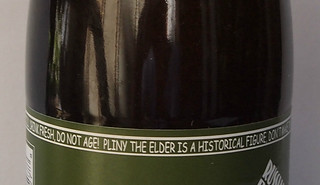
  • Respect your (Pliny the) Elder (02)

  • 30 August 2015
    Hoppy beers. When aging a beer is not a good thing.
    —Via Fritz Hahn, at Washington Post.

  • 30 August 2015
    "Failure rates for new craft breweries are near zero. Barriers to entry are nonexistent. Startup costs are low. Sales start immediately. Margins can be fat. But the price of success is brutally hard work, long hours, and low pay."
    —Via Entrepreneur.

  • 30 August 2015
    When breweries produce beers with ingredients and processes other than the 'standard' water, malt, hops, and yeast, the U.S. government's Alcohol and Tobacco Tax and Trade Bureau (TTB) requires approval of the formula. In 2014, the TTB relaxed those standards just a bit. Certain processes —such as aging beer in barrels containing NO DISCERNIBLE QUANTITY of wine or distilled spirits— and certain fruits and spices were exempted.
    —Via Brewery Law, at YFGF.

  • -----more-----

    Saturday, September 19, 2015

    Pic(k) of the Week: Wine on draft.

    Wine on draft (04)

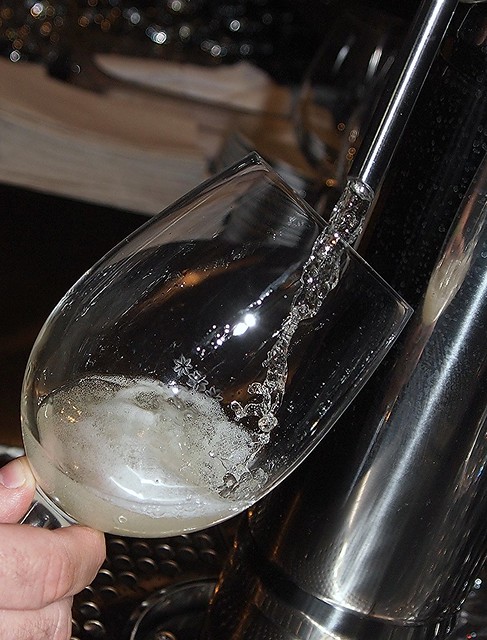
    It's a New Zealand Sauvignon Blanc: stored in a keg, pushed through a draught system, poured from a tap ... at a brewpub.

    American restaurants —'white-tablecloth' or pub, 'hip' or 'neighborhoody'— have begun pouring wine from kegs; and wineries are offering them greater choice in draught wines, better than generic 'red or white.'

    Wine on tap flows through a 304 grade stainless draft system —very similar to that used for beer— pushed out of kegs using a blended mixture of gasses, usually 75% nitrogen and 25% carbon dioxide. This blend preserves wine quality and freshness, without adding bubbles. (Using a higher concentration of carbon dioxide would carbonate the wine, inappropriate, unless, of course, the wine were a sparkling wine.) The equipment installation cost for a restaurant is not that great, especially if a beer-dispense system is already in place.

    The standard keg size for wine is 5.16 gallons, which, in wine-measurement, is 19.5 liters (the equivalent of twenty-six 750-ml wine bottles: two cases plus two bottles). * White and red wine kegs should be served from different refrigerated compartments: the white wine at or about 42 °F; red wine at or about 55 °F. (Room temperature red wine, draught or bottle, is not a refreshing beverage. Chill it slightly.)

    At present, it's mostly California wineries that are kegging their wines. They ferment and age their wines as usual, and ship the results in bulk containers to facilities which package the wine for them. (Of course, there's no reason, except cost, for a winery, like a brewery, to install its own kegger.)

    At the restaurant, there's no waste, no corks to un-cork, no bottles (and corks or screwtops) to dispose of, and little to no spoilage. It's clean, green, 'cool'; and usually at or just below the equivalent per-ounce cost of a bottle, depending on the wine poured.

    As seen at Ornery Beer Company, in Woodbridge, Virginia, on 28 August 2015.

    -----more-----

    Wednesday, September 16, 2015

    America is doing cask ale wrong.

    It should go without saying, but I'll say it anyway. There are exceptions to poorly constructed and wretchedly served cask ales in America. But sadly, they are in the minority. America is doing cask ale wrong.

    Patrick Berger is the publican at the Kaiser Tiger, in Chicago, Illinois. He is a fan of cask-conditioned ale. "Is there anything as lovely as a perfectly cellared and properly poured pint of cask conditioned real ale?" he asks. No, there isn't, I'll stipulate ... at least in beer.

    Cask pour of Peg Leg Stout

    But ... despite being an obvious partisan for cask-conditioned ale, Mr. Berger REFUSES to serve any cask ale at all at his pub. And, why? Because, as he writes in a clear and convincing essay, "As with most things, the devil is in the details, and cask beer in America more often than not gets the details wrong."
    • Oxidation

      A hand pump introduces oxygen to the beer in the cask every time you pull the handle. Oxidizing beer will create a fruity 'off' flavor that is very apparent after only a day or two so the beer's shelf life is very short. Many places use a CO2 breather that places a blanket of gas over the beer in the cask to give it a few more days of freshness but you're still left with 3 or 4 days tops to finish that cask. This might work out if all the bar is offering is a few cask beers, but in my experience the hand pump is usually sitting next to many other taps thus making it difficult to plow through one selection.

    • Lack of expertise

      Many breweries don't normally fill casks and therefore aren't experienced with it. Try to remember that the perfect pint of cask beer you perhaps had in London, was filled by a brewery that fills firkins everyday and probably has been for the last 100 years. Pro tip: if a brewery doesn't own a firkin, chances are they don't know how to properly fill and condition them.

      No tut

    • Inappropriate beers

      Traditional English ales are way more balanced than ours and the softer carbonation [as cask ale] brings out the nuances of the caramel malts and earthy hops. But ... modern American craft beer flavors are not designed with casks in mind and do not necessarily get better when you put them in one. American craft beer is made to be served through a modern (hopefully clean) CO2 draft system. Some beer geeks get downright giddy when they find out their favorite IPA is being served in a cask, but I'm not sure the beer tastes any better. American beers are meant to whack you over the head, not highlight the subtle balance of malt and hops.

    • Freshness counts

      Why not serve imported firkins from England? Well, mostly because it defeats the whole purpose of fresh cask beer. Some beer will be fine in a cask for a month or two while it sits on a boat and then sits in customs and then in a distributor's warehouse -- but most won't. [This can also be a deleterious issue with American casks, often shipped thousands of miles, refrigerated or not, and served weeks or months later.]


    And what of the cocoa-puffs and dingleberries American brewers seem to add willy-nilly to their cask ales?

    A recent Wall Street Journal piece on cask ale quoted a brewer on just that: "Casks are an incubator for experimentation, a chance to do something new all the time.” In other words, in America, cask ale is not about freshness of flavor and condition, but is used as a pilot brewery on the cheap, with the consumer picking up the tab for experimentation, good or bad. I would think that a brewer would be proud of her beer, as it tastes, as she brewed it. But maybe that's just me.

    And what of cask ale at American bars and pubs? Mr. Berger recommends skipping that experience altogether. Go to a brewpub, instead, he writes.
    Many brewpubs are able to pull it off because they have a trained cellarman (the brewer) who can pick and choose which beers are going to benefit from the cask. They also have a willing brewery partner (themselves) and they usually only pour a small selection of their own beer which they tend to plow through.

    With laws changing to allow consumer consumption at production breweries, I would add brewery taprooms to the list, but only if those breweries understand cask ale and its preparation. Drinker beware!

    Last week, I was involved in the following conversation at a 'craft' beer bar near to where I live. It was a conversation that, in similar form, recurs in many American 'craft' beer pubs far too often (but minus the honest admission).
    Me: "When was the firkin tapped?"
    She: "Two weeks ago." [Points for honesty.]
    Me: "What do you have on draft?"

    American publicans, on the whole, have little clue as to what cask ale is or how to serve it properly. Without respect for the beer, or the brewery, or their patrons, publicans toss cask ales on bartops without conditioning or care or cellar coolant, and serve room-temperature messes, tilting the casks to catch the last dregs not brewery-intended for human consumption.

    Cask pour? You must be joking.

    Or, they will serve a cask via a hand-pump, and, assuming a magical quality therein, will serve the beer well past a cask beer's two day, three, or four day best-by date (or, on rare occasions, five day lifespan). Often several weeks.

    And, after all that, they'll have the temerity to say that that sour, flat, warm, and stale sludge they've served you is cask ale. No, it is not cask ale. It's crap.

    What publican Patrick Berger says he desires is proper, well-tended cask ale. I couldn't have said so better myself, so I've quoted him above, and summarized. Please read his entire piece. He has more to say. Read it, and act upon it.

    Consumers: demand better. It's your dollar; it's your missed opportunity for 'real' cask ale.

    Publicans: learn the art and science of cellarmanship. But if you can't or won't —and that's understandable: there's a lot of work in a busy multi-tap pub— please don't do injustice to cask-conditioned ales. Your patrons won't appreciate that; and cask ale, itself, in the process, will lose drinkers for life. Please choose instead from the wealth of wonderful non-cask kegged beers.

    Brewers: likewise. Cask-conditioned ale is so much more than, simply, ale in a cask. If more of you would take care to learn the art and skill of cask-ale preparation, maybe Mr. Berger might be convinced to change his mind. And I. And maybe, as well, more Americans, unaccustomed as they are to beautiful cask-conditioned ale, might change their minds.

    Mad Ordinary

    I don't want to dismiss all cask beer in this country. I think when it's done right it's a wonderful worthwhile thing. So while a lot of us beer nerds like to lose our shit over any beer in a firkin, try to keep in mind - it doesn't automatically make it better.

    -----more-----