Showing posts with label cellarmanship. Show all posts

Friday, March 27, 2020

Shut-Down Maintenance for Cask Ale.

If your pub serves cask ale via a draught dispense system (e.g, beer engine, dedicated cellar, cask lines, etc.), there are specific procedures you should follow when shutting down the system for an extended period of time (such as now, during the time of coronavirus).

Cask Marque, based in the U.K., offers these guidelines, more applicable to cask-predominant pubs, but useful for all.

Cask Ale extended shut down maintenance

Related

  • How to close down beer dispense systems for 1 week+
    — Avani Solutions
  • Draught quality recommendations during extended bar/restaurant shutdown (pdf)
    — [U.S.] Brewers Association
  • Hibernating your draught beer system
    — Micromatic

What is Cask Marque

Since 1997 Cask Marque has been ensuring that the cask ale you drink in pubs in the UK is in perfect condition. Our 50 qualified assessors make over 20,000 visits to pubs each year in England, Scotland, Wales, Europe, and even America to check the temperature, appearance, aroma, and taste of Britain’s favourite drink. Visit a Cask Marque accredited pub and you are guaranteed to receive a great pint of cask ale.
— Cask Marque.
  • Cask Marque accreditation (and training) has been available in the U.S. for a few years (Link: here.) That's something to consider for the coming time when COVID19 will be reined under control and pubs return to their perch as the good third place.
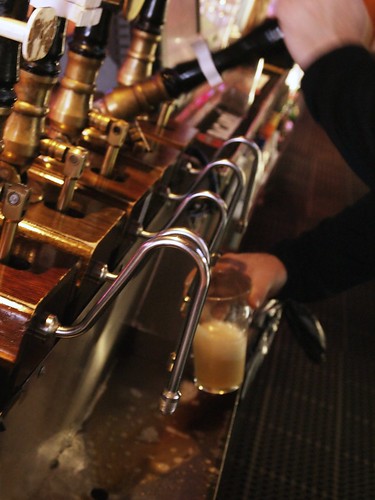
Casey pulls a pint (02)

-----more-----

Thursday, March 19, 2020

What to do if your bar must shut down its tap system for an extended period of time.

Draught Beer Quality Manual 2019

If beer is left stagnant in draught lines for too long, 
the system will be at risk of 
AN IRREVERSIBLE BACTERIAL CONTAMINATION. 

As more and more jurisdictions order closures of meeting places, such as bars, restaurants, and brewery taprooms, as a defense against the spread of the coronavirus, Neil Witte —the [U.S.] Brewers Association Quality/Draught Quality Ambassador— has posted timely instructions on how a taproom/bar should properly care for its draught system if shut down for an extended period of time.
In the event of an extended shutdown of your brewery, it is important to take some steps to make sure your draught system stays healthy and you are not faced with an unexpected expense or quality concerns when starting it back up.

If beer is left stagnant in draught lines for too long, the system will be at risk of AN IRREVERSIBLE BACTERIAL CONTAMINATION [emphasis mine].

Taking the right steps can prevent you from having to deal with dangerous gas leak hazards, costly draught line contamination, or even more expensive draught line replacement.
[U.S.] Brewers Association

Quick tips

  • Disconnect draught lines from kegs/serving tanks.
  • Clean the lines.
  • Disassemble and clean faucets.
  • Do NOT leave lines filled with a chemical solution!
  • Any part/piece of your draught system that comes in contact with beer —that is not cleansed during a line cleaning— should be cleaned and sanitized separately.
Do NOT pack the lines with chlorinated water: they'll be permanently tainted with that fresh-from-the-swimming pool flavor and you'll need to replace them. And as to leaving beer in the lines, don't do it! Experts are predicting a possible shutdown of 8 weeks or more. At that point any beer in the lines, even if it has been kept at 38 °F, will not be tasting its best self. And, far worse than that, to repeat the warning above from the BA: "If beer is left stagnant in draught lines for too long, the system will be at risk of AN IRREVERSIBLE BACTERIAL CONTAMINATION."

Without a doubt, read and follow the entire list of procedures. Direct link to procedures (pdf): here.

Good luck and be safe. And we'll see you on the flip side with many a fresh draught pint.

Cleaning the tap

-----more-----

Wednesday, November 29, 2017

Is your AMERICAN pub a Cask-Ale hero?

Since 1997, Cask Marque has been ensuring that the cask ale you drink in pubs in the U.K. has been in perfect condition. Qualified assessors make over 20,000 visits to pubs each year in England, Scotland, Wales, and Europe to check the temperature, appearance, aroma, and taste of Britain’s favourite drink.
—Cask Marque

Does your American pub (or brewery taproom or brewpub) serve a "great pint" of cask-ale? If so, you should know that Cask Marque accreditation IS now available for pubs and breweries in the United States.

In fact, Cask Marque has been assessing American pubs for several years, initially led by Paul Pendyck, a purveyor of cask-ale equipment in the U.S. and assisted by Alex Hall, a cask-ale partisan in New York. Both, by the way, are British expats.

Now, Steve Hamburg, one of the premier cellarmen in the U.S., has taken the reins as Cask Marque's USA Director and Chief Assessor.

****************

Criteria

What does it take for a pub (or brewery taproom or brewpub) to gain accreditation in the U.S.?

First and foremost, as self-evident as this may sound, your pub must serve cask-ale every day, or close to it. Simply tossing a cask up on the bar once a week for Firkin Friday doesn't cut it.

After that, it's the big five criteria: temperature, aroma, taste, appearance, and cleanliness.
  • Temperature of beer.
    Real ale 1 should be served, in the customer's glass, at between 11 and 13 °C. That's 51-55 °F. (And here in the U.S., we could lower that to 10 °C / 50 °F.) That's not warm, it's cellar cool: neither too cold to mask a beer's flavor nor too warm to rob a beer of refreshment. (Unfiltered beer that is served too cold can could also develop a 'chill haze' as proteins come out of solution, which speaks to 'clarity,' discussed below.)
  • Aroma of beer.
    No evidence of staling, contamination, or otherwise off-aromas that don't belong in the beer as brewed.
  • Clarity of beer.
    This one gets tricky. As classically presented in the U.K., cask-ales should be bright as a filtered beer without filtration. But American brewers often eschew clarity (and some UK brewers do as well). So, as with aroma, the clarity should be as the beer was brewed. No extraneous yeast or proteinaceous sludge.
  • Flavor (& conditioning) of beer.
    Not gassy or foamy; not flat. No evidence of staling or age. The flavor should be representative of the beer as brewed; conditioning (carbonation) should be as the brewery intended.
  • Cleanliness.
    A clean beer-cellar, clean beer-lines, clean beer-engine and/or tap, and beer-clean glassware. Of course.
  • NO extraneous gas pressure
    NO gas pressure can be used to dispense from the cask, whether CO2, nitrogen, or whatever. That being stipulated, a cask breather 2 does not add pressure to a cask and, thus, a pub may employ one if it wishes. Using a cask breather is not a demerit: only badly served cask-ale is.
When your pub passes its inspection, it receives a Cask Marque metal plaque, with an attached expiration date tag. This works as does a car license plate. A pub must renew each year (and pass its subsequent assessments) to get a new valid sticker.

Cask Marque & UK Brewing Supplies
l-r: Paul Nunny —Director, Cask Marque (UK);
Steve Hamburg —USA Director, Chief US Assessor Cask Marque (US);
Paul Pendyck —Owner, UK Brewing Supplies (US).
At Craft Brewers Conference in Washington, D.C., 2017.

****************

Value to pub

Most pub owners are very money conscious, as, of course, they should be. And, yes, there is a nominal annual fee for Cask Marque accreditation, which helps defray the cost of the U.S. licensing fee and materials. Thus pub owners should view Cask Marque as a valuable value-added business-augmenter.

It's a consultation: how to do things right so that customers return for repeat pours. It's an advertisement of achievement, just as a victory at the Great American Beer Festival would show brewing skill or a Cicerone accreditation highlight serving acumen. It's a public acknowledgment of a pub's (or brewery's or brewpub's) cask excellence and, thus, of the value to a customer. And it's not (yet) a common thing in the U.S.: again a mark of distinction for your pub or taproom.

For further details, and to arrange an assessment, contact Mr. Hamburg directly, via email: shamburg@cask-marque-americas.com.

Serving a great pint of cask-ale is not rocket science. But it does require care and attention to detail.

So, do it. Be that cask-ale hero. Get your pub its Cask Marque accreditation. That Cask Marque plaque is a damned nice thing to display.

-----more-----

Saturday, November 04, 2017

Pic(k) of the Week: Wooden cask, deconstructed.

Wooden cask, deconstructed

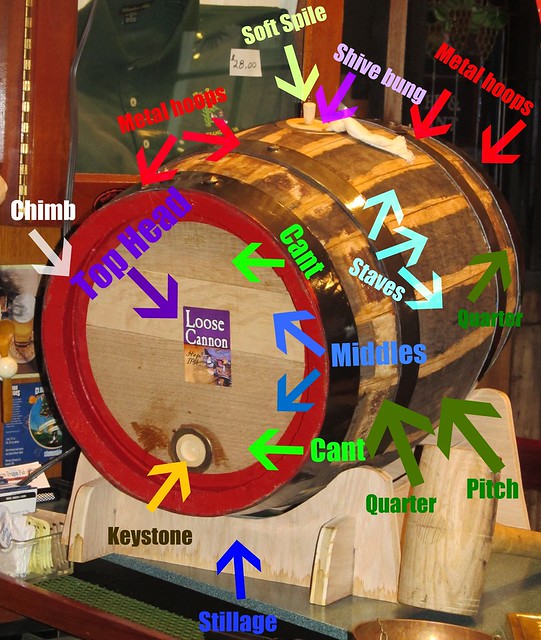
A wooden cask, deconstructed...
1) TOP HEAD (purple arrow)
The entire front disc. Even though it's referred to as "top", it faces forward, not up. It's circumferenced by a wooden ridge called a chimb (white arrow), or chime. The head consists of four planks: two crescent-moon shaped pieces called cants (bright green arrows). Between them are the two middles (blue arrows). The lower cant is where the keystone bung sits.
2) BACK HEAD (not pictured)
The back of the cask.
3) PITCH (forest green arrow)
The BELLY of the cask, made up of several wooden planks called staves (aquamarine arrows). The shive bung (fuscia arrow) sits at the top of the pitch.
4) QUARTERs (forest green arrows)
The two sections of the belly between the pitch and the front and rear chimes, respectively.
5) HOOPS (red arrows)
Metal bands keep the heads and staves securely in place.

**************

BITS & PIECES

1) SOFT SPILE (pale green arrow)
Porous bamboo peg inserted into the tut in the shive bung. The tut (not pictured) is an indentation in the center of the shive bung. When venting a cask, the tut is hammered through, and the spile inserted.
2) STILLAGE (dark blue arrow)
Stand on which the cask sits, angled slightly forward toward the top face, the bottom of the back chimb no higher than the level of the top of the keystone.

**************

MORE

1) WOOD OR METAL
A beer cask can be made of wood or metal although stainless steel is much more the common choice these days. Although metal casks are welded together and don't have staves as do wooden ones, one can still refer to a cask's heads, chimbs, keystone, shive bung, spiles, stillage, etc. Ditto for plastic casks.

2) FIRKINS
  • Casks come in many sizes. A firkin is one size of cask, equal to 10.8 U.S. gallons.
  • The cask above is NOT a firkin, but a 10 U.S. gallon wooden cask. It did, however, contain cask-conditioned ale. *.
  • Volume sizes here are given in U.S. measure. Thus, a 10.8 U.S.-gallon firkin (U.S.) is identical in volume to a 9 U.K.-gallon firkin (U.K.)
3) FIRKIN DIMENSIONS
Here.

4) WEIGHT OF STAINLESS STEEL FIRKIN:
  • Empty: 24 pounds (11.24 kilograms).
  • Full: 114 pounds (51.71 kilograms).
  • One gallon (of water) = 8.34 pounds (3.78 kilograms)
  • The weight of one gallon of beer will be a bit more than that of water, due to its specific gravity (weight of unfermented starch, sugar, etc.)
5) WEIGHT OF WOODEN FIRKIN
?? ... but more than 90.072 pounds, the weight of 10.8-gallons of water.

6) More CASK VOLUMES
Here.

***************

NOTA BENE

A barrel and a cask, while superficially similar, serve two distinct purposes.
☞ A barrel is for aging.
☞ A cask is for cask-conditioning.
☞ A barrel-aged beer is well-aged; a cask-conditioned beer is, well, fresh. It's the package and the intent.

Fobbing at the Tut

Fobbing at the Tut:
A series of occasional posts on good cask cellarmanship.


-----more-----

Sunday, October 29, 2017

Cask advice for 2017...from 1850.


In 1765, the Swan Brewery began brewing in London. It would continue doing so for an additional one hundred seventy-one years until 1936, when the Ind Coope/Samuel Allsopp & Sons brewing consortium purchased the brewery ... and promptly closed it.

But nearly a century earlier, in 1850, when The Swan was still going strong, it published a pamphlet for the trade that described its brewing procedures and its beers, and offered advice on how to properly care for them. Included was a short passage on cask cellarmanship. It was sensible advice then and remains so now, nearly two centuries later.

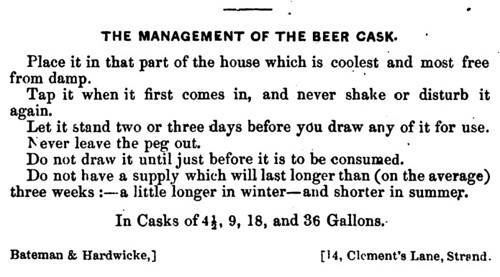
The Management of the Beer Cask (1850)
The Management Of The Beer Cask
  • Place it in that part of the house which is coolest and most free from damp.
  • Tap it when it first comes in, and NEVER SHAKE OR DISTRUB IT AGAIN [emphasis mine].
  • Let it stand two or three days before you draw any of it for use.
  • Never leave the peg out.
  • Do not draw it until just before it is to be consumed.
  • Do not have a supply which will last longer than (on the average) three weeks: —a little longer in winter— and shorter in summer.
—"The Proprietors of the Swan Brewery, Walham Green, Fulham - (Established 1765) - Beg to Present These Pages on Beer and Brewing; and Will Feel Honoured by Their Acceptence and Perusal."
1850

Note the cask sizes mentioned: 4.5, 9 (firkin), 18, and 36 gallons. Swan, of course, listed them in Imperial (U.K.) measure. Translating to U.S. volumes, they would be, respectively: 5.4, 10.8 (firkin), 36, and 72 gallons.

The short pamphlet also discussed the clarification of cask ale, i.e, the fining of casks.

The Fining of Cask Ale (in 1850)
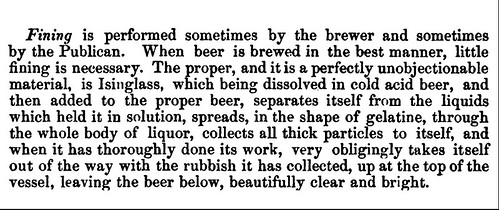
Fining is performed sometimes by the brewers and sometimes by the Publican. When beer is brewed in the best manner, little fining is necessary. The proper, and it is perfectly unobjectionable material is Isinglass, which being dissolved in cold acid beer, and then added to the proper beer, separates itself from the liquids which held it in solution, spreads, in the shape of gelatine, through the whole body of liquor, collects all thick particles to itself, and when it has thoroughly done its work, very obligingly takes itself out of the way with the rubbish it has collected, up at the top of the vessel, leaving the beer below, beautifully clear and bright.


Ah, but what is the "perfectly unobjectionable material," isinglass? Here, from the The Oxford Companion to Beer (2012):
Isinglass is derived from the swim bladders of certain tropical and subtropical fish. [...] Traditionally, isinglass for brewing purposes was derived from sturgeon, although modern commercial isinglass is more typically derived from tropical estuarine dwellers. [...] When used as a fining agent, [isinglass] has the ability to settle yeast and beer proteins very quickly and can do so repeatedly. This latter property is essential for cask-conditioned ales, where the casks may be moved several times prior to serving.

Many cellarmen in 21st-century U.S. have switched from the use of isinglass to non-animal-derived agents for clarifying cask ales. Others rely on gravity and time and/or rapidly-settling yeast strains.

But many others, sad to say, when it comes to cask quality, isinglass or no isinglass, couldn't give a f care less.

Fobbing at the Tut

Fobbing at the Tut:
A series of occasional posts on good cask cellarmanship.


-----more-----

Saturday, October 07, 2017

Pic(k) of the Week: Priming casks (cellarman couture)

Priming casks

Brewer's Alley is a brewpub in Frederick, Maryland, USA. In February 2004, Tom Flores, brewmaster there invited YFGF's Thomas Cizauskas to the brewery to add priming gyle* to freshly-racked firkins.

Four observations:
  • Now, that's a blast from the past.
  • Now, that's some high hair.
  • Now, that's some cellarman couture.
  • That's a photo of me, from back in the day. I'm Thomas Cizauskas.
-----more-----

Wednesday, March 29, 2017

Mark Dorber on Real Ale, Cask-Conditioned Ale, & Cellarmanship


If he had lived five hundred years later than he did, Desiderius Erasmus Roterodamus might have translated that ancient Greek proverb as a reference to cask-conditioned ale.

Indeed five centuries later, a gentleman named Mark Dorber has been working to prevent cask "casualties." From 1981 to 2007, Mr. Dorber was the manager at the renowned White Horse pub on Parson’s Green, in London. Many traveled (and commuted) there to learn about 'proper' cask-conditioned ales, and to drink them.

Now, in the 21st century, Mr. Dorber is the landlord of The Anchor, "an award-winning inn and restaurant-with-rooms [...] in the charming village of Walberswick across the footbridge from the market town of Southwold" on the English North Sea coast, about 100 miles north-east of London.

Still serving 'real ales' and still imparting knowledge, Mr. Dorber has kindly posted a concise tutorial on cask ale service at the inn's website. I've reprinted it below.


Cellarmanship & Real Ale


"Real ale" as an expression was adopted by CAMRA (the Campaign for Real Ale) in 1973. First known as the Campaign for the Revitalization of Ale, its name change was an attempt to simplify and shorten what was an uncomfortable mouthful of letters at the most sober of times. The appellation is a convenient campaigning device that has attracted a lot of crass comments about the "realness" of filtered beers.

Cask-Conditioned Ale

I prefer the simplicity and nondidactic expressions "cask-conditioned" or "bottle-conditioned" to describe beer with live yeast. The qualitative difference between cask-conditioned beers and filtered beers lies in the presence of live yeast, which is able to feed on any fermentable sugars remaining in the beer from the time it is racked into cask at the brewery and to impart its own individual imprint of aromas and flavours as well as life-enhancing carbonation.

Oxygen and beer

However, what might be termed CAMRA's "clause celebre" has inspired the fundamentalists of the campaign to insist that even a non-invasive blanket of carbon dioxide at atmospheric pressure * to protect slow-selling beers from the ravages of oxidation must be construed as an unnatural interference with the aroma, flavour and mouthfeel of cask ale, thereby rendering it non-real.

Their strongest claim is that the air drawn into a cask on dispense somehow softens the palate of the beer resulting in beneficial flavour changes analogous to the effect of oxygen on a young red wine. The fact that not a smidgen of evidence can be produced to support their thesis appears not to deter them in their dogmatic determination to be wrong and to penalize those who wish to get it right by excluding from the listings of beers in Good Beer Guide pubs those beers that use blanket pressure as part of their dispense and preservation regime.

The Art of Cellarmanship - Cask Conditioned Ales

Cellarmanship in the broadest sense covers the gamut of drinks sold by retail outlets and requires a detailed technical manual. The purpose of this short piece, though, is to set out the general principles for the successful management of cask- conditioned ales.

An avaricious brewer may define cellarmanship as the art of serving a continuous supply of saleable beer with the least financial loss. Here, compromises will be made on quality in order to fulfil the primary requirement of profit maximization.

My view on the primary goal of cellarmanship, which, incidentally has not changed since August 1981, is the following:


"To promote the most beauty in each cask of beer by developing the most interesting range of sound aromas and flavours; by nurturing wherever possible high levels of natural carbonation consistent with each beer style and, moreover, by serving each beer in a manner and at a temperature that enhances its aroma and flavour profile and creates an appropriate mouthfeel."

The above must follow the disciplines of good husbandry continuity of supply and speedy turnover in order to keep the beer in each broached cask as fresh as possible.

The Techniques of Cellarmanship

  • 1. Setting a Stillage

    Securing a cask of beer: A stillage is the name given to any solid object that enables a cask of beer to be laid down and prevented from moving by means of the insertion of wooden wedges (also known as scotches or chocks). It is important that casks be set horizontally with the shive pointing straight at the ceiling. If a cask is stillaged with a forward tilt, sediment will fall to the front of the cask and be concentrated at the tap, leading to fouling of the tap and the need to draw off three or four pints of beer before the clarity and quality of the cask's contents can be judged accurately. If the cask is tilted backward, problems of unstable yeast and finings slurry slipping forward may arise when the cask is tilted in order to decant the final few gallons.

  • 2. Conditioning

    The purpose of conditioning is to reduce the level of carbon dioxide in the cask to enable a good finings action to occur and then to build up the level of carbonation appropriate to the style of beer.

    Venting excess CO2 is achieved by inserting/hammering a porous peg ("soft peg" made of soft wood, usually bamboo cane) into the sealed shive tut causing a sudden escape of gas and the immediate emergence of fobbing beer. This procedure should be carried out in a controlled way; i.e., the contents of each cask should be chilled to 52 to 55 degrees F in order that a relatively calm and nonexplosive purging of excess CO2 can take place.

    It is also important that upon soft spiling, the cask should have an even distribution of finings and yeast. It is sensible to roll each cask vigorously before stillaging, securing and venting. The time taken for the beer to "work" through the soft peg will vary according to each yeast strain, the concentration of yeast cells per millilitre, and the yeast's general friskiness, along with the amount of residual sugar/primings in the cask and the temperature/state of agitation of the cask. In the case of exceptionally lively beers, it may be necessary to replace the soft peg every hour for a day or more. The pegs sometimes become blocked with yeast and, occasionally a plug of dry hops may form underneath the soft peg, preventing the release of gas.

    The rule on the amount of time to soft peg beer is that there is no rule. It is entirely dependent upon the yeast fining regime adopted. The object of soft pegging is to reduce the amount of CO2 to the point at which the finings will prove effective.

    But do not over vent. You are preparing the yeast for a marathon journey not a short sprint, hence the need to vent at low temperatures and avoid exhausting the supply of sugars. The tension to be observed is the need to produce clear beer and the imperative to stimulate good to high levels of CO2 in solution. Flat, clear beer is the norm in Britain. We drink with our eyes and then jazz up flat beer by forcing it through a tight sparkler. We cannot put our well-conditioned pale ales through a sparkler at the White Horse without substantial wastage due to the relatively high level of CO2 in solution.

    Hard pegging should occur when a cask has "worked" to the point where it takes 3 to 10 seconds for the fob to re-form on top of the soft spile after being wiped clean, again depending upon the style and strength of the beer, the yeast/finings regime, and when the beer is required for dispense. The soft peg should be replaced with a nonporous hard spile to prevent the escape of any more CO2 and to slow down yeast activity.

    Dropping bright will now occur and is, in my experience, greatly assisted by a rising temperature. Again, it is a matter of trial and error with the yeast strains used, but I have found that taking the ambient cellar temperature from 52 to 54 degrees F up to 58 to 60 degrees F for about 8 to 12 hours produces consistently bright, polished results across the range of ale yeasts used in Britain today. Dropping bright times from hard pegging vary from four hours to four to five days.

    Carbonating should now take place after a spell of warm conditioning at 58 to 60 degrees F. It is important to chill back down to 52 to 55 degrees depending upon the temperature that your yeast is happy with. The lower the temperature tolerated by the yeast, the greater the level of carbonation possible.

    Bass yeast remains one of the liveliest and most tolerant of yeast strains in Britain and will work happily at 50 degrees. After a four-week maturation period in the cellar at 50 to 52 degrees F our pale ale has the most glorious, mouth caressing effervescence that one could wish for.

  • 3. Maturation

    This part of the process of cellaring beers, sadly, is seldom given much attention in practice. However, aging beers not only allows the appropriate level of carbonation to be generated but also allows the beer to dry out the effects of krausen or priming additions, thus taking away any insipid qualities from the palate of the beer. The fresh kiss of yeast, the hallmark of cask-conditioned ale or unfiltered lager, develops further impact and complexity during the process of maturation, be it in a lagering tank or in a cask. Aging also enables the effects of dry hopping to achieve maximum impact after two weeks or so in cask, developing its own particular grace and delicacy of aroma.

    For beers such as low-gravity dark milds, we would expect to put the beer on dispense in the shortest time possible, perhaps only four or five days after racking, in order to promote the slightly sweet, fresh malt character of this supremely quaffable style. We cellar ordinary 1040 original gravity pale ales, such as Harvey's Sussex Best Bitter, for two weeks in order to extract the succulent malt characteristics and earthy Sussex hop flavours, but stop before the dual strain, spicy, clove-like yeast imprint becomes dominant. A period of two weeks also enables us to build up good levels of carbonation to provide the complementary mouthfeel so sought after.

    Draught Bass we keep for three to four weeks as described above. Old ales have been cellared successfully by us for months; two months for Highgate Old (1050 og.) this past winter to a year in the case of Traquair House Ale and Adnam's Tally-Ho (1075 og.).

  • 4. Dispense

    The key areas to get right here are:
    • Temperature, ideally 50 to 55 degrees F depending upon the style of beer and the ambient temperature. Please don't excessively chill a rich, biscuity, malty Scotch ale or an ester-laden, vinous barley wine. Therefore, pay attention to insulated beer lines (and beer engines) carrying beer from your cellar or chill cabinet behind the bar to the customers' glass.

    • Use either tap-fed gravity dispense or beer engines. If you use beer engines, decide which beers benefit from the use of sparkler attachments in order to produce a tight, creamy head. Stouts and dark milds can be enhanced by the use of sparklers, but think carefully and experiment before you connect a carefully crafted IPA to an 'Angram Pip'.

    • Each cask broached and put on dispense should be consumed as quickly as possible; ideally within 24 to 48 hours unless a cask breather is used. It is not just a question of oxidation and acetification setting in, but the loss of CO2. In all but the most carefully prepared casks, such loss will result in a notable loss of freshness and vitality, which matter a great deal to me.
For those of you who are preparing pale ales for cask-conditioned dispense, the following quote from the head brewer of Marston's in 1899 provides a rare insight into his perception of quality and indicates just how far brewing techniques had advanced from the 16th century:


Dorber concludes in high fashion by paraphrasing the "late, great Bill Shankly, pioneering manager of Liverpool Football Club":


A true fact, that.

-----more-----
Fobbing at the Tut
Fobbing at the Tut:
A series of occasional posts on good cask cellarmanship.

  • * Some American pubs apply CO2 to a cask at 1 or 2 psi to forestall oxidation. The goal is noble; the suggestion is very wrong. Any additional pressure will add carbonation to the cask —more so the longer beer is served from it— defeating the purpose of the naturally-derived carbonation of cask beer. Dorber, on the other hand, is recommending blanket pressure of CO2 —net zero CO2 pressure— to forestall oxidation.
    • The atmosphere exerts pressure on us, which, at sea level, is 14.7 pounds-per-square-inch (PSI), depending upon weather conditions. A standard CO2 gauge measures only any additional pressure greater than atmospheric. Thus a gauge showing 1 pound-per-square-inch-gauge (PSIG) is actually releasing CO2 at one pound PLUS atmospheric pressure.
    • A cask breather does not really pressurize a cask. It's an aspirator valve that responds to the slight vacuum created when beer is pulled from a cask, by releasing CO2 at atmospheric pressure (or maybe a wee, wee, wee bit more) —thus, effectively, zero PSIG— completely filling the space vacated by the beer pulled out with CO2. This CO2 rests atop the beer like a blanket, accomplishing two things. It prevents ingress of air —and the oxygen in it— into the cask, which would oxidize, that is, stale, the beer. And, it slows the flow of CO2 —dissolved in the beer— into the headspace, that is, it slows the beer from going flat.
    • With a standard CO2 regulator, a setting of '1' would permit enough CO2 to flow into a cask to actually carbonate it, thus making it kegged beer rather than cask-conditioned beer, albeit at lower pressure additional beer carbonation. And a setting of zero would prevent any CO2 at all from flowing into the cask, and thus prevent little beer, if any, from being pulled out.
    • By the way, using nitrogen instead of CO2, or even mixed gas —so called Guinness gas (a blend of nitrogen and carbon dioxide)— would also protect the beer from oxidation, but it would NOT protect the beer from going flat, that is, losing CO2 into the headspace. (Why? Look up Dalton's Law of Partial Pressures!)

  • Yvan Seth, an expat Australian who runs a beer distribution company in England, has written two myth-busting cask-ale-service posts based on his in-the-trade experiences: Three Cask Ale (semi)Fallacies (12 May 2014) and Followup: Cask Ale Fallacies (18 May 2014).
  • Justin Hawke, an expat Californian in Britain, owns and operates Moor's, a small brewery in Bristol. Here are his Cellar Management Tips.
  • From YFGF: America is doing cask ale wrong. (16 September 2015).
  • Mr. Dorber's original essay at The Anchor: Cellarmanship & Real Ale.

  • For more from YFGF:

Saturday, March 12, 2016

Pic(k) of the Week: Conversation amidst the barrels

Conversation amidst the barrels

There is beer in these oak barrels, but these are not beer barrels. Very few breweries today employ coopers to craft their own. And, I don't believe that there are any American 'craft' breweries which do so.

More and more breweries, however, are re-purposing wood (usually oak) barrels which had been used, at some earlier point, to hold other alcoholic beverages, such as whiskey, rum, wine, etc. Especially bourbon barrels —fifty-three gallons apiece— each of which, by U.S. law, can only be used once to make bourbon (but no law as to how often a brewery can brew into them).

Re-use them after that, and there'll be diminishing returns from bourbon flavor, but increasing influences of flavor of the oak itself, and micro-oxygenation, maturation, or, possibly and often intentionally, 'wild' fermentation from resident or ambient yeast and bacteria.

The couple above was deep in conversation, at Wild Heaven Craft Beers, a production brewery in Avondale Estates, Georgia, a small city, just outside of Atlanta, as seen on 25 February 2016. Behind them were rows of (former) bourbon oak-barrels, now containing maturing beer. The brewery specializes in Belgian-style and, of course, barrel-aged beers.

-----more-----

Saturday, September 26, 2015

Pic(k) of the Week: Bad keg!

Bad keg!

Would you want to drink a beer poured from this 'craft' beer keg?

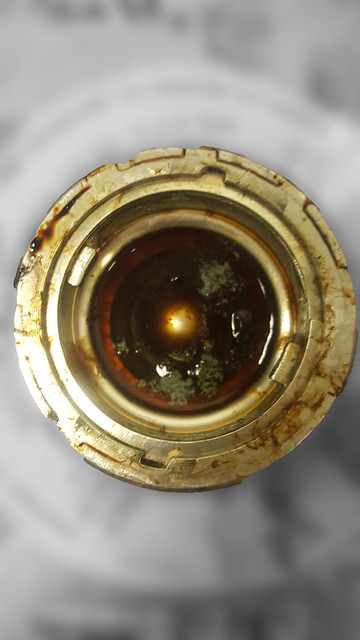
After filling the keg at the brewery, the cellarman had apparently neglected to spray out and sanitize the well of the keg spear. This was the result, as seen at a bar, several weeks later, when the publican removed the keg cap. Not good. That green stuff is mold growing on an inch of dried, 'gel-ed', beer. Brewing is 95% cleanliness; everything else follows.

My answer to the question: not me. I would not care to drink a beer poured from this keg. And neither did the bar, which didn't tap it.

The photo has been blurred to protect the guilty. They know who they are.

-----more-----

Saturday, September 19, 2015

Pic(k) of the Week: Wine on draft.

Wine on draft (04)

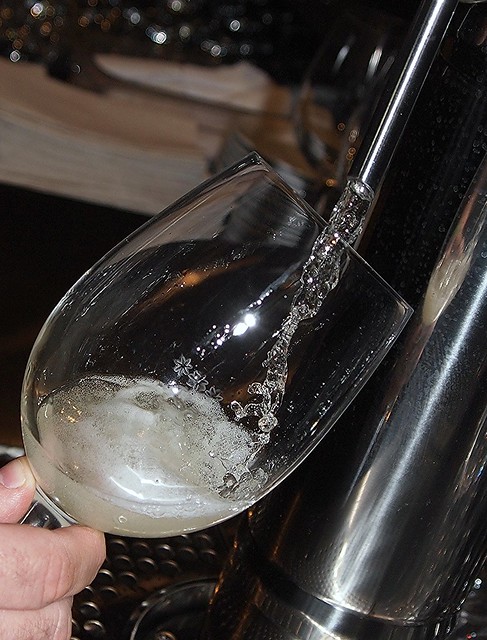
It's a New Zealand Sauvignon Blanc: stored in a keg, pushed through a draught system, poured from a tap ... at a brewpub.

American restaurants —'white-tablecloth' or pub, 'hip' or 'neighborhoody'— have begun pouring wine from kegs; and wineries are offering them greater choice in draught wines, better than generic 'red or white.'

Wine on tap flows through a 304 grade stainless draft system —very similar to that used for beer— pushed out of kegs using a blended mixture of gasses, usually 75% nitrogen and 25% carbon dioxide. This blend preserves wine quality and freshness, without adding bubbles. (Using a higher concentration of carbon dioxide would carbonate the wine, inappropriate, unless, of course, the wine were a sparkling wine.) The equipment installation cost for a restaurant is not that great, especially if a beer-dispense system is already in place.

The standard keg size for wine is 5.16 gallons, which, in wine-measurement, is 19.5 liters (the equivalent of twenty-six 750-ml wine bottles: two cases plus two bottles). * White and red wine kegs should be served from different refrigerated compartments: the white wine at or about 42 °F; red wine at or about 55 °F. (Room temperature red wine, draught or bottle, is not a refreshing beverage. Chill it slightly.)

At present, it's mostly California wineries that are kegging their wines. They ferment and age their wines as usual, and ship the results in bulk containers to facilities which package the wine for them. (Of course, there's no reason, except cost, for a winery, like a brewery, to install its own kegger.)

At the restaurant, there's no waste, no corks to un-cork, no bottles (and corks or screwtops) to dispose of, and little to no spoilage. It's clean, green, 'cool'; and usually at or just below the equivalent per-ounce cost of a bottle, depending on the wine poured.

As seen at Ornery Beer Company, in Woodbridge, Virginia, on 28 August 2015.

-----more-----

Wednesday, September 16, 2015

America is doing cask ale wrong.

It should go without saying, but I'll say it anyway. There are exceptions to poorly constructed and wretchedly served cask ales in America. But sadly, they are in the minority. America is doing cask ale wrong.

Patrick Berger is the publican at the Kaiser Tiger, in Chicago, Illinois. He is a fan of cask-conditioned ale. "Is there anything as lovely as a perfectly cellared and properly poured pint of cask conditioned real ale?" he asks. No, there isn't, I'll stipulate ... at least in beer.

Cask pour of Peg Leg Stout

But ... despite being an obvious partisan for cask-conditioned ale, Mr. Berger REFUSES to serve any cask ale at all at his pub. And, why? Because, as he writes in a clear and convincing essay, "As with most things, the devil is in the details, and cask beer in America more often than not gets the details wrong."
  • Oxidation

    A hand pump introduces oxygen to the beer in the cask every time you pull the handle. Oxidizing beer will create a fruity 'off' flavor that is very apparent after only a day or two so the beer's shelf life is very short. Many places use a CO2 breather that places a blanket of gas over the beer in the cask to give it a few more days of freshness but you're still left with 3 or 4 days tops to finish that cask. This might work out if all the bar is offering is a few cask beers, but in my experience the hand pump is usually sitting next to many other taps thus making it difficult to plow through one selection.

  • Lack of expertise

    Many breweries don't normally fill casks and therefore aren't experienced with it. Try to remember that the perfect pint of cask beer you perhaps had in London, was filled by a brewery that fills firkins everyday and probably has been for the last 100 years. Pro tip: if a brewery doesn't own a firkin, chances are they don't know how to properly fill and condition them.

    No tut

  • Inappropriate beers

    Traditional English ales are way more balanced than ours and the softer carbonation [as cask ale] brings out the nuances of the caramel malts and earthy hops. But ... modern American craft beer flavors are not designed with casks in mind and do not necessarily get better when you put them in one. American craft beer is made to be served through a modern (hopefully clean) CO2 draft system. Some beer geeks get downright giddy when they find out their favorite IPA is being served in a cask, but I'm not sure the beer tastes any better. American beers are meant to whack you over the head, not highlight the subtle balance of malt and hops.

  • Freshness counts

    Why not serve imported firkins from England? Well, mostly because it defeats the whole purpose of fresh cask beer. Some beer will be fine in a cask for a month or two while it sits on a boat and then sits in customs and then in a distributor's warehouse -- but most won't. [This can also be a deleterious issue with American casks, often shipped thousands of miles, refrigerated or not, and served weeks or months later.]


And what of the cocoa-puffs and dingleberries American brewers seem to add willy-nilly to their cask ales?

A recent Wall Street Journal piece on cask ale quoted a brewer on just that: "Casks are an incubator for experimentation, a chance to do something new all the time.” In other words, in America, cask ale is not about freshness of flavor and condition, but is used as a pilot brewery on the cheap, with the consumer picking up the tab for experimentation, good or bad. I would think that a brewer would be proud of her beer, as it tastes, as she brewed it. But maybe that's just me.

And what of cask ale at American bars and pubs? Mr. Berger recommends skipping that experience altogether. Go to a brewpub, instead, he writes.
Many brewpubs are able to pull it off because they have a trained cellarman (the brewer) who can pick and choose which beers are going to benefit from the cask. They also have a willing brewery partner (themselves) and they usually only pour a small selection of their own beer which they tend to plow through.

With laws changing to allow consumer consumption at production breweries, I would add brewery taprooms to the list, but only if those breweries understand cask ale and its preparation. Drinker beware!

Last week, I was involved in the following conversation at a 'craft' beer bar near to where I live. It was a conversation that, in similar form, recurs in many American 'craft' beer pubs far too often (but minus the honest admission).
Me: "When was the firkin tapped?"
She: "Two weeks ago." [Points for honesty.]
Me: "What do you have on draft?"

American publicans, on the whole, have little clue as to what cask ale is or how to serve it properly. Without respect for the beer, or the brewery, or their patrons, publicans toss cask ales on bartops without conditioning or care or cellar coolant, and serve room-temperature messes, tilting the casks to catch the last dregs not brewery-intended for human consumption.

Cask pour? You must be joking.

Or, they will serve a cask via a hand-pump, and, assuming a magical quality therein, will serve the beer well past a cask beer's two day, three, or four day best-by date (or, on rare occasions, five day lifespan). Often several weeks.

And, after all that, they'll have the temerity to say that that sour, flat, warm, and stale sludge they've served you is cask ale. No, it is not cask ale. It's crap.

What publican Patrick Berger says he desires is proper, well-tended cask ale. I couldn't have said so better myself, so I've quoted him above, and summarized. Please read his entire piece. He has more to say. Read it, and act upon it.

Consumers: demand better. It's your dollar; it's your missed opportunity for 'real' cask ale.

Publicans: learn the art and science of cellarmanship. But if you can't or won't —and that's understandable: there's a lot of work in a busy multi-tap pub— please don't do injustice to cask-conditioned ales. Your patrons won't appreciate that; and cask ale, itself, in the process, will lose drinkers for life. Please choose instead from the wealth of wonderful non-cask kegged beers.

Brewers: likewise. Cask-conditioned ale is so much more than, simply, ale in a cask. If more of you would take care to learn the art and skill of cask-ale preparation, maybe Mr. Berger might be convinced to change his mind. And I. And maybe, as well, more Americans, unaccustomed as they are to beautiful cask-conditioned ale, might change their minds.

Mad Ordinary

I don't want to dismiss all cask beer in this country. I think when it's done right it's a wonderful worthwhile thing. So while a lot of us beer nerds like to lose our shit over any beer in a firkin, try to keep in mind - it doesn't automatically make it better.

-----more-----

Saturday, August 08, 2015

Pic(k) of the Week: A cask's keystone should never look like this!

Would you want to drink a beer poured through this keystone? I wouldn't.

A cask's keystone should never look like this! Clean that mold.

That green stuff is mold. Mold growing on beer residue left on the keystone of a firkin after that 10.8 gallon cask was sealed at a brewery. Mold insinuating itself into the wood (and maybe the beer). Should the brewery have done a (much) better job of cleaning the keystone? Uh, yes.

Should the pub have done a better job of cleaning the keystone upon receiving the cask? Uh, yes (although I suspect that no attempt was made).

At some point, the publican will be tapping that firkin through that keystone. So, I ask again. Would you really want to drink the beer poured through that bung? Not me!

I have left unmentioned the identities of the guilty brewery and pub in order to gently prod them toward better, more hygienic, practices. They know who they are.

-----more-----

Saturday, July 25, 2015

Pic(k) of the Week: Fobbing at the tut.

Fobbing at the tut

A volcanic beer shower when tapping a cask? Uh, no. That's the result of an unskilled publican, tapping with macho posturing. A skilled cellarman, who understands how to properly handle and condition a properly-brewed cask ale, rarely will be bathed in beer.

And, contrary to much opinion,
cask conditioned beer should never be flat. A certain amount of carbon dioxide must be retained in the beer to give it liveliness on the palate; this is the "condition" sought by the cellarman, and without it the beer can become flat and lifeless. The flavor of the beer is materially affected by the secondary fermentation.
— The Oxford Companion to Beer: Oxford University Press, 2012.

The photo above was taken, in Baltimore, Maryland, on 16 May 2009, at a festival at a brewery then known as Clipper City Brewing Company (and now known as Heavy Seas Beer).

Excess carbonation (and beer) was fobbing through a soft spile (made of bamboo) which the cellarman had earlier inserted into the tut (an indentation) in the top shive bung of the firkin (a cask holding 10.8 U.S. gallons). When the fobbing dissipated, and only then ... was the beer ready to be drunk.

And it was.

-----more-----

Friday, May 08, 2015

Spring Real Ale Festival in Baltimore, Maryland.

Our friends at Pratt Street Ale House,in Baltimore, Maryland, are hosting their Spring Real Festival, this Saturday.

They're pouring thirty-two cask-conditioned ales and one cask-conditioned lager. Nineteen come from breweries in Maryland; two from Washington, D.C.; two from Pennsylvania; two from Colorado; one from New Jersey; one from Georgia; and five from breweries in the United Kingdom. This is a bookend to their Chesapeake Real Ale Fest, held every October.


Pratt Street has been the home of Oliver Brewing since 1993 (when the pub was originally known as the Wharf Rat). The brewery creates (among other styles) British-style ales, poured cask-conditioned, via hand-pumps, at the pub.

I asked brewmaster Steve Jones (himself an ex-pat Briton), the host and organizer, about the difficulties (and pleasures) of running a cask ale festival.

Hosting a cask ale festival at a brewpub presents numerous challenges. Ideally, a cask-conditioned beer is set in the place from which it is to be served, at cellar temperature, for several days prior to being vented/tapped, to allow the yeast to settle, allowing the beer to be served at optimal clarity and condition. The casks are soft-spiled for the necessary amount of time to allow the venting of excess carbon dioxide (condition).

This is obviously not possible in a festival environment, such as this.

Casks are stored at regular cold room temperature (40 °F), as we don't have sufficient storage space in our cask (52 °F) room. I vent the casks 24-36 hours prior to the festival, and soft-spile them. Because of the colder temperature, we can't expect them to attain ideal conditioning (CO2 being more soluble at lower temperatures).

Casks are carefully moved to their serving stations during the early morning of the day of the festival (efforts being made to disturb the beer as little as possible). This allows them the opportunity to slowly warm up to cellar temperature (52 °F) over the course of the three or so hours before the start of the festival. Excess condition will be vented off to some degree at this time. Casks are also tapped at this point.

During the festival, casks are kept cool by using bar towels soaked in ice water draped over the cask. Evaporation of the water from the towels will serve to cool the casks; the bar towels are frequently replaced, as they warm and dry out.

Whereas Jones' draft beers are transferred to a conditioning tank, all of his casks are filled directly from the brewery's open fermenting vessels post-fermentation, and are 'primed' with a bit of fermenting wort and fined with isinglass.

Saturday's outdoor festival could be considered a celebration of another event, as well.

After 23 years, the small 'Peter Austin' brew-kit in the basement of the the pub —which Jones often refers to as a Hobbit brewery— is about to be decommissioned. Oliver Brewing Company has nearly completed construction on a much larger production-only facility, offsite, in eastern Baltimore. The Pratt Street Pub will reamain where it is, in downtown Baltimore, across from the Convention Center and Oriole Park at Camden Yards.

Steve Jones at the door

For the Festival, Jones is serving five of his own cask-conditioned ales, including two that he brewed in collaboration with local breweries for American Mild Month.
  • Burial At Sea
    Ruby mild. 3% alcohol-by-volume (abv).
    Brewed in collaboration with DC Brau (Washington, D.C.) for American Mild Month.
  • Cherry Blossom Ale
    Wheat ale fermented with dark sweet cherry puree. 5.8% abv.
  • Dark Horse
    Dark mild ale. 3.8% abv.
  • Olde Fashion Black Magik
    Dark ale. Brewed on the occasion of the recent 22nd anniversary of Oliver Brewing. 9.4% abv.
    Steve Jones' comment: "Olde Fashion Black Magik has been conditioned in a 10-gallon toasted American oak barrel, from which it will be drawn via beer engine. This barrel has been much used, so we won't know what effect it will have on the beer until we tap it, on Saturday morning."
  • Straight On 'Til Morning
    Golden-oat mild. 3% abv.
    Brewed in collaboration with DuClaw Brewing (Rosedale, Maryland) for American Mild Month.
Jones taps the glass cask (02)

The festival runs from 1 until 5pm. Admittance allows for unlimited sampling (within the bounds of propriety!). Very Important Persons can gain an extra hour of festiveness, at noon. (This exclusivity is gained by paying a somewhat higher ticket cost.) Food is available in the pub.

An ardent traditionalist, Jones finished by affirming:

I hasten to add that none of my casks have any "additions" other than finings!

Here's the rest of the afternoon's line-up.

  • The Brewer's Art (Baltimore, Maryland)
    • Birdhouse, with grapefruit and Amarillo hops.
    • Charm City Sour Cherry Ale.
  • Burley Oak Brewing (Berlin, Maryland)
    to be determined.
  • Coniston Brewery (U.K.)
    Bluebird Bitter.
    Supreme Champion Beer of Britain: Great British Beer Festival, 1998.
  • Dark Star Brewery (U.K.)
    Revelation English Ale, brewed with American hops.
  • DC Brau (Washington, D.C.)
    • On The Wings Of Armageddon Imperial IPA, with grapefruit.
    • El Hefe Hefeweizen.
  • DuClaw Brewing (Rosedale, Maryland)
    • Anti-Venom, double dry-hopped.
    • Mosaic Red, double dry hopped (hop continuum #2).
  • Flying Dog Brewery (Frederick, Maryland)
    Single Hop Warrior.
  • Flying Fish Brewery (Somerdale, New Jersey)
    to be determined.
  • Heavy Seas Beer (Halethorpe, Maryland)
    Deep Six Porter.
  • Hobsons Brewery (U.K.)
    Manor Ale ESB.
  • Ilkley Brewery (U.K.)
    • Mary Jane IPA.
    • The Mayan Chocolate Chipotle Stout.
  • Jailbreak Brewing (Laurel, Maryland)
    Welcome to Scoville Jalapeno IPA w/ blue corn tortillas, mango, and cherry red and long hot peppers.
  • Manor Hill Brewing
    • IPA, with azacca, passion fruit, and raw organic cocoa nibs.
    • 4 Grain Saison, with Hallertau Blanc hops, grapefruit juice, grapefruit peel, and fresh lemongrass.
  • Monocacy Brewing (Frederick, Maryland)
    Riot Rye Pale Ale, with mango.
  • Monument City Brewing (Baltimore, Maryland)
    51 Rye IPA.
  • New Belgium Brewing (Fort Collins, Colorado)
    • Portage Porter, dry hopped with Willamette hops.
    • Skinny Dip citrus-infused lager.
  • The Raven Brewery (Baltimore, Maryland)
    Annabel Lee Belgian-style Wit, dry-hopped with Citra Hops.
  • Sly Fox Beer (Phoenixville, Pennsylvania)
    O’Reilly’s Stout.
  • Terrapin Beer (Athens, Georgia)
    Single Hop Imperial IPA, with Ella hops.
  • Union Craft Brewing (Baltimore, Maryland)
    to be determined.
  • Weyerbacher Brewing (Easton, Pennsylvania)
    to be determined.
  • Yards Brewing (Philadelphia, Pennsylvania)
    Philly Pale Ale, with grapefruit.
-----more-----
  • Admission is $40 for admission at 1pm (including 'unlimited' tasting) or $60 for 'VIP' admission at noon. Available: here.
  • Isinglass is a traditional fining agent (clarifier) for cask ales. Pulverized, it electro-chemically attracts yeast and proteins, and falls, clumped together, to the bottom of a cask, clarifying the ale. Derived from the swim bladders of fish, isinglass will not be in the finished beer, if used properly, but below the level of the serving tap.
  • Caveat lector: As a representative for Select Wines, Inc. —a wine and beer wholesaler in northern Virginia— I sell the beers of Oliver Brewing. Any opinions here are mine alone.

  • For more from YFGF:

Friday, January 02, 2015

We need a book on cask-conditioned ale in America. Please!

The Session #95 - What beer book which has yet to be written would you like to see published? The Session is a monthly event for the beer blogging community, begun in March of 2007 by Stan Hieronymus of Appellation Beer and Jay Brooks of the Brookston Beer Bulletin.

On the first Friday of every month, a pre-determined beer blogger hosts The Session: Beer Blogging Friday. He or she chooses a specific, beer-related topic, invites all bloggers to write on it, and posts a roundup of all the responses received. For more information, view the archive page.


Alan McLeod —at the blog A Good Beer Blog— became the emergency host of the 95th iteration of The Session, when the original host went missing-in-action.

For January 2015, his topic is "What beer book which has yet to be written would you like to see published?"

I co-authored three books which were published in 2014 and now know what a mug's game it is. In fact, there was very positive talk of another at a more advanced level. But it was not a piece of work that was within the reach of the budget if a proper job was to be done. Travel and hotel costs to allow for research. Time away from work. We wanted to do the complete thing. No rush around the world or the internets for a skipping stone study would do. So it wasn't done. It may yet be but at this point it's on the back burner. Now that I know this I realize that resources may well stand between many a good author and many many more good readers. Does good beer suffer overall because of it? I have no doubt that it does.

So... on January 2, 2015, let the fates know that you know of their cruelty. What is the book you would want to write about good beer? What book would you want to read? Is there a dream team of authors you would want to see gathered to make that "World Encyclopedia of Beer and Brewing"? Or is there one person you would like to see on a life long generous pension to assure that the volumes flow from his or her pen?


***************
Jason Oliver is the heavily-medalled brewmaster for Devils Backbone, a brewery and brewpub in central Virginia, which, although flagshipped with a Vienna lager, is multi-modal, known for ales and lagers. A decade earlier, Mr. Oliver had been the executive brewer for the mid-Atlantic group of Gordon-Biersch brewpubs, a chain heavily Teutonic, where lagers predominate.

Thus, I give great credit to Mr. Oliver, who, when he was still with Gordon-Biersch, uttered this pearl of wisdom, not about lagers, but about ales. Cask ales. To an assemblage gathered at a beer tasting at RFD, a good beer pub in downtown Washington, D.C.
You put beer in a cask: that's beer in a cask. Anyone can do that. You condition ale in a cask: that's cask-conditioned ale. There's a big difference.

That is an understanding so simple, yet so profound. So why is it, a decade later, one sees and tastes so many cask ales whose construction shows only ignorance or churlish whimsy?

Cask-conditioned ale is fresh beer, tasting as beer straight from a fermenter: bursting with flavor not dulled by time, temperature, or travel. But such a pure ale-as-art has become harder to find in America. Indeed, it is easier to find beers tossed in casks by brewers with no consideration of appropriateness or skill, than it is to find beer whose freshness is sine qua non. No, to these brewers, a cask is merely a thing in which to toss a beer for sport, a pot in which to toss extraneous, irrelevant ingredients. And, unfortunately, more and more drinkers are coming to think the same, as well.

Exhibit one. This apostasy actually masqueraded as a 'craft' cask-conditioned ale.

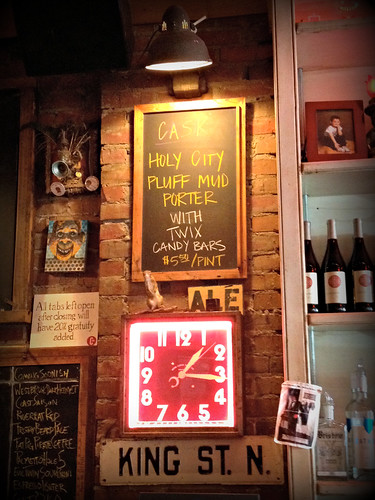
Twix-conditioned cask

Twix bars? That is what they're putting in a cask and calling it 'craft'? Did those brewers even know what was in a Twix bar?
Milk Chocolate (Sugar, Cocoa Butter, Milk Ingredients, Cocoa Mass, Lactose, Soy Lecithin, Polyglycerol Polyricinoleate, Artificial Flavor), Enriched Flour (Flour, Niacin, Reduced Iron, Thiamine Mononitrate, Riboflavin, Folic Acid), Sugar, Hydrolyzed Palm and Palm Kernel Oil, Corn Syrup, Milk Ingredients, Dextrose, Salt, Cocoa Mass, Sodium Bicarbonate, Soy Lecithin, Soybean Oil, Artificial Flavor.

Cask-conditioned ale is not a sponge from which to squeeze out Twix, or thiamine mononitrate, or cocoa-puffs and dingleberries*, or whatever else might catch a brewer's fancy, with no forethought except for, "hey, what the fuck?"

And mind this. Not all beers taste better at the lower carbonation level or warmer temperature of good cask-conditioned ale. A cask saison? Why? Give me a bottle or draft.

Cask-conditioned ale is a skill; it's an art; it's the beauty of a beer at its freshest. It's unfiltered beer, brewed from traditional ingredients, that has undergone a final fermentation WITHIN a cask, and then served from that cask, at cellar temperature (52-54 °F, or so), without extraneous gas pressure, either pumped from the cask by hand, or by simply opening a tap which has been hammered into a bung. Think of a cask as a fermenter (albeit a small one) containing active, still fermenting, beer.

Exhibit two. Don't get me started on those (oh, too many) pubs that toss a cask on the bar, tap it with a —WOW— huge explosion of beer, and think that the resulting sludgy, now de-carbonated mess, is good beer.

Cask pour? You must be joking.

Recently, after I had explained the cask-conditioning process to a newbie publican, he replied, "Why, that's easy." Why, yes, I agreed, it is simple, a truism that makes the presentation of so much bad beer, served in the name of cask-conditioned ale, all the more perplexing and distressing. Why can't others have this easy perspicacity?

Cask-conditioning is a continuum from brewer to cellarman to deliveryman to publican. Be lazy at any part of that chain, and the ale is not cask-CONDITIONED. It's crap.

This rant concerns 'craft' cask in America. The British, from whom we learned it, 'do' cask-conditioned well. And, yes, there are many conscientious brewers and publicans in the United States who have learned their lessons well, who understand the process. But, for the most part, cask-conditioned ale in America has jumped the Twix bar. It's become a bad joke.

Thus, it's due time. It's past time. We need a book, a primer, on cask-conditioned ale. Ask for it; plead for it; hope for it. So that our brewers can learn what an amazing thing cask-conditioned ale is and how to make it, and that our drinkers will understand what it is, and thus come to demand the same of their brewers.

Please.

-----more-----

Saturday, October 25, 2014

Pic(k) of the Week: Cask Stout Pour

Cask pour of Peg Leg Stout

A photo of a pretty pour, hand-pumped from a cask of Peg Leg Stout —brewed by Heavy Seas Brewing (of Baltimore, Maryland)— is this week's Pic(k) of the Week.
  • The cask was stored in an under-bar-counter refrigerator, kept at 50 °F.
  • It was vented, tapped, and served, standing upright, using a cask widge.
  • To forestall spoilage, a cask breather provided blanket carbon dioxide (CO2) coverage, but at zero pressure. *
Served at:
American Taproom
Arlington (Clarendon), Virginia.
22 October 2014.

-----more-----
Thursday, July 24, 2014

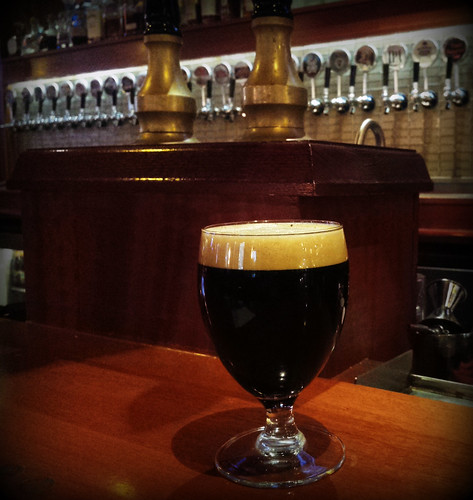
The NeverEnding CaskAle Lesson

Cask-conditioned ale is a process that starts at the brewery and continues at the pub. Bad practices at either end yield poor cask ales. For example:

How NOT to cellar and tap cask ale

Were the casks improperly conditioned (or grossly over-conditioned at the brewery)? Sure looks like it. You have to feel sorry for the guy, but, still, hilarious.


In contrast,

How TO tap cask ale


Paul Pendyck —star of the second video— is the owner of UK Brewing Supplies. Based in Pennsylvania, U.S.A., he sell casks, cask equipment, and traditional British pub supplies. He dispenses (pun intended) excellent advice on cask ale, and has a few more cask how-to videos online.


Fobbing at the Tut: a series on cellarmanship.
Fobbing at the Tut:
A series of occasional posts on good cask cellarmanship.


-----more-----
Saturday, February 15, 2014

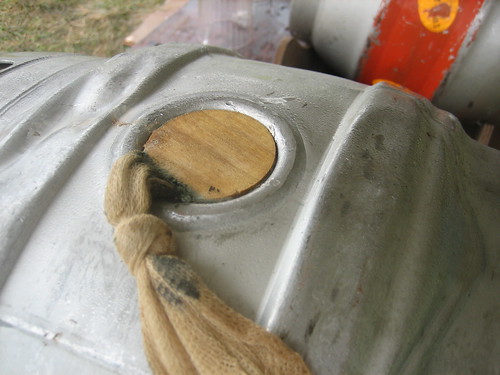
Pic(k) of the Week: High Prime

High Prime (02)

As part of its 20th anniversary celebrations, Legend Brewing Company (of Richmond, Virginia) invited 'celebrities' from the Virginia beer world to prepare and tap casks of beer. I've been honored by the brewery to be one of those guest 'caskateers.'

To fill 'my' cask, I chose a beer that is more about the flavor of malt than the spice of hop: Legend Brown Ale.
Our most popular beer, Legend's is a full bodied version of a British Brown Ale. Expect a rich, malt-forward brew with a beautiful mahogany tone. Generous amounts of specialty malts bring flavors of sweet caramel, toasted nuts, coffee, and molasses, all perfectly balanced by a steady but cautious hop dryness. Fruity undertones provided by our house yeast strain bring the final flavor element to round out this world class ale. 5.8% Alc. By Vol.

Further, I wished to eschew the 'American-style' of cask ale: to avoid the twigs, berries, fruity pebbles, cocoa-puffs, and dingleberries so often added to American casks. Those encumbrances, as a fellow blogger wrote, make American casks, in effect, large stainless steel Randalls. 1 No, I wanted 'my' cask to taste of its ur-essence: a brown ale of brilliant from-the-fermenter freshness, unsullied by all that galling frou-frou. After all, I like the taste of beer; I don't need kiddy flavors in mine. Legend beers taste good as they are.

**************
Above, at Legend Brewing, I'm filling a beaker with Brown Ale that is at the stage of high-krausen [pronounced CROY —like the 'oy' in boy— zin]. In other words, I'm filling the flask with some Brown Ale that has just begun its active fermentation stage, abundant with happily reproducing yeast, and containing almost as much malt sugar per fluid ounce as the wort had begun with. (You can see how active the fermentation is: just look at the 'overflow' in the foreground.)

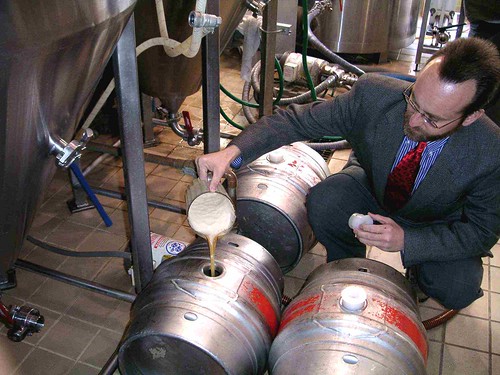
I added that solution to a cask into which I had racked (filled) 5.4 gallons from a different batch of Brown Ale that was its opposite: quiescent, fully fermented. I stuffed in two ounces of whole leaf Golding hops (traditional English hops, appropriate to the style) in cheese-cloth bags, and then I sealed the cask by hammering in a shive bung. (Well, actually, it was Aaron Sanders, Legend's cellarman, who did the honors for me. My Keystone Kops story: here.)

The cask will sit for 10 days at about 65 °F, during which time it will come 'into condition,' that is, the frothy solution, that I had added, will fully ferment, infusing the entire cask with approximately 1.2 volumes of carbon dioxide bubbles. (Typical bottled beer contains around 2.6 volumes of CO2.)

Mr. Sanders and the cellar staff will then crash-cool the cask to 38 °F. At that cold temperature, most of the yeast, haze-proteins, and any loose hop matter will eventually fall to the bottom of the cask, below the level of the keystone bung, which is where the tap will be inserted. In other words, gravity and cold will have clarified the beer.

Legend February Anniversary Pin 2014

Before service, the cask will be allowed to warm back to proper 'cellar temperature,' about 54 °F. 2 All that will remain will be to tap it and to drink it. That, I'll be doing this Thursday evening, 20 February 2014, at 6 pm, in Legend Brewing's upstairs pub.

I should thank all the folk at Legend who made this happen. I'll mention four: Tom Martin, owner (for having the courage to start the whole thing 20 years ago); John Wampler, brewmaster (for brewing the beer); Dave Gott, vice-president of operations (for inviting me); and, Aaron Sanders, cellarman (for doing the 'heavy lifting' during the racking session).

I'm a 'celebrity'! Who knew?

Photo taken:
Legend Brewing Company
Richmond (Manchester), Virginia.
8 February 2014.

-----more-----
Tuesday, January 14, 2014

Fobbing at the Tut: Cask Ale 101 with Alex Hall

Alex Hall is an advocate for cask ale in the U.S., based in New York City. Here, he is interviewed by Barry Wasser, of the Brewed Palate, on cask ale fundamentals.

There's a lot more to serving cask-conditioned beer properly than many publicans in the U.S. may realize. This is an excellent primer.

  • 00:00
    Vent the beer well before serving it: one to two days or more. Tap and sample; wait for beer to condition and clear before serving.

  • 2:00
    Who is Alex Hall?

  • 4:38
    "It's always hands-on. You must never neglect a cask. Watch for clarity; don't put it on too early!" Possibly add finings. Constantly monitor the progress before and after serving.

  • 6:20
    Pulling the beer up to the bar. "It's all manual." No extraneous gas.

  • 7:35
    Cask breathers are controversial in the U.K. But, "The cask breather is seriously, seriously helping to spread cask in the U.S." But it's much better to have beer that's not going to stale in 3 or 4 days. "If you don't like it, don't drink the beer!" [I would add that even though the cask breather receives pressure set at 4psi, it sends CO2 to the cask at ZERO pressure.]

  • 10:05
    What's a beer engine?

  • 12:10 Temperature, clarity, flavor. Casque Marque is a cask ale quality accreditation program in the U.K., which has now come to New York City and eastern Pennsylvania, thanks to Paul Pendyck of UK Brewing Supplies (located in Pennsylvania).

  • 14:00
    Keep casks cool with wet towels, placed all around the cask, not just on the top, "like some sort of hat." Keep them wet!

  • 16:55
    How a brewery fills a cask.

  • 17:40
    Less than a quarter of U.S. breweries use finings to clarify the beer. A good pub cellarperson knows how and when to add finings.

  • 21:40
    Low gravity beers can be surprisingly complex. British cask beers tend to be low-gravity. American cask beers are often much stronger, and often flavored within the cask.

Fobbing at the Tut: a series on cellarmanship.
Fobbing at the Tut:
A series of occasional posts on good cask cellarmanship.

-----more-----
Sunday, June 30, 2013

Cask pour? You must be joking.

My usual practice on this blog is to ignore bad beer, write about good. Not so in this case. On a recent visit to a restaurant in my local area, I saw such an egregious ignorance of basic cask ale cellarmanship or, worse yet, disdain for its customers that I couldn't remain silent.

In addition to serving draught beer, the pub in question serves cask ale, both via hand-pump from temperature-controlled and blanket-pressure-protected casks, and by gravity-pour from casks on the bartop.

On the early afternoon of my visit, a cask was sitting on the bar, warm, unprotected by any cooling method: neither ice-blanket, nor insulated jacket, nor simple wet towel. The cask may have resided there for a couple of days, as there was scant in it.

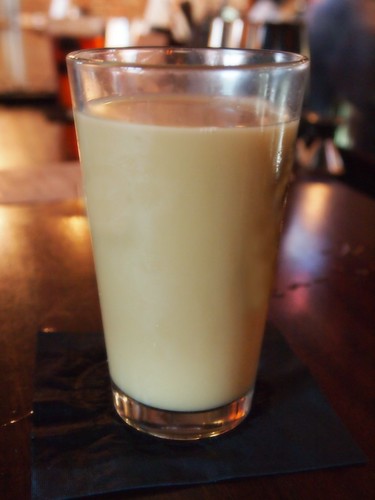
I watched as the bartender tilted the cask almost vertically, and, with a straight face, pour a customer the below-pictured glass.

Cask pour? You must be joking.


Really? You must be joking!

Cask ale is fresh, CLEAR, cool, gently carbonated, and refreshing. That glass was not that. It was spent yeast and proteinaceous sludge.

A customer, not knowing the actual appearance and flavor of the beer in question, might have easily assumed that it and its brewery were not worth a second chance (let alone cask ale itself). I, 'knowing' the beer, could attest that the brewer is a capable one, and that the beer, —in its proper state— is delicious and only slightly hazy.

I've re-touched the photo to remove incriminating logos from the glass. I'll say no more than this: the restaurant is located within the Washington, D.C., Maryland, Virginia area. If the U.K.'s Casque Marque operated here, the pub's accreditation for "serving great cask ale" would have been summarily suspended. I'll protect the restaurant's identity but I'll abjure its actions.

UPDATE: I've been contacted by restaurant management, who has assured me that this was an aberration, not the restaurant's standard practice, and that it is taking corrective measures to prevent a recurrence. I understand that 'things happen,' which is one reason why I kept all names anonymous. I write Yours for Good Fermentables to promote good beer, not to flame someone's livelihood. I thought this a teachable moment, not a 'Yelp' gotcha.

-----more-----