Showing posts with label The Session. Show all posts

Friday, November 16, 2018

The beer blog is dead. Long live the beer blog.

The Session: Beer Blogging Friday

Earlier this month, within one day of each other:

  • Jay Brooks announced the impending demise, after 11 years, of the monthly communal beer bloggers' jam session, "The Session: Beer Blogging Friday."

  • Jonathan Surratt announced the creation of ReadBeer, an aggregator of beer blogs (in non-jargon parlance: a list that updates the latest posts of beer blogs).

***************
Jay Brooks is a beer author and the amazingly prolific publisher of the beer blog, the Brookston Beer Bulletin. He posts daily about beer birthdays (historical and current), historic beer ads, beer art, and current beer-related topics. And, of course, he co-founded "The Session" (with fellow beer writer, Stan Hieronymous).

The penultimate Session, the 141st overall, he titled: "Second-To-Last Session: The Future Of Beer Blogging" and wrote:
Fast forward a decade and there are many more ways that people interact online, and blogs, I think, lost their vaunted place in the discussion. Now there’s also Facebook, Twitter, Instagram and countless other ways to communicate online. This has meant blogging, I believe, has lost its place at the top, or in the middle, or wherever it was. That’s how it feels to me, at least. I think one incident that confirmed this for me is that recently the Beer Bloggers & Writers Conference changed its name to the "Beer Now Conference," a seeming acknowledgment that the landscape has changed.


ReadBeer

Jonathan Surratt, among several beery things, is the web guru for the Cicerone Certification Program. Way back in 2005, he launched the (still viable) crowd-sourced brewery/beer store locator, the Beer Mapping Project.

A few days after ReadBeer went live, Suratt tweeted:
We just hit 988 posts in less than a week. That's from 63 different beer news/blog sources. Since we launched (last Friday), we've sent more than 4,500 clicks outgoing to these sources.


The beer blog is dead. Long live the beer blog. Or, at least, long live the beer journal, public or private, online or pen-and-paper.


-----more-----

Monday, April 09, 2018

Drinking in the Culture: A checklist for Beer Gardens in Europe. (Beer Blogging Friday)

The Session: Beer Blogging Friday is a monthly event for the beer blogging community, begun in March of 2007 by Stan Hieronymus of Appellation Beer and Jay Brooks of the Brookston Beer Bulletin. On the first Friday of every month, a pre-determined beer blogger hosts The Session, choosing a specific, beer-related topic, inviting all bloggers to write on it, and posting a roundup of all the responses received.

For The Session #134, Friday, 6 April 2018, I was that pre-determined host and my topic was ... Beer Gardens.

Beer writers/raconteurs/travellers/tickers Bob and Ellie Tupper sent in a checklist for European beer gardens — a checklist that could be referenced universally (or, for now, globally). I've posted it here, today —Monday, 9 April— because, in the beer world and especially in a beer garden, it's always Friday in spirit. Allons-y, Alonzo!

***************

Drinking in the Culture

The calendar, if not the thermometer, says it’s springtime, so it’s time to leave the romantic tasting rooms with crackling fires and start searching for places to drink beer in the great outdoors. The explosion of farm breweries may soon make beer gardens more numerous and exciting in the U.S. than in the Old Country, but, for now, we still look forward to returning to our favorites in Germany and Austria.

When we wrote Drinking In the Culture: Tuppers’ Guide to Exploring Great Beers in Europe [in 2015], we tried to identify the six best places in each of the twenty-four featured cities to experience the local beer culture. We succeeded in over twenty cities, but failed miserably in Munich: there were just too many. We finally compromised on the six best establishments in each of four different categories, only one of which was "beer garden." It came down to six criteria that lifted those six winners to the top of a crowded Munich field.

Here are those criteria, with a favorite or two in Germany and Austria for each of them.
  • Accessibility
    We only included places accessible by public transportation. German DUI laws are even stricter than in the U.S. We found a lovely, historic beer garden near Freising last year, but the round-trip cab ride came to over $70. The Augustiner Keller in Munich is two blocks from a tram stop and the S Bahn subway.


  • Prices
    The price of a German Mass (short-filled liter) can vary from 6 to 9 Euros. In general, the closer to the center of the city, the more you’ll pay. The price of a liter at the Kloster Mülln garden in Salzburg is still just above the 6 Euro level.

  • Size
    Intimate gardens can be attractive, but we love a really enormous one. The clanking of steins and rumble of 200-liter barrels, overlaid with hundreds of conversations, could be cacophonic, but to us, it’s a symphony. On a beautiful weekend night, the Munich Hirschgarten comes close to filling their 8,000 seats, and the hum is like a contented beehive you can hear for blocks.

  • Setting
    Traditional German beer gardens evolved in the 19th century as brewers discovered that if you spread white gravel on the hilltop above the underground cellars where you kept the beer, then further shaded the white stone with leafy chestnut trees, it kept the cellars cooler. An unintended benefit was that this shady hilltop was a perfect place to drink that lovely beer. Some gardens have particularly good vistas: you can spot an Alp from Kloster Mülln, gaze at the massive Dom across the Danube from the Spital Brauerei garden in Regensburg, or feed the deer that mooch along the fence next to your table at the Hirschgarten.

  • Food
    Almost every garden will have roast chicken and bratwurst, but the biggest and best of them go much farther. Fresh fish roasted over live coals, spare ribs, enormous spiral-sliced white radishes, massive roasted pork knuckles, and a wide array of salads and sweets almost always taste as good as they look. Food vendors indoors and out in the garden at Kloster Mülln offer a variety that gives this one an edge over the others. Or copy the locals and bring in your own picnic; almost all gardens allow it as long as you’re drinking their beer.

  • Beer
    As important as this criterion would seem, it probably influences us the least. Almost every brewery with a good garden brews a fine helles lager. But, as Orwell noted, some are more equal than others. Munich’s Augustiner is sweet, but achingly clean, and somehow leaves you with no ache at all the next morning. Salzburg’s Augustiner brewery looms above the Kloster Mülln garden; being able to sit within meters of where the beer is born seems to make it taste even better.

  • Gemütlichkeit
    Gemütlichkeit, or friendliness, is hard to judge on a limited number of visits. You’ll almost always sit at communal tables, so conversation is optional but usually available. On almost every one of our dozen visits to Kloster Mülln, spanning decades, we’ve made new best friends, only some of whom could speak more than a few words of English.

***************
— "We're Bob and Ellie Tupper, “DC’s original beer geeks” (Washington City Paper). We spent 35 years seeking beers all over Europe, amassing a database with over 32,000 entries, before writing Drinking In the Culture. In it, we describe the best places in Europe to visit in order to “drink in” the rich connections between beers and the societies that brew them.

We're currently working on
Brews & Snooze, a guide to breweries and B&Bs of the Mid-Atlantic region, featuring places where you can visit a brewery and walk, not drive, back to where you're spending the night. In some cases, the journey back to your room involves only walking up a couple of flights of stairs. We hope to have the book in print by the end of the year."

The Tuppers maintain their own website and blog, called, punningly enough, CultureAle. The essay above —but illustrated with photographs— they'll be posting there soon. Until then, of course, you could read their book.


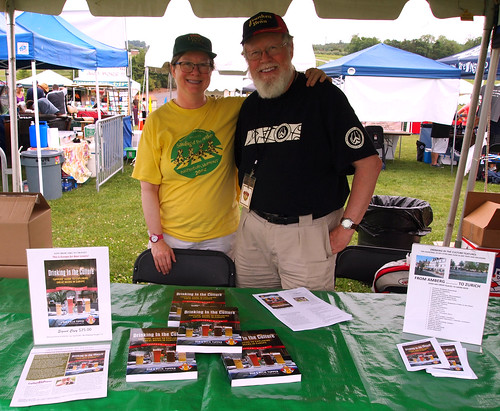
Bob & Ellie Tupper: "Drinking in the Culture" (01)

-----more-----

Sunday, April 08, 2018

Beer and the Great Outdoors. A Match Made in Heaven. (Beer Blogging Friday)

The Session: Beer Blogging Friday is a monthly event for the beer blogging community, begun in March of 2007 by Stan Hieronymus of Appellation Beer and Jay Brooks of the Brookston Beer Bulletin. On the first Friday of every month, a pre-determined beer blogger hosts The Session, choosing a specific, beer-related topic, inviting all bloggers to write on it, and posting a roundup of all the responses received.

For The Session #134, Friday, 6 April 2018, I was that pre-determined host and my topic was ... Beer Gardens.

Dave Gott —Vice President of Legend Brewing Company, in Richmond, Virginia— kindly sent in an essay on beer gardens in general and his beer garden in particular. He stated that he is "not a writer." I disagree.

***************

Beer and the Great Outdoors. A Match Made in Heaven.

I guess I don’t have to start this saying “I like beer”. The mere fact that I am taking the time to write about it is proof enough. I am a beer drinker, not a writer. However when asked to write about my two favorite pastimes; drinking good beer and being outside, I put my two index fingers to work and in the old cop at the typewriter style and started banging away.

I have been in the beer business for 27 years and the question I get the most is “what is the best beer”? My pat answer has always been “a free one” but I have begun to reconsider that answer and hone in on to a little more detail. A free one consumed on a nice sunny day when a warm breeze is blowing and you see the world as the glorious wonder that it is. Especially when there is no yard work to do.

Whether it is a deck, a porch, a true beer garden or just sitting in the grass, there is something special about that first beer outside in the spring. Hell, the Norwegians even have a special word for it. Utepils meaning outdoor lager.

The current craze of outdoor seating in our breweries and restaurants today is an expression of a much older tradition. In the German Biergarten, dating from the 19th century, beer, food, and music were enjoyed in an atmosphere the Germans called Gemütlichkeit. A word used to convey a state or feeling of warmth, friendliness, and good cheer. Drink a few steins and say that five times really fast.

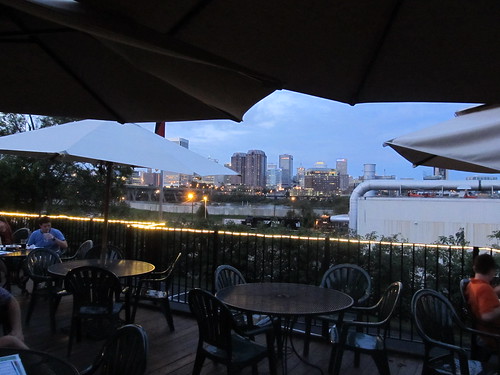
Downtown Richmond, across the James

At our Pub in Richmond, Virginia —Legend Brewing Company— we have a deck that seats 200 and has a spectacular view of the James River and the city skyline. We also have a beer garden that seats 80 at the front of our Pub. Let’s face it, you can’t have too much of a good thing. Our Portsmouth location has a beer garden overlooking the Elizabeth River with a view of the big navy vessels in dry dock. These are places where people sit, talk, trade ideas and get to know each other all under the big blue sky with a nice cold one in hand. The troubles of life fade away on that aforementioned warm breeze and all the world is at peace.

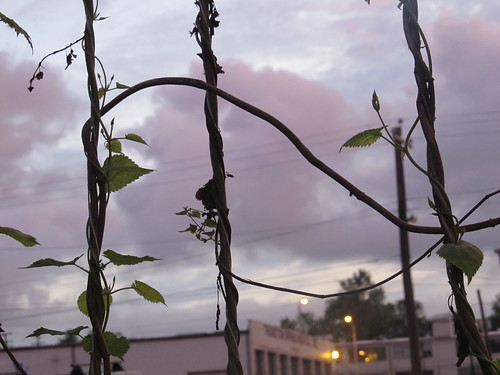
Hop bines at sunset (04)

So what makes a good beer garden? My friends, the answer is simple. You do. It is neither the wood deck, slate patio, or spectacular view. It is the coming together —the community, and camaraderie— we share over our favorite beverage. Gemütlichkeit.

So, I bid you cheers and goodwill. The warm weather is coming and outside we will go! With beer in hand, of course.

***************
— Dave added that he has been in the beer business since 1991 and with Legend since 1996. He attended Longwood College in Farmville, Virginia, where he received a degree in Earth Science and Philosophy, and drank a lot of beer. After college, he worked and traveled extensively overseas and drank a lot of beer. The rest is history.

I would add that Legend is celebrating its 24th anniversary. Opened in 1994, it is, by far, Virginia's oldest operating 'craft' brewery. (The only Virginia brewery older is Anheuser-Busch's Williamsburg plant, which began operations in 1972.)


-----more-----

Friday, April 06, 2018

What is a DC beer garden? (Beer Blogging Friday)

The Session: Beer Blogging Friday is a monthly event for the beer blogging community, begun in March of 2007 by Stan Hieronymus of Appellation Beer and Jay Brooks of the Brookston Beer Bulletin. On the first Friday of every month, a pre-determined beer blogger hosts The Session, choosing a specific, beer-related topic, inviting all bloggers to write on it, and posting a roundup of all the responses received.

For The Session #134, today, I am that pre-determined host and my topic is ... Beer Gardens.

Keith Chamberlin, a non-blogger in Washington, D.C., kindly sent in a report on beer gardens there. I've posted it here.

***************

DC Beer Gardens

In pursuit of what is a DC beer garden, I checked out several places. Of course, the most obvious one is Biergarten Haus at 1355 H Street. The manager claims it to be a German beer bar with an American twist. They can handle up to 700 patrons, 500 being outside. They have TVs for sports in a covered outdoor area, a rooftop deck and only German beer, except during special occasions like Dyngus day. The beer selection has a good variety of German suds including Salvator dopplebock, Weihenstephaner hefeweizen and Kostritzer schwartzbier, among others utilizing 12 taps. The look of the front bar reminds me very much of a woody German beer hall and I have eaten in the beer garden in good weather and the food is authentic with the red cabbage being excellent. It is popular and a treat for DC beer goers.

A newcomer that has been around for about 1 year is the Midlands Beer Garden at 3333 Georgia Ave. Their claim is an American craft beer garden. The place looks inviting with roll-up doors with approximately half their occupancy indoors with picnic tables outside for a total of about 250 people. They have 7 static taps, 7 local rotating and 7 imports that rotate. The imports are mostly German and Belgian while the 7 locals are small local beers and are typically not the most common ones to find.


Garden District beer garden is a small patio beer garden that doesn't open during inclement weather as most of their seating is outside. There is a little inside but it is tight! They only have German beer and American craft beer, about 8 taps, and their food is focused on good bbq. The seating seems to be enough for 100-150 people and is a good location around other restaurants and bars as well as the Black Cat music venue.

Another DC beer garden that is not quite in DC is Denizen's Brewing Company. I include them because it is a brewery and a unique place. Close to the Silver Spring Metro they are open year round but the beer garden only in good weather. The beer garden also has beer service on the patio when busy as well as two indoor bars. The food is decent and has rotated with different vendors a couple times since opening. Inside there is an upstairs and downstairs bar with the brewery on the lower level. The outdoor seating with 24 large tables, each holding about 8 people and there is cornhole for adults and kids. They like to be called a local watering hole and their slogan is 'unified by beer', socially bringing people together.

DC and the surrounding metro area has many other rooftop beer patio and gardens that are worthy of a visit with the local craft beer scene being about as good as it ever has been. Come for a visit!

***************
— Keith added that he is a DC homebrewer and beer advocate who's an engineer during the day.

Thank you, Keith!


-----more-----

A sad beer garden story (for Beer Blogging Friday).

We walked in one early Sunday afternoon, happily anxious to sit outside at this, a recently opened bar, with "Beer Garden" in its name.

**************

A forlorn fable

There was no one in the bar except for two bartenders, talking to each other. We stood there for a minute, awkwardly unacknowledged. Eventually, we asked, "Hello. Where's the beer garden?"

Motioning with a thumb, one replied, "Out there," and returned to the conversation.

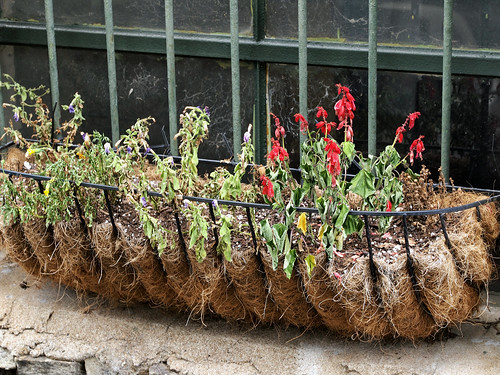
Beer garden parched

We walked out there, down some stairs to a crushed-stone patio, walled in with a high fence and the stone side of a propinquant business. The garden, as it was, comprised a few picnic tables (there was one with an umbrella), one unblooming Crepe Myrtle (strange, as the rest of the city was awash with the trees' glorious blossoms), and a few flower boxes attached to a wall, in which sat a few scraggly specimens. A water hose, lying nearby, was apparently unused.

Then we sat and sat, until we realized that we would not be served. Walking back inside, I saw the two still engaged in conversation, now standing at the opposite end of the bar to one additional customer.

"What beers do you have?" Again a gesture, this time toward a board above and behind the bar, listing several local draught options. "Do you have a printed list? I won't be able to remember all for my friend outside." "No," was the one-word answer.

I made a decision and carried my beers outside. We each drank our beer, and, when finished, returned our empty glasses to the bar, paid our tab (tipped?), and left...into the bright July sunshine, not to return.

*************

Is that all there is?

To us, a beer garden has a mythical ethos, like a German outdoor sibling to the coziness of a British pub. But there, that day, the fable seemed extirpated, the expectation denied. Had we been so wrong? Is a beer garden simply a place for beer drinking minus any trappings except for an outdoor setting?

So, today, we're enlisting the aid of others. Help vivify our myth.

***************

Beer Blogging Friday

Teh Session: Beer Blogging Friday is a monthly event for the beer blogging community, begun in March of 2007 by Stan Hieronymus of Appellation Beer and Jay Brooks of the Brookston Beer Bulletin. On the first Friday of every month, a pre-determined beer blogger hosts The Session, choosing a specific, beer-related topic, inviting all bloggers to write on it, and posting a roundup of all the responses received.

Today, for The Session: Beer Blogging Friday #134, I am that pre-determined (read: volunteered) host. And I've determined that my topic is ... Beer Gardens. Today, I'm asking all beer bloggers to write on beer gardens. If you do, tell me about it by:
**************

A better story

Not a blogger, but an active Twitter-er or Instagrammer? Just tag/hashmark as above. Or a beer writer without a blog? You can participate as well. Here's how.

Once the day is done, I'll post summaries and links in a roundup. But, please, today, tell me a good Beer Garden story, like the one pictured below. At least one better than my sad one.

Lake House in the biergarten

-----more-----

Wednesday, March 14, 2018

What (and where) is a Beer Garden? Announcement for The Session: Beer Blogging Friday #134.

The Session: Beer Blogging Friday is a monthly event for the beer blogging community, begun in March of 2007 by Stan Hieronymus of Appellation Beer and Jay Brooks of the Brookston Beer Bulletin.

On the first Friday of every month, a pre-determined beer blogger hosts The Session, choosing a specific, beer-related topic, inviting all bloggers to write on it, and posting a roundup of all the responses received.


***************
For The Session: Beer Blogging Friday #134, on 6 April 2018, I am that pre-determined host. And I've determined that my topic is ...

Beer Gardens


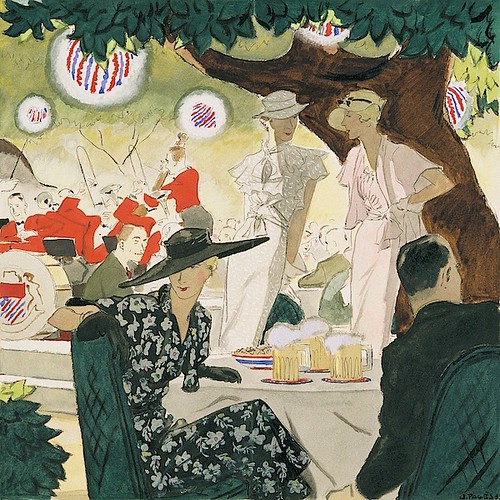
"A Beer Garden" (Jean Pagès, 1933)

What is a beer garden? Or what isn't a beer garden? Or what should a beer garden be? Or where is a beer garden?

Is a beer garden a place of foliage and shrubberies? Or is it a plot of concrete with umbrellas? Is a beer garden an outdoor bar? Or an outdoor Biergarten pavilion with Gemütlichkeit und Bier? Or is a beer garden to be found at a brewery with a hop trellis de rigueur?

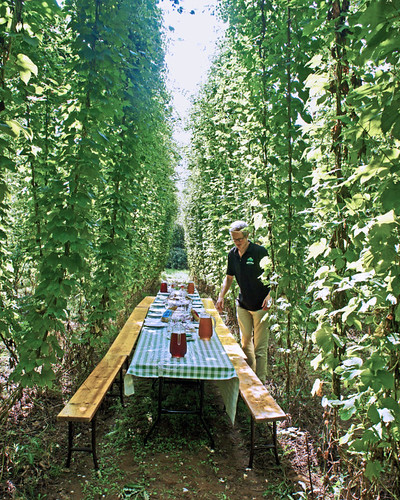
Hop-pickers' lunch

Is a beer garden to be found outdoors, or can it be, alternatively, an interior third place, an arboretum with beer? Is a beer garden a real thing or is it a Platonic ideal, an imagined gueuzic nostalgia? Or is it a place indeed, once or often visited, not Bill Bryson in the woods, but Lew Bryson in a beer garden? If so, where is it? Tell us (with or without Lew).

According to the Beer Bloggers Conference, there are over 1,000 active "Citizen Beer Blogs" in North America, over 500 "Citizen Beer Blogs" throughout the rest of the world, and another couple hundred industry beer blogs. So, jump in folk. Please contribute!

How to play

On Friday, 6 April, post an essay on beer gardens to your blog. Then let me give you credit. Provide a link to the story by:

How to contribute WITHOUT a blog!

A blog itself isn't even necessary to contribute.

  • Compose a 280-character tweet and then link to me and/oror hashtag with #BeerBloggingFriday.
  • On Instagram, post a beer-gardenesque pic and then tag me and/or hashtag with #BeerBloggingFriday.
  • On Facebook, write a comment about beer gardens and tag me (YoursForGoodFermentables) or post a comment at my page.
  • Or, if so inspired, you could write an essay (300-500 words are ideal and 1,200 would be the most you'd want for a blog post, short-attention-span and all that) and send it to me bye the 6th. Use this form.


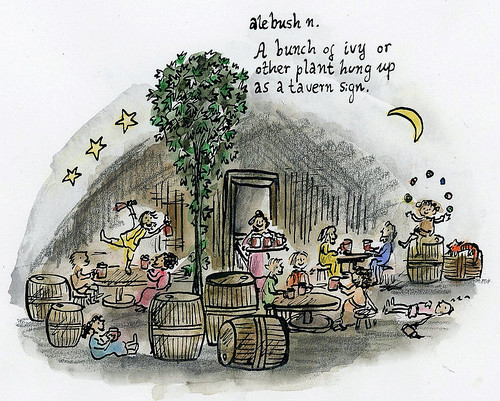
Alebush
On a warm summer evening, I love to watch the light filter through the leaves of the dogwood and viburnum, with a beer in hand salad on the table, listening to the conversation of friends. "Why is it," I wonder, "that food and beer taste so much better together when we're in the beer garden.
Dinner in the Beer Garden, by Lucy Saunders.

The topic is beer gardens: whatever they may be, wherever they may be. And even your backyard, Olmsted-esque or humble, might be a Moon Over Beer garden. On Friday, 6 April, tell the world about it. I'll round up all the contributions, whether they're blogged, emailed, tweeted, or 'grammed.'

Thanking you in advance,
Yours for good fermentables,
Thomas 'Tom' Cizauskas

-----more-----

Thursday, August 03, 2017

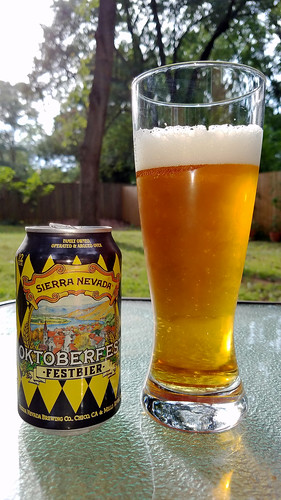
Drinking, again! Sierra Nevada Oktoberfest.

Sierra Nevada Oktoberfest: July (!) 2017.

In Munich, Germany, Oktoberfest will run for eighteen days this year, from 16 September through 3 October. In North Carolina, Sierra Nevada Brewing packaged its Oktoberfest-style lager for this year ... on 7 July 2017. Calendar creep.

Back when I was flogging beer in northern Virginia, the beer-buyer in one particular shop would admonish me in summer: "No mention of Oktoberfest (or pumpkin beer) before 1 August." Sierra Nevada (and others) yearly jump this red line. Way too soon, but way so delicious.

Limpid, light-amber color. Nose of toasted marshmallow and herbs. Sweet, baked-shortbread middle. Drying slug of finishing hops. At 6.1% alcohol-by-volume, on the higher end: festive, indeed. Worth the early taste.

The brewery's website displays a bottle with the name of Germany’s "Brauhaus Miltenberger" emblazoned below the word "Oktoberfest." The beer can does not (with, instead, the word, "Festbier").
This year, we’re collaborating with Germany’s Brauhaus Miltenberger, whose approach to the classic style we’ve long admired. The result is a festival beer true to their style—deep golden in color with deceptively rich malt flavor and balanced by traditional German-grown whole-cone hops.
  • 6.1% alcohol-by-volume (abv)
  • 30 IBUs (international bittering units)
  • Bittering hops: German Magnum
  • Finishing hops: German Select, Tettnanger, Spalter
  • Malts: Two-row Pale, Steffi, Pilsner, Munich
Despite a resurgence of lagers among small American 'craft' breweries, it still appears difficult for many of them —if for technical and brewing-philosophical reasons— to produce elegant lagers such as festbiers.

For example, one datum. In 2016, I purchased a locally-brewed Oktoberfest-style lager, a mere three days after the brewery had canned it. It tasted like a Belgian sour beer gone bad, like a melon left out too long. A (very) small sample size, yes, but twelve-dollars was wasted. Rarely is that a problem with Sierra Nevada.

Even with modern refrigeration and technology, there is at least one beer style that remains naturally dependent on the calendar. And so, I wait for autumn-harvest beers brewed with picked-that-day, uncured, hops. I anticipate the fresh-hopped beers of September and October.

A series of occasional reviews of beer (and wine and spirits).
No scores; only descriptions.

-----more-----

Wednesday, March 08, 2017

Bock lucky

According to The Oxford Companion to Beer:

Bock is a traditional strong, malty Bavarian lager [with] a typical alcohol content beyond 6.5% ABV. [...] Many —but not all— bock beers tend to be full-bodied to slightly sweet and malty with a floral or fruity note. They are generally not hop-driven beers, and bitterness is kept to a moderate level.

Dopplebock is a strong beer with [...] typical alcohol content beyond 7% ABV. [...] Doppelbocks are usually reddish-brown bottom-fermented lagers, and generally show a toffee-like, bready aroma and rich malty palate with notable residual sweetness.

Maibock, although brewed to bock strength —with about 6% to 7% alcohol by volume and a substantial body— is light amber to deep golden in color. This sets it apart from the darker winter bocks, hence its other name, heller bock (pale bock). [...] Compared with the winter bocks, maibocks also tend to have slightly more hop bitterness and hop flavor from noble Bavarian hop varieties.

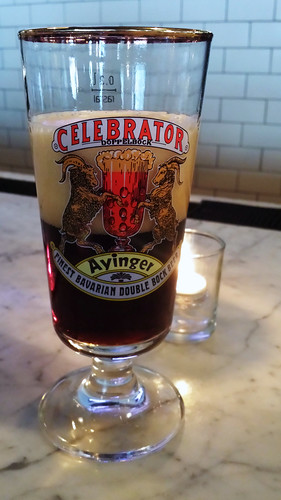
In late winter and early spring, I look for bock beers. If I'm fortunate, I'll find them in local pubs, such as this bock, brewed in Germany at Ayinger Privatbrauerei, which I found served on draught in Virginia. I call Celebrator a favorite; it's often called a doppelbock.

Ayinger Celebrator, on draft

In late spring, I've enjoyed paler, almost golden bocks, sometimes called hellerbocks or maibocks, such as this one I enjoyed, post-spring, in mid-summer, in Wisconsin, in the Bier Garten of the Capital Brewery.

A Capital maibock

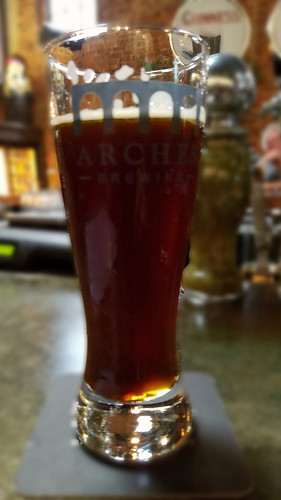
Only a few weeks ago, in winter, I drank this bock, made in Georgia, served on draught at a pub in Georgia.

Dark Maibock?

The pub called it a maibock. The Georgia brewery that brewed it —Arches Brewing Company— did not:
MYSTIK BOCK - 7.5% (MARCH-MAY)
This traditional German lager originated in the 14th-century and was lagered in caves through Winter to be consumed to celebrate the coming of Spring. The strong, sweet malt character is the hallmark of the style, complemented by a deep amber color. The malt character is balanced by a slight hop bitterness that allows the toasted grain and caramel flavors to shine through.

In my prior neck of the woods, bocks —both imported and locally-brewed— were not absent from taps and shelves.

In my newer, southern, neck of the woods, however, they are rare. Possibly, it's the climate.

Here (and not just limited to here), the emphasis is on hops and sours; bocks of malt character are not au courant. That's unfortunate. Malt is beer's irreducible soul. Tasting good should always be fashionable.

On that night a couple of weeks ago, that mis-ID'd bock was a caramelly, toasty, (slightly) concord-grapey, and reddish-brown bock. And it was tasty. Count me bock lucky.

*****************
Session 121: Bock! Beer Blogging Friday: The Session is a monthly event for the beer blogging community, begun in March of 2007 by Stan Hieronymus of Appellation Beer and Jay Brooks of the Brookston Beer Bulletin.

On the first Friday of every month, a pre-determined beer blogger hosts The Session, choosing a specific, beer-related topic, inviting all bloggers to write on it, and posting a roundup of all the responses received.


For The Session: Beer Blogging Friday #121, Jon Abernathy — blogger at The Brew Site— is the host. His theme is one word, with emphasis: "Bock!"
The month of March heralds the start of spring, and March 20 is even National Bock Beer Day. So Bockbiers seemed like a natural fit for the month! Don’t feel constrained to simply write a review of a Bock beer, though I’m certainly interested to read any reviews that come it. Some other ideas to consider:
  • Dig into the history of the style—their ties to Einbeck, the differences in the development of Bocks and Doppelbocks, and so on.
  • Do any of your local breweries brew a Bock-styled beer? Seek it out and write about it.
  • Alternatively, interview your local brewer who brewed that beer; get their take on the style and why/how they brewed it the way they did.
  • Have you ever attended Bockfest in Cincinnati, Ohio? It just so happens to take place the first weekend of March—write a review for The Session!
  • There are already the styles of traditional Bock, Doppelbock, Maibock, Eisbock, Weizenbock (and Helles Bock and Dunkles Bock in the BJCP) guidelines. Just for fun, invent a new style of Bock and describe it.
  • Have you homebrewed a Bock or similar style? Tell us about it, and anything you learned brewing this lager style at home.
  • Bock puns!
-----more-----

Friday, August 05, 2016

Pilsner as beer's Mozart

Session 114: Pilsners! Beer Blogging Friday: The Session is a monthly event for the beer blogging community, begun in March of 2007 by Stan Hieronymus of Appellation Beer and Jay Brooks of the Brookston Beer Bulletin.

On the first Friday of every month, a pre-determined beer blogger hosts The Session, choosing a specific, beer-related topic, inviting all bloggers to write on it, and posting a roundup of all the responses received.


For The Session: Beer Blogging Friday #114, Alistair Reece, aka Velky Ale — blogger at Fuggled— is the host. His theme is one word, with emphasis: "Pilsners!"

What I want folks to do is put down their IPAs, their Belgians, their sours, their barrel aged stuff, and hunt out a few pilsners to compare and contrast, whether they be Czech, German, Belgian, American, etc, etc. Try to get examples of Czech and German in particular to see the differences. Most of all though I just want people to re-discover what I consider the pinnacle of the brewing craft, so off hunting you go!


****************

Pilsner as beer's Mozart

In 2013, a columnist for the Washington Post wrote these seven dirty words:
Pilseners tend to be simple, straightforward beers.

In retort, I wrote these two-hundred eleven righteous words.
No, no, no, and no!

At best, the statement is dismissive praise, like saying that Mozart's String Quartet No. 19 —the Dissonance Quartet— is 'simple' music because the notes have been written down.

At worst, his comment finds common cause with the major brewing companies in doing harm to their distant legacies of Czech and German lagers —and SAB/Miller Brewing, in particular, with its apostasy "true Pilsner" campaign: if we repeat something enough, it will be believed to be true.

I'm going to avoid quoting formalistic delineations of OG/ABV/IBU and other alphabetic parameters. But I know a pilsner when I taste one: firm, slightly sweet, deep golden-hued malt; spicy, floral hops; crisp character, with a whiff of yeasty sulfur; gentle enough alcohol at about 5% to allow another sip, yet strong enough to make a statement; a long, dry, dare I say, bitter finish. And, above all, a clear, joyful declaration of the four ingredients of beer —malt, hops, yeast, and water— unencumbered by ale's zig-zag riot of dank hop, fruited yeast, and, nowadays, back-of-the-cupboard oddities.

Bob Tupper —the past host of renowned beer tastings at Washington D.C.'s Brickskeller— is fond of a music analogy for beer.
Ales are like jazz quartets. Each member goes his own way, but all finish together.

Lagers are like string quartets. Hops, malt, water, and yeast play together in seamless performance.

I would add to that: pilsners (lagers) are like Mozart string quartets.

Jazz as an analogy predates Millenials, Gen X-ers, and even many baby boomers. If that's the rub, substitute your musical experience and you'll (hopefully) get to the nub.

Pilsner for Beer Blogger Friday

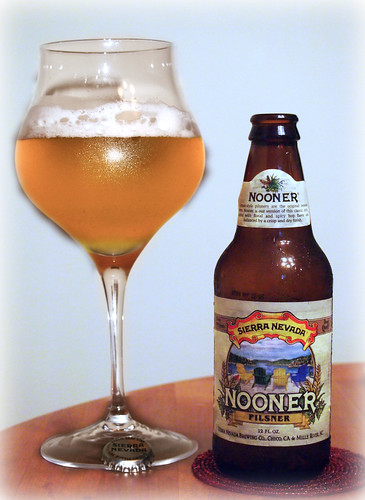
California's (and now also North Carolina's) Sierra Nevada Brewing —well-known for its American 'craft' beer iconic Pale Ale— also brews lagers. One, its Nooner Pilsner, it describes like this:
German-style pilsners are the original session beers. Nooner is our version of this classic style, loaded with floral and spicy whole-cone hop flavor and balanced by a crisp and dry finish.
  • Yeast: Lager yeast.
  • Bittering hops: German Perle.
  • Finishing hops: Saphir, Tettnanger, Strisselspalt.
  • Malts: Two-row Pale, Pilsner, Munich, Acidulated.
  • Alcohol-by-volume (abv): 5.2%.
  • International Bittering Units (IBUs): 32.
Get past the silly name, the less-than-expected clarity, and the higher-than-'session' alcohol level. What one is left with is a lovely beer: scents of a meadow field (not barnyard muck!), shortbread cookie malt in the background, candied lemon, and an ever-so-slightly sour-sweet finish. An American pilsner.*

It's a fascinating juxtaposition that today's The Session on pilsners follows on the heels of yesterday's #IPADay. Or maybe not.

This month's host of The Session, Alistair Reece, is a beer polyglot: an advocate for Czech lagers, American mild ales, British/Scottish real ales, and an imbiber of American 'craft' ales. Maybe, more 'craft'-ers should be so.

In coda, I wrote:
No disrespect is meant to the world of ales. But if one fancies her or himself a beer lover, and 'simply' dismisses lagers out-of-hand, she or he leaves undiscovered an entire hemisphere of delicious choices.


-----more-----

Thursday, May 19, 2016

Eight facets of beer.

The Session: Beer Blogging Friday is a monthly blog-in, held on the first Friday of each month, in which beer bloggers write on a given beer-related topic. The topic on 6 May was "Surviving a Beer Mid-Life Crisis." At his blog, Literature & Libation, Oliver Gray, May's host, asked:

Recently, I’ve found my interest in said hobby waning. The brilliant luster of new beers and new breweries looks now, a few pounds heavier and a bunch of dollars lighter, more like dull aluminum oxide. Do you find it hard to muster the same zeal for beer as you did a few years ago? Are you suffering through a beer-life crisis like I am? If so, how do you deal with it?


I answered his question with a contribution entitled, "Enjoy the beer; forget the hype." But it was something I had written as an aside, weeks before The Session —as a comment at another beer blog— in which I may have better drilled down to the lode.

Call it the seven ur-facets of beer.
There’s beer as a business; beer as tax revenue; beer as science and technology; beer as one (small) study point in history; beer as an alcohol delivery system; beer as a diverting avocation. Each except the last is specific to a limited concern. A loss of interest in the last calls for a new hobby. There’s little semiotic about it.

I had forgotten that I had written that until Mr. Gray kindly reminded me. In his summary of the sixteen submissions to The Session, he found that almost all the contributors had written, independently, on an identical monad: "Embrace the mania."

Mania, indeed! Let's call pleasure the eighth ur-facet of beer. Then, let's go grab a beer.

Weizen al fresco

-----more-----

Friday, May 06, 2016

Enjoy the beer; forget the hype. (The Session: Beer Blogging Friday)

Session 111: Surviving a Beer Midlife Crisis The Session is a monthly event for the beer blogging community, begun in March of 2007 by Stan Hieronymus of Appellation Beer and Jay Brooks of the Brookston Beer Bulletin.

On the first Friday of every month, a pre-determined beer blogger hosts The Session: Beer Blogging Friday. He or she chooses a specific, beer-related topic, invites all bloggers to write on it, and posts a roundup of all the responses received. For more information, or to ask to host, go to the home page.


For The Session: Beer Blogging Friday #111, Oliver Gray —of Literature & Libation— is the host. His theme for bloggers: "Surviving a Beer Midlife Crisis." Elucidating, he wrote this:

I don’t work in the beer industry. OK, yes, sometimes I get paid to write about beer, but that money does not my livelihood make. Despite pouring myself into brewing and beer culture for the last 6 years, I remain little more than an overly involved consumer. [...]

Recently, I’ve found my interest in said hobby waning. The brilliant luster of new beers and new breweries looks now, a few pounds heavier and a bunch of dollars lighter, more like dull aluminum oxide.

The thing I have embraced so fully and spent so much time getting to know and love, suddenly seems generally, unequivocally: meh. It’s like I’ve been living a lie, and everything I’ve done is for not. I’m having a beer mid-life crisis, yo.

Maybe it’s the politics of purchasing or selling. Maybe the subculture has peaked. Maybe this is the natural progression of a hobby that has no real tie to the industry behind it. [...]

Do you find it hard to muster the same zeal for beer as you did a few years ago? Are you suffering through a beer-life crisis like I am? If so, how do you deal with it?

****************
Years before the term 'craft' became a 'thing,' in the early days of microbrewing, the New Yorker printed a cartoon of a gentleman, on an airliner, requesting a "microbrew." The flight attendant (who may have been called stewardess or steward back then) returned with a tiny 1.7-ounce micro-bottle of beer, just like a booze miniature. Funny.

Maybe I only imagined this and the New Yorker never actually did publish this cartoon, and I believed that they should have.

Many things have changed since then. The best change is what I call the "main-streeting of good beer." Quoting myself:
Where and when good beer had been seldom seen anywhere, we would work toward taking it everywhere —not simply skulking in subterranean beer-geek grottos or pontificating in haughty beer Xanadus— but by bringing it everywhere, to every corner shop and every pub, to every suburban chain-store restaurant and every urban white-tablecloth foodie haven, to shopping malls and 7-11s, to big-box stores and to independent wine and beer shops. We're not quite there yet, but the times, they are a' changing.

Unlike Mr. Gray, I do work in the beer industry, and have for a quarter-century. And I enjoy beer. Quoting myself again,
I have a love affair with beer: not simply its flavors —as delicious, complex, and varied as they may be— but with its history, science, lore, business, and evolving creation.

I would say to Mr. Gray, and others with 'craft' beer ennui: forget about the 'craft' revolution.

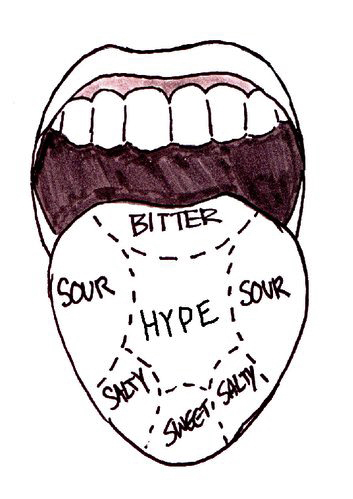
Tongue flavor receptors?

Forget about the solipsistic "I am a craft-brewer" rants. Forget about the superciliousness of the mushrooming beer-expert class. Forget about the [U.S.] Brewers Association's tortuous, moving-goalpost definition of a 'craft' brewery (which curiously omits a definition of 'craft' beer). Forget about badly brewed beers. Forget about badly served beers, and stale beers on store shelves. Forget about 'craft' mergers and acquisitions, and hypocrisy and fevered screeds.

Forget about 'craft.'

Instead, I'd say to Mr. Gray and others suffering from a mid-life beer crisis to meditate on the joyful pleasure implied by the simple phrase: "Let's go grab a beer."

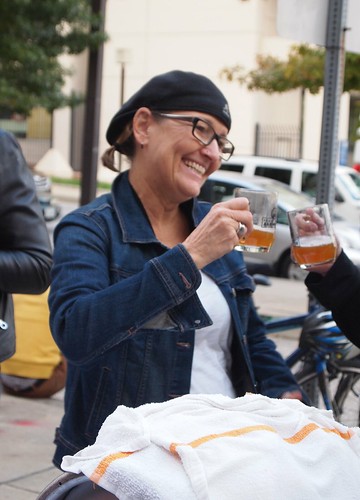
Real ale smilin'

And then to do this. Find a good beer. Enjoy the beer. Forget the hype.

Every lunchtime he would walk all the way across St Albans, passing a dozen or pubs or more, to the one house in the city that sold the Bedford bitter.

His performance never varied.

As he entered the public bar he would raise his finger and Ken the landlord would reach for a pint glass and fill it as David walked to the counter.

He never rushed.

He looked at the pint for a moment or two, waiting for the beer to settle and the head to form. Then he would reach for the glass and fleetingly hold it up to the light, savouring the crystal clarity and tawny colour of the beer.

Then, and only then, would he put the glass to his lips and despatch a good third of its contents. A great explosion of pleasure, a long orgasmic 'Aaaagh!', accompanied the return of the glass to the bar.

David would suck the foam from his moustache and then say to the bar and to the world in general all that needed to be said on the subject of the quality, the pleasure, the unalloyed brilliance of his beer.

"Not bad, that."
—Roger Protz. The Great British Beer Book. 1992.

-----more-----
  • Twitter-er WeirdB created the tongue-in-cheek drawing of the tongue flavor receptors.
  • I've apparently re-quoted myself quoting Roger Protz, and from a prior Beer Blogging Friday. In the May 2014 The Session #85: Why do I drink?, I used the identical quotation from The Great British Beer Book. On that occasion, I observed:
    Why do I drink? I drink beer because I like how it tastes; I like how it makes me feel. Gustation and psychotropics. Pleasure. That, just that, is why I drink beer. All else is froth. I'll have another, please.

  • For more from YFGF:

Friday, March 04, 2016

In Praise of Porter. (The Session: Beer Blogging Friday.)

Session 109: Porter The Session is a monthly event for the beer blogging community, begun in March of 2007 by Stan Hieronymus of Appellation Beer and Jay Brooks of the Brookston Beer Bulletin.

On the first Friday of every month, a pre-determined beer blogger hosts The Session: Beer Blogging Friday. He or she chooses a specific, beer-related topic, invites all bloggers to write on it, and posts a roundup of all the responses received. For more information, or to ask to host, go to the home page.


For The Session: Beer Blogging Friday #109, Mark Lindner —of By the Barrel: The Bend Beer Librarian— is the host.

For The Session 109—my first as host—I would like us to discuss porter. It seems that this highly variable style has not been done in The Session before.

“The history of porter and the men who made it is fascinating, for it deals with the part that beer has played in the development of Western Culture. Conversely, of course, much of porter’s growth was the result of profound changes in the nature of British society. It is also a microcosm of how our industries have developed; events in porter’s history explain the structure of the modern brewing industry, not only in Britain, but in the other major Western countries.

Porter is intimately tied in with the Industrial Revolution, in which Britain led the world. Through the growth it enabled the brewers to achieve, it was instrumental in the development and technological application of a number of important scientific advances.” (Foster, Terry. Porter. Brewers Publications. P. 17).

I am not talking about your long dead relative’s porter—although you might be—but about all of the variations currently and previously available. Hey, feel free to write about the porter of the future or some as-yet-unrecognized sub-style of porter.

I am not a librarian, and none of my long-departed relatives ever owned breweries (that I know of). But I believe that the history of our heritage —whether beer or otherwise— can show us our common roots and point to our common (or uncommon) futures. Beer as liquid history? To repeat, yet again, this trope: well, yes.

As to porter substyles, I believe there is porterPlatonic or 'I can't define it but I know it when I taste it'— and then there are other things, infused with kitchen-sink ephemera. Give 'em a great name, like Double Imperial Coconut Killer ale, but, please, be honest and respectful: not porter. Modifiers heaped upon modifiers yield differences of kind not degree.

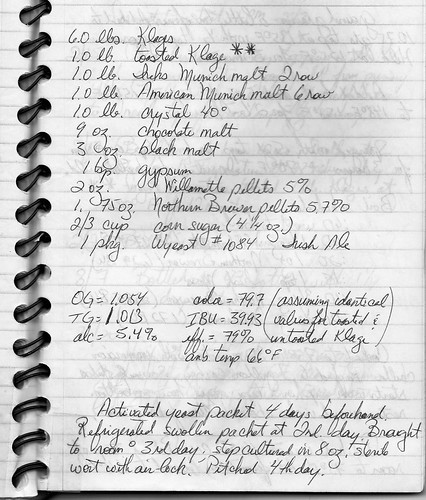
I began brewing at home in the late 1980s. Porter was my go-to brew. In 1992, I trepidatiously entered an enth-generation batch in the Spirit of Free Beer, a contest organized by B.U.R.P.Brewers United for Real Potables— a Washington, D.C.-area home brew club.

1992 Porter (01)

The recipe was not complex —especially as contrasted with today's so-called 'extreme' beers of high alcoholic strength and exotic procedures— but, at 5.5% alcohol by volume, it was flavorful enough to garner a silver medal.

I went on to brew professionally, but porter would remain insinuated in my soul. That bakers chocolate nose; whiff of dark fruit and pine cone; chocolate-malted body; more-ish but not boozy; that brisk slap of a finish.

At the risk of sounding elegiac: is porter dying in the U.S.? I find it harder and harder to find examples on tap or in bottle. If so, that would be a shame: a neglect of tradition and a loss of a delicious thing.

But, then, when I can still drink something sublime like this, I smile, mollified.

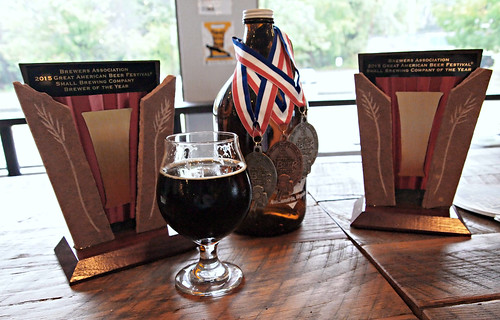
Port City is the American Small Brewery of the Year, 2015.
Porter from Port City Brewing (of Alexandria, Virginia) won Silver Medal at 2015 Great American Beer Festival, at which the brewery took top honors as Small Brewery of Year.

-----more-----

Friday, January 01, 2016

Beer is joy juice. (The Session: Beer Blogging Friday.)

Session 107: Holiday Beers The Session is a monthly event for the beer blogging community, begun in March of 2007 by Stan Hieronymus of Appellation Beer and Jay Brooks of the Brookston Beer Bulletin.

On the first Friday of every month, a pre-determined beer blogger hosts The Session: Beer Blogging Friday. He or she chooses a specific, beer-related topic, invites all bloggers to write on it, and posts a roundup of all the responses received. For more information, or to ask to host, go to the home page.


For the first The Session: Beer Blogging Friday of 2016, Dan Conley of Community Beer Works, a nanobrewery in Buffalo, New York, was the host. He asked this:

The topic I want you all to write about: “Are breweries your friends?” To be in business nowadays you pretty much have to have a social media presence. This is especially true in the beer world, where some breweries have basically built themselves on their personality. And yet, at the end of the day, we’re also selling you something. I believe this is the first Session to be hosted by a brewery rather than beer blogger. How do you feel about that? Do you want your feeds clear of businesses, or do you like when a brewery engages with people? Can you think of anyone who does it particularly well, or poorly?

To which beer writer Alan McLeod at A Good Beer Blog responded:
What an excellent set of questions. They ask us to look in the mirror a bit and think about how beer affects relationships but they also ask us to consider the meaning of friendship. I am a lucky guy. I have friends. Friends are people who you have known a long time, have been with you through good times and bad, folk who you can rely on without any thought of doing something in return. When they let you down the relationship is not undermined. Friends are rare.

And then Mr. McLeod wrote this:
See, beer is joy juice. Makes you happy. Makes you think you are a better dancer, that your joke is funnier than it is. Makes you set aside the rules once in a while. I once knew a couple that only seemed to get along when drinking. The solvent, as I quipped, was the bond. Like any thought altering drug, alcohol can make you think you are engaged in a friendship when you really aren't. "Good times, good friends, great beer" is the promise. How much more the risk when the beer is free and the friend is the brewer? Careful relationship management is required to walk safely though that potential minefield.

To which he perorated:
Are brewers my friends because I follow them on social media? Not a chance. They are not even my acquaintances. Doesn't mean they are not worth respect and attention. But in this business, that's just business. Friends are rare. Worth more than just respect and attention.

What is the nature of friendship? What is the purpose of beer drinking? What are beer goggles? What are professional ethics?

Mr. McLeod has plumbed those in a mere eleven paragraphs. Which is why I've simply quoted the pith of his essay for January 2016's The Session: Beer Blogging Friday, rather than contributing myself.

Beer is joy juice, Mr. McLeod says. With more of that, may the goddess bless us all in 2016, every one.

-----more-----
Friday, December 04, 2015

The Session: Beer Blogging Friday #106. Holiday Beers.

Session 106: Holiday Beers The Session is a monthly event for the beer blogging community, begun in March of 2007 by Stan Hieronymus of Appellation Beer and Jay Brooks of the Brookston Beer Bulletin.

On the first Friday of every month, a pre-determined beer blogger hosts The Session: Beer Blogging Friday. He or she chooses a specific, beer-related topic, invites all bloggers to write on it, and posts a roundup of all the responses received. For more information, or to ask to host, go to the home page.


For December 2015's The Session: Beer Blogging Friday (the 106th edition), Jay Brooks himself is the host. He has asked us to

write about whatever makes you happy, so long as it involves holiday beers.
  • Discuss your favorite holiday beer.
  • Review one or more holiday beers.
  • Do you like the idea of seasonal beers, or loathe them?
  • What’s your idea of the perfect holiday beer?
  • Do have a holiday tradition with beer?
  • Are holiday beers released too early, or when should they be released?
  • Do you like holiday beer festivals?
For seasonal beers, the Solstice/Christmas/Hanukkah/Kwanza/Mithra time of the year is my mostest favorite. Holiday beers are by design no one style, but are a chance for individual breweries to let their talent and imagination run wild. At the holidays, when people stop their busy lives and share some precious time with family and friends, the beer they choose should be equally as special as the time they’re sharing. So a holiday beer should be made to impress, to wow its audience, to stand out. That’s the only criteria that should be met by one of these beers.

Nothing profound from me today. (War on Christmas? Bah! Humbug!) Just a beer that 'makes me happy.' Thanks, Jay! I like that as an essential parameter of any 'winter holiday' beer-style.

**************
'Nöelco' Santa

As a kid in the late 1960s, first seeing this television ad each year — a Norelco Santa schussing down foam snow hills on an electric razor— would announce the onset of the Christmas season for me. It should have been Mass and Advent wreaths, but, you know: Christmas and gifts. (But, please. No razors, or socks, for me.)

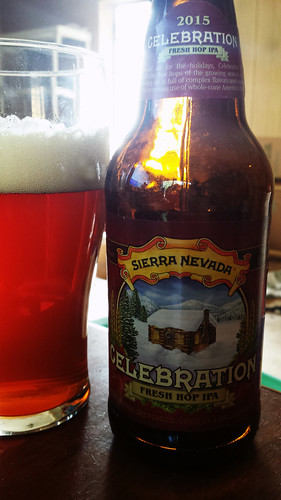
Post kidhood, the appearance of Sierra Nevada Brewing's Celebration Ale on store shelves has become a winter-season doorbell. (Still no razor, or socks, for me, please.) It remains so now, even though its appearance around Columbus Day is a bit too soon for me; I try to resist the urge to pop one open until Thanksgiving or so.

Celebration Ale 2015

Celebration Ale tastes pretty much the delicious same as it ever was (first brewed by the Chico, California, pioneering 'craft' brewery, in 1983), although the phrase "Fresh hop IPA" made it onto the label a few years ago. Christmas-tree-lights red; bright citrusy and piney hops chased by a Christmas sugar-cookie middle; some light caramel; long-lasting, white-peppery finish; warming but stay-standing-up 6.8% alcohol-by-volume.

Not laced with nostalgia for me, but of a more recent anticipatory vintage, is Jubelale, as Oregon brewery Deschutes conceives of a 'winter' warmer.' At 7.5% alcohol-by-volume, it's a darkish non-sticky figgy pudding (poured under a Christmas pine tree).

There's frost on the car this morning. It's beginning to feel a lot like Christmas. Later today, it'll be beginning to taste a lot like Christmas.


-----more-----

Friday, October 02, 2015

Beer blogging: beating that drum to the emptiness of the universe.

Session 104: Quick! Write... And Make It Good!! The Session is a monthly event for the beer blogging community, begun in March of 2007 by Stan Hieronymus of Appellation Beer and Jay Brooks of the Brookston Beer Bulletin.

On the first Friday of every month, a pre-determined beer blogger hosts The Session: Beer Blogging Friday. He or she chooses a specific, beer-related topic, invites all bloggers to write on it, and posts a roundup of all the responses received. For more information, view the archive page.


When no potential host stepped forward to host October's edition, the 104th, The Session's co-creator, Jay Brooks, seemed to suffer an existential pang of doubt:

Way back in early 2007, Stan Hieronymus had an idea, one he’d borrowed from the wine bloggers, who at the time were further along in both numbers and longevity. That idea was Beer Blogging Friday, the monthly Session that takes place on the first Friday of each month. The plan was simple. Beer bloggers from around the world would get together and write from their own unique perspective on a single topic each month, on the first Friday.

Lately, however, it’s been hard finding hosts and fewer and fewer people have been stepping up. For the last year or so, we’ve limped along, and we’ve been able to keep going only by the skin of our teeth. There have been more than a few months when someone stepped up just in the nick of time and offered to host. Should we keep the monthly Session going, or put it out to pasture, and declare it past its prime and no longer of any enduring interest? Certainly beer blogging has changed in the eight years since we started the Session. When I asked Stan [Hieronymous, beer blogger, writer, and co-founder of The Session] yesterday — since it’s really his baby — he wondered if we should “take the philosophical approach, that the Session has run its course,” noting that “it lasted longer than the similar wine project” that inspired it.

To the rescue came Alan McLeod —beer writer and author of blog A Good Beer Blog.
I was going to tell you to write anything you feel like whether it makes any sense or not... but then I realized that's what you do anyway. Especially you. Yes, you!! So you are going to write about this: if we just "take the philosophical approach, that the Session has run its course” aren't we really admitting that beer blogging is a massive failure? I say no. I say this is a fabulous way to cover up problem drinking with anti-social internet addictions. Maybe you know of another reason we should keep writing and try to make some sense of the beer and brewing world. Well, goodie for you. Write about it. Explain yourself. Because if you can't you are really admitting (i) you've wasted the best part of the last decade or (ii) you live in a fantasy world where think you are a beer writer and not a beer blogger and that's soooooo much more important.


*****************
Alan, you've asked:
If we just "take the philosophical approach, that the Session has run its course” aren't we really admitting that beer blogging is a massive failure?

Well, in three words: I think not. In more words: you're foisting a false dilemma upon us. Or a claim to beer-blogging exceptionalism.

As I write this, Hurricane Joachin is bearing down on me —or maybe it isn't.
The weather Sunday and Monday remains highly uncertain with heavy rain…strong gusty winds…tidal flooding and erosion remaining a concern…though it could just turn out to be a partly sunny and breezy day.
—The National Weather Service

That's a C.Y.A. hoot.

To be well-prepared —for either contingency: emergency or autumn life as normal— I stocked the larder with an ample supply of batteries, pet food, toilet paper, and bottled aqueous extract of hordeum vulgare —that last item fortified psychotropicly by my friendly neighborhood brewer— minus extranea.

Before doing that, I posted a not-in-any-way-storm-related Facebook rant against corn syrup, modified corn starch, tetrasodium pyrophosphate, artificial flavor, and artificial color (aka marshmallows) as having any place in 'kraft' beer. Smores extranea. As a reward, I was quite wonderfully 'trolled':
No one cares. But keep beating that drum to the emptiness of the universe.

And that's a hoot I'll accept as a challenge. Why not?

I'll continue banging that good-beer drum into the void, confident that, somewhere, good-beer SETI will hear me. But better with the companionship of The Session: Beer Blogging Friday.


-----more-----
  • The troller equated actual significance with virtual Facebook 'likes.' That's an unsettling view of validation, a commentary for another day.

  • For more from YFGF:

Friday, January 02, 2015

We need a book on cask-conditioned ale in America. Please!

The Session #95 - What beer book which has yet to be written would you like to see published? The Session is a monthly event for the beer blogging community, begun in March of 2007 by Stan Hieronymus of Appellation Beer and Jay Brooks of the Brookston Beer Bulletin.

On the first Friday of every month, a pre-determined beer blogger hosts The Session: Beer Blogging Friday. He or she chooses a specific, beer-related topic, invites all bloggers to write on it, and posts a roundup of all the responses received. For more information, view the archive page.


Alan McLeod —at the blog A Good Beer Blog— became the emergency host of the 95th iteration of The Session, when the original host went missing-in-action.

For January 2015, his topic is "What beer book which has yet to be written would you like to see published?"

I co-authored three books which were published in 2014 and now know what a mug's game it is. In fact, there was very positive talk of another at a more advanced level. But it was not a piece of work that was within the reach of the budget if a proper job was to be done. Travel and hotel costs to allow for research. Time away from work. We wanted to do the complete thing. No rush around the world or the internets for a skipping stone study would do. So it wasn't done. It may yet be but at this point it's on the back burner. Now that I know this I realize that resources may well stand between many a good author and many many more good readers. Does good beer suffer overall because of it? I have no doubt that it does.

So... on January 2, 2015, let the fates know that you know of their cruelty. What is the book you would want to write about good beer? What book would you want to read? Is there a dream team of authors you would want to see gathered to make that "World Encyclopedia of Beer and Brewing"? Or is there one person you would like to see on a life long generous pension to assure that the volumes flow from his or her pen?


***************
Jason Oliver is the heavily-medalled brewmaster for Devils Backbone, a brewery and brewpub in central Virginia, which, although flagshipped with a Vienna lager, is multi-modal, known for ales and lagers. A decade earlier, Mr. Oliver had been the executive brewer for the mid-Atlantic group of Gordon-Biersch brewpubs, a chain heavily Teutonic, where lagers predominate.

Thus, I give great credit to Mr. Oliver, who, when he was still with Gordon-Biersch, uttered this pearl of wisdom, not about lagers, but about ales. Cask ales. To an assemblage gathered at a beer tasting at RFD, a good beer pub in downtown Washington, D.C.
You put beer in a cask: that's beer in a cask. Anyone can do that. You condition ale in a cask: that's cask-conditioned ale. There's a big difference.

That is an understanding so simple, yet so profound. So why is it, a decade later, one sees and tastes so many cask ales whose construction shows only ignorance or churlish whimsy?

Cask-conditioned ale is fresh beer, tasting as beer straight from a fermenter: bursting with flavor not dulled by time, temperature, or travel. But such a pure ale-as-art has become harder to find in America. Indeed, it is easier to find beers tossed in casks by brewers with no consideration of appropriateness or skill, than it is to find beer whose freshness is sine qua non. No, to these brewers, a cask is merely a thing in which to toss a beer for sport, a pot in which to toss extraneous, irrelevant ingredients. And, unfortunately, more and more drinkers are coming to think the same, as well.

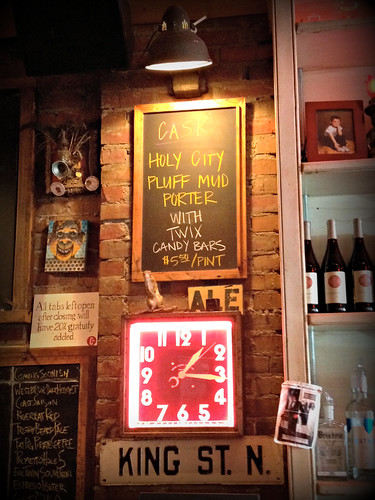
Exhibit one. This apostasy actually masqueraded as a 'craft' cask-conditioned ale.

Twix-conditioned cask

Twix bars? That is what they're putting in a cask and calling it 'craft'? Did those brewers even know what was in a Twix bar?
Milk Chocolate (Sugar, Cocoa Butter, Milk Ingredients, Cocoa Mass, Lactose, Soy Lecithin, Polyglycerol Polyricinoleate, Artificial Flavor), Enriched Flour (Flour, Niacin, Reduced Iron, Thiamine Mononitrate, Riboflavin, Folic Acid), Sugar, Hydrolyzed Palm and Palm Kernel Oil, Corn Syrup, Milk Ingredients, Dextrose, Salt, Cocoa Mass, Sodium Bicarbonate, Soy Lecithin, Soybean Oil, Artificial Flavor.

Cask-conditioned ale is not a sponge from which to squeeze out Twix, or thiamine mononitrate, or cocoa-puffs and dingleberries*, or whatever else might catch a brewer's fancy, with no forethought except for, "hey, what the fuck?"

And mind this. Not all beers taste better at the lower carbonation level or warmer temperature of good cask-conditioned ale. A cask saison? Why? Give me a bottle or draft.

Cask-conditioned ale is a skill; it's an art; it's the beauty of a beer at its freshest. It's unfiltered beer, brewed from traditional ingredients, that has undergone a final fermentation WITHIN a cask, and then served from that cask, at cellar temperature (52-54 °F, or so), without extraneous gas pressure, either pumped from the cask by hand, or by simply opening a tap which has been hammered into a bung. Think of a cask as a fermenter (albeit a small one) containing active, still fermenting, beer.

Exhibit two. Don't get me started on those (oh, too many) pubs that toss a cask on the bar, tap it with a —WOW— huge explosion of beer, and think that the resulting sludgy, now de-carbonated mess, is good beer.

Cask pour? You must be joking.

Recently, after I had explained the cask-conditioning process to a newbie publican, he replied, "Why, that's easy." Why, yes, I agreed, it is simple, a truism that makes the presentation of so much bad beer, served in the name of cask-conditioned ale, all the more perplexing and distressing. Why can't others have this easy perspicacity?

Cask-conditioning is a continuum from brewer to cellarman to deliveryman to publican. Be lazy at any part of that chain, and the ale is not cask-CONDITIONED. It's crap.

This rant concerns 'craft' cask in America. The British, from whom we learned it, 'do' cask-conditioned well. And, yes, there are many conscientious brewers and publicans in the United States who have learned their lessons well, who understand the process. But, for the most part, cask-conditioned ale in America has jumped the Twix bar. It's become a bad joke.

Thus, it's due time. It's past time. We need a book, a primer, on cask-conditioned ale. Ask for it; plead for it; hope for it. So that our brewers can learn what an amazing thing cask-conditioned ale is and how to make it, and that our drinkers will understand what it is, and thus come to demand the same of their brewers.

Please.

-----more-----