Showing posts with label beer book. Show all posts

Sunday, February 02, 2020

Beer-Cheese Dip

Beer-Cheese Dip

There's something to celebrate — beer isn't just "beer' anymore; it; a delightful beverage to share with family and friends who appreciate quality ingredients in cooking and a new experience in American cuisine. There is nothing "common" about beer anymore.

Written in 1989 by Jack Erickson, Great Cooking! With Beer is a snapshot of American beer 'culture' in the 1980s, when 'craft' beers were called "microbrews" and beer 'culture' was a nascent thing to be coddled. 1 Of course, it was also a cookbook: a useful beginning point for learning about beer IN food. And it remains so today (though sadly out-of-print).2

Mr. Erickson lived in the northern Virginia area through the early 1990s, where he evangelized on the goodness of the new-fangled microbrews. I met him there on a few occasions. I never gathered up the nerve to make his recipe for "Beer Syrup" for pancakes (for which he admonished me), but I have prepared (and enjoyed) other of his recipes, including Beer-Cheese Dip.

Today, the Sunday of Super Bowl LIV, it might be a good day to post about that. So, here's the recipe, but with some personal adaptions. 3


***************

Recipe

INGREDIENTS
  • 2 cups (6-8 ounces) shredded cheddar cheese, at room temperature
  • 2 ounces cream cheese, at room temperature
  • 1 tsp dry mustard powder
  • 1 clove garlic, mashed...or 1/4 tsp garlic powder (see note below)
  • 1 tsp (vegan) Worcestershire sauce 4
  • 1/2 tsp black pepper
  • 1/2 tsp turmeric
  • 1/2 tsp onion powder
  • 1/2 tsp cumin
  • 1/4 tsp cayenne pepper (or more to taste)
  • 1 tsp malt vinegar
  • 1/2 cup (4 ounces) light lager (e.g., PBR: Pabst Blue Ribbon)
  • 1 dash smoked Spanish paprika
  • scant handful spring onions, chopped
PROCEDURE
  1. Combine cheddar, cream cheese, mustard, pepper, turmeric, onion powder, cumin, garlic, vinegar, cayenne, and Worcestershire in a food processor or blender. (No salt needed; the cheese will be salty enough!) 
  2. Process/blend 30 seconds to blend. 
  3. NOTE:
    When recently re-making the dip, the taste of the single fresh garlic clove overpowered the dish. So, I would recommend first blending all else and only then adding a little at a time of the smashed garlic to the blender/processor and checking for flavor before (or not) blending more.
  4. With processor/blender running, add the beer gradually, blending until the mixture is 'peanut-butter' smooth, not runny. Add more, only if necessary. 
  5. Transfer the mixture to a serving bowl and refrigerate for at least an hour to allow the flavors blend. 
  6. Before serving, bring to room temperature. Garnish with chopped spring onions and a dash of paprika. Serve with raw vegetables. 

Great Cooking! With Beer

Great Cooking! With Beer
  • Author: Jack Erickson
  • Paperback, hardcover: 146 pages
  • Publisher: Redbrick Press (February 1989)
  • Language: English
  • ISBN-10: 0941397017
  • ISBN-13: 978-0941397018
-----more-----
  • 1 American beer writer Vince Cottone is credited with first using the term "craft brewery" in print in 1986, although it didn't enter the common usage until more than a decade later.
  • 2 Erickson also wrote several beer travelogues, themselves snapshots of 'microbreweries' of the 1980s and early 1990s. These are also out-of-print, but you cna find them if you search for second-hand sources.
  • 3 See Erickson's original recipe: here.
  • 4 Worcestershire sauce, although fermented from barley malt, also contains anchovies. There are non-fish, vegan/vegetarian alternatives.
  • Vegan? Try this 21st-century recipe for a Beer-Cheese Dip, with no actual cheese, from blogger Rabbit and Wolves. Almond milk and nutritional yeast supply the 'cheesiness.' It's tasty.

  • For more from YFGF:
Wednesday, May 15, 2019

Draught Beer Quality in the U.S.?

Foamy draught

The number one problem affecting 'craft' beer in the United States is not the beer itself. It's not the infantilization of beer flavors (Ninkasi: make it stop!). It's not even shelf-stability, although beer staling within days of receipt in a store is indeed a problem.

The biggest fault in 'craft' beer is the much-too-often-encountered poor condition of draught beer, as it is poured at pubs and at breweries themselves. Dumping pints of foam down a bar drain, repeatedly, is a gross loss of profit; it's an alteration to the carbonated quality of the beer itself. If a brewery cannot understand the basics of draught technology sufficiently enough to pour a good pint in its own taproom, how can it expect or demand that a commercial account do better?

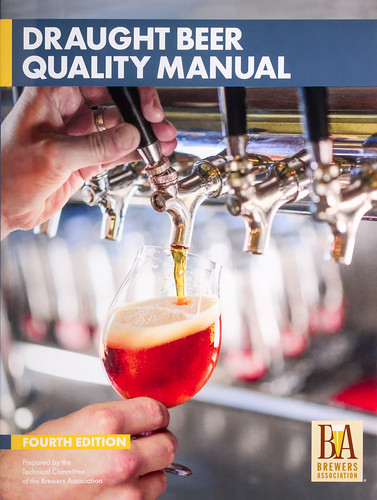
To that end —even though it wouldn't couch it in those terms— the [U.S.] Brewers Association released the 4th edition of its Draught Beer Quality Manual, in April of this year. The new edition has been expanded from the 87 pages of the 3rd edition to 117, adding an index, among other things.

Draught Beer Quality Manual 2019
Prepared by the Technical Committee of the Brewers Association, the Draught Beer Quality Manual presents well-researched, detailed information on draught line cleaning, system components and design, pressure and gas balance, proper pouring technique, glassware sanitation, and other valuable advice from the experts. Also included is information on both direct- and long-draw draught systems, important safety tips, and helpful visuals for easy reference.

The manual even contains four pages —as one of four extensive appendices— on serving cask ale. Taproom managers would be well-served to read those before simply tossing (ugh!) a firkin onto a bartop.

The Brewers Association Draught Beer Quality Working Group began focusing on draught beer quality at retail in 2007. Under the guidance of Ken Grossman, Founder of Sierra Nevada Brewing Co. and 2008 Chair of the Brewers Association Technical Committee, the brewing community came together to develop a set of best practices and standards to help brewers, wholesalers, retailers, and draught system installers improve and maintain the quality of available draught beer. The Draught Beer Quality Manual continues to evolve through collaborative efforts within the brewing community.

The information on how to serve a good —if not perfect— pint is out there; it's been so for years. There simply is no good excuse for bartenders (and brewery taprooms, for #$%!@! sake) to claim ignorance and serve bad draught beer. It's their product. They should take pride in it.

-----more-----

Thursday, December 13, 2018

2018's best cookbook, "with beer."

Melissa Cole's Malt Loaf
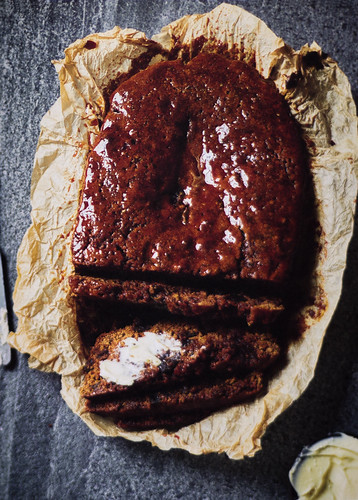
I love malt loaf [made with dried fruits, wholemeal flour, mild ale, and malt extract, among other ingredients]. It's something that was a feature of my childhood because either my Mum had made it or because my friends' Mums had or it was from a yellow packet — whichever way it came, it was always handed to me toasted and with lashings of salted butter on it. ¶ My heart doesn't want to give you a beer pairing for this, because I think it should be enjoyed for the innocent treat it is so, just like fish and chips, Grandad Biscuits, and any form of breakfast. I'm not going to directly suggest a pairing, I'm just going to mention that the mild [ale] you cooked it with wouldn't be terrible on the side.
Magnificent Malt Loaf, p. 126.

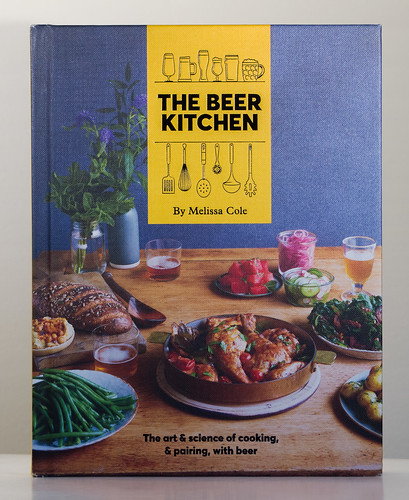
Published in October, The Beer Kitchen: The Art & Science of Cooking & Pairing, with Beer, by U.K. beer author Melissa Cole, lives up to its subtitle. The chapters:
  • Why Beer & Food
  • How to Assess a Beer
  • How to Pair to Perfection
  • Store-cupboard & Fridge Staples
  • Most-used Bits of Kit
  • So simple [recipes]
  • Some Effort [Ibid.]
  • Show Off! [Ibid.]
  • Sya Cheese! [Ibid.]
  • About the Author
As to the science, or the application thereof, Ms. Cole expounds gently. Take, for example, these two salient points:
Don't deglaze your pan with beer — all this does is burn the sugars in the beer, which creates bitter compounds, concentrates hop bitterness, and drives off all the aroma compounds. ¶ Don't just think about adding beer, think about how it will enhance the flavours — what does it actually add to the dish should always be your first question. If it's basically nothing, then save it for your mouth, not the pot.

Vegetarianism being a subplot of this blog, I should note that the book is far from a vegetarian cookbook. (It wasn't written to be one, although several recipes are vegetarian.) Who's perfect? But there is that Magnificent Malt Loaf (pictured above).

And, of course, there's cheese. (Beer-baked Cheese!)
Cheese and beer are the most perfest of partners. It may sound odd, as we are always told about cheese and wine but, trust me, try it, and you'll never look back.

My snapshot review of The Beer Kitchen? For the home-cook, it's the best cookbook of 2018, "with beer."

The Beer Kitchen

-----more-----

Thursday, August 30, 2018

“Therein lies the joy.” Michael Jackson and the pub.

DSC00302
Michael Jackson
(27 March 1942 - 30 August 2007)

The pub is the place that children's fathers get shouted at by children's others for having dallied in. The pub is a landmark in conversation: something happened outside the Rose and Crown; turn left at the King Charles; park your car 100 yards past the Star and Garter. Pub is a three-letter word serves so many purposes. The pub is the place where there is a wooden trapdoor in the pavement. Sometimes, especially in the mornings, the trapdoor is opened, to receive casks, rolling down the ramp. On such occasions, the pub is a parking-place for boldly-painted trucks, and sometimes, horses pulling drays. (The London brewery of Young's is just one which has retained horse-power.*) The pub is the place where lights shine through translucent glass in the evenings, the doors swing open to exhale noisy conversation and beery smells. the pub is the place where stubble-chinned schoolboys sneak in plain clothes to prove their manliness; anyone can fool around with girls, but only real men drink in pubs.
— Michael Jackson. The English Pub: A unique social phenomenon.
London: Wm Collins & Sons, 1976.

For more than thirty years, British journalist Michael Jackson —affectionately known as The Beer Hunter— was a prolific author of influential books on beer (and whiskey), in which he firmly established the concept of beer type and beer style.

It has been eleven years since Mr. Jackson died and four decades since he published The English Pub, his first book. Pubs have changed; the beer industry has changed; beer historiography has changed; mores have changed. But the Beer Hunter's writing abides.
Those who love the institution will continue to investigate it. Because no two pubs are the same (despite the worst efforts of the big brewers), the search can never reach a conclusion. Therein lies the joy.

-----more-----

Monday, April 09, 2018

Drinking in the Culture: A checklist for Beer Gardens in Europe. (Beer Blogging Friday)

The Session: Beer Blogging Friday is a monthly event for the beer blogging community, begun in March of 2007 by Stan Hieronymus of Appellation Beer and Jay Brooks of the Brookston Beer Bulletin. On the first Friday of every month, a pre-determined beer blogger hosts The Session, choosing a specific, beer-related topic, inviting all bloggers to write on it, and posting a roundup of all the responses received.

For The Session #134, Friday, 6 April 2018, I was that pre-determined host and my topic was ... Beer Gardens.

Beer writers/raconteurs/travellers/tickers Bob and Ellie Tupper sent in a checklist for European beer gardens — a checklist that could be referenced universally (or, for now, globally). I've posted it here, today —Monday, 9 April— because, in the beer world and especially in a beer garden, it's always Friday in spirit. Allons-y, Alonzo!

***************

Drinking in the Culture

The calendar, if not the thermometer, says it’s springtime, so it’s time to leave the romantic tasting rooms with crackling fires and start searching for places to drink beer in the great outdoors. The explosion of farm breweries may soon make beer gardens more numerous and exciting in the U.S. than in the Old Country, but, for now, we still look forward to returning to our favorites in Germany and Austria.

When we wrote Drinking In the Culture: Tuppers’ Guide to Exploring Great Beers in Europe [in 2015], we tried to identify the six best places in each of the twenty-four featured cities to experience the local beer culture. We succeeded in over twenty cities, but failed miserably in Munich: there were just too many. We finally compromised on the six best establishments in each of four different categories, only one of which was "beer garden." It came down to six criteria that lifted those six winners to the top of a crowded Munich field.

Here are those criteria, with a favorite or two in Germany and Austria for each of them.
  • Accessibility
    We only included places accessible by public transportation. German DUI laws are even stricter than in the U.S. We found a lovely, historic beer garden near Freising last year, but the round-trip cab ride came to over $70. The Augustiner Keller in Munich is two blocks from a tram stop and the S Bahn subway.


  • Prices
    The price of a German Mass (short-filled liter) can vary from 6 to 9 Euros. In general, the closer to the center of the city, the more you’ll pay. The price of a liter at the Kloster Mülln garden in Salzburg is still just above the 6 Euro level.

  • Size
    Intimate gardens can be attractive, but we love a really enormous one. The clanking of steins and rumble of 200-liter barrels, overlaid with hundreds of conversations, could be cacophonic, but to us, it’s a symphony. On a beautiful weekend night, the Munich Hirschgarten comes close to filling their 8,000 seats, and the hum is like a contented beehive you can hear for blocks.

  • Setting
    Traditional German beer gardens evolved in the 19th century as brewers discovered that if you spread white gravel on the hilltop above the underground cellars where you kept the beer, then further shaded the white stone with leafy chestnut trees, it kept the cellars cooler. An unintended benefit was that this shady hilltop was a perfect place to drink that lovely beer. Some gardens have particularly good vistas: you can spot an Alp from Kloster Mülln, gaze at the massive Dom across the Danube from the Spital Brauerei garden in Regensburg, or feed the deer that mooch along the fence next to your table at the Hirschgarten.

  • Food
    Almost every garden will have roast chicken and bratwurst, but the biggest and best of them go much farther. Fresh fish roasted over live coals, spare ribs, enormous spiral-sliced white radishes, massive roasted pork knuckles, and a wide array of salads and sweets almost always taste as good as they look. Food vendors indoors and out in the garden at Kloster Mülln offer a variety that gives this one an edge over the others. Or copy the locals and bring in your own picnic; almost all gardens allow it as long as you’re drinking their beer.

  • Beer
    As important as this criterion would seem, it probably influences us the least. Almost every brewery with a good garden brews a fine helles lager. But, as Orwell noted, some are more equal than others. Munich’s Augustiner is sweet, but achingly clean, and somehow leaves you with no ache at all the next morning. Salzburg’s Augustiner brewery looms above the Kloster Mülln garden; being able to sit within meters of where the beer is born seems to make it taste even better.

  • Gemütlichkeit
    Gemütlichkeit, or friendliness, is hard to judge on a limited number of visits. You’ll almost always sit at communal tables, so conversation is optional but usually available. On almost every one of our dozen visits to Kloster Mülln, spanning decades, we’ve made new best friends, only some of whom could speak more than a few words of English.

***************
— "We're Bob and Ellie Tupper, “DC’s original beer geeks” (Washington City Paper). We spent 35 years seeking beers all over Europe, amassing a database with over 32,000 entries, before writing Drinking In the Culture. In it, we describe the best places in Europe to visit in order to “drink in” the rich connections between beers and the societies that brew them.

We're currently working on
Brews & Snooze, a guide to breweries and B&Bs of the Mid-Atlantic region, featuring places where you can visit a brewery and walk, not drive, back to where you're spending the night. In some cases, the journey back to your room involves only walking up a couple of flights of stairs. We hope to have the book in print by the end of the year."

The Tuppers maintain their own website and blog, called, punningly enough, CultureAle. The essay above —but illustrated with photographs— they'll be posting there soon. Until then, of course, you could read their book.


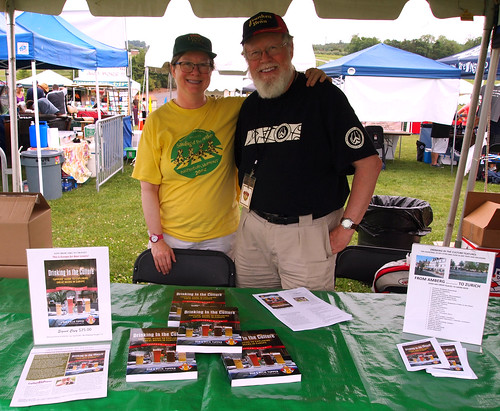
Bob & Ellie Tupper: "Drinking in the Culture" (01)

-----more-----

Saturday, January 13, 2018

Pic(k) of the Week: Graham Wheeler, homebrew guru, R.I.P.

Graham Wheeler, homebrew guru, R.I.P.

Sad news.

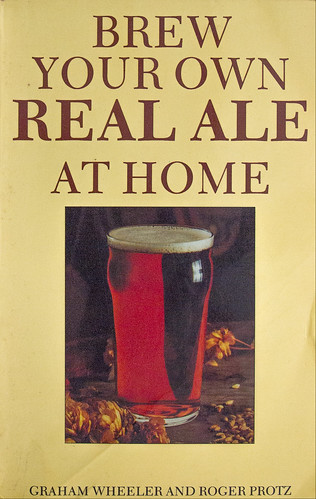
Graham Wheeler —the author of several editions of a seminal homebrewing guide published by U.K.-based CAMRA (Campaign for Real Ale)— died in late November 2017. His books provided instruction for several generations of budding homebrewers, British and stateside. Many of those amateur brewers —it would be safe to surmise— went on to brew professionally.

I already had been brewing when Wheeler first wrote Brew Your Own Real Ale at Home in 1993, but the book wet my whistle for Bitters. And I haven't lost that since.

Thank you, Mr. Wheeler.

Brew Your Own Real Ale at Home (1993)

-----more-----

Saturday, November 18, 2017

Pic(k) of the Week: Mssrs. Beaumont & Webb

Mssrs. Beaumont & Webb (03)

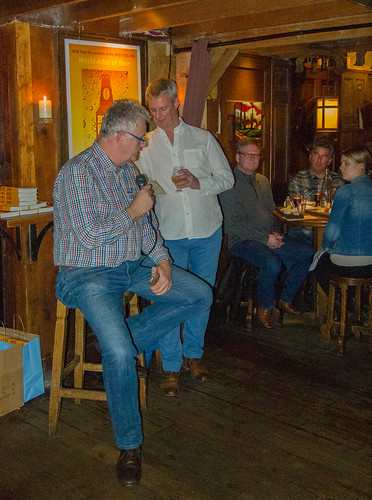
Quad is NOT a style!” insisted Stephen Beaumont, as he and Tim Webb presented the just-released edition of their new book —Best Beers: The Indispensable Guide to the World’s Beers— to a 50+ filled room (attendance, not all demographics), upstairs at the Brick Store Pub, in Decatur, Georgia, on 14 November 2017.

Among many beery accomplishments, Tim Webb is also the author of The Good Beer Guide Belgium, first published in 1992, and now in its 7th edition (the latter co-authored in 2014 with Joe Stange). The 8th edition is scheduled for release in spring 2018; in fact, Webb was working on the final revisions during this America trip. Sadly, it will be his last update to the series.

Stephen Beaumont, in his own words, has been ...
lucky enough to have spent the last 25 or so years sipping and savouring beers and spirits all around the world, and getting paid to write and talk about it. Along the way, I’ve managed to author or co-author ten books, beginning with the first of two editions of The Great Canadian Beer Guide back in 1994. [...] Among my other books, I’m extremely proud of The World Atlas of Beer, which I co-wrote with Tim Webb and has now been printed in eleven international editions in nine languages.

In previous editions, Best Beers: The Indispensable Guide to the World’s Beers had been entitled The Pocket Guide to Beer. This was both because that is what the books had been and because, to some degree, Messrs. Webb and Beaumont wrote them as an homage to the late beer writer, Michael Jackson, who had begun the Pocket Beer series in 1986.

For the 2017 edition, the authors have retitled and re-tooled the book to include fewer beer reviews. And why is that?
Our own very conservative estimate places the global brewery total at over 20,000, but it is likely that there are many more than that. [...] The worldwide count of regular beers is fast closing on a quarter-million, and when one-offs are included, doubtless well beyond it. [...]

So, you might ask, why create a book that features even fewer beers? The answer is focus. Rather than attempt to deliver a cross-section of breweries spanning the globe, we have assembled a carefully selected group of what we firmly believe are the best minds in beer [listed at the back of the book] and tasked them to deliver detailed reviews of the absolute best beers their native lands have to offer. Not the most talked about or rarest or the most obscure, but simply the finest ales and lagers and mixed-fermentation beers that eager enthusiasts might actually be able to get their hands on. Star ratings have been dispensed with because all the beers we have featured are at the top of their class.

That evening in Georgia, the audience was served anecdotes and appetizers, cheeses and full plates, and six beers, too (but no quadrupels). The presentation was recorded; at some point, I'll post a transcription, including Beaumont's quad rant and Webb's saison rant. In the meantime, here is another, less 'artistic' view of Mr. Webb (left) and Mr. Beaumont (right):

Mssrs. Webb & Beaumont (01)

-----more-----

Friday, November 17, 2017

New England IPA: "the first beer style based around Instagram culture."

Garrett Oliver, at Morning Advertiser

Garrett Oliver —author, bon vivant, editor of The Oxford Companion to Beer, and brewmaster for Brooklyn Beer— recently had something to say about so-called New England India Pale Ales.
I think it (NEIPA) is a fad. These things come and go. I have seen a great many fads over my 28 years of brewing. Three or four years ago, it was black IPA —everyone brewed one. Now, it is hard to find one.

And more...
New England IPA is a beer style that can be really tasty when it is well made, but it can't even sit on a shelf for two weeks. It has no shelf life to it at all. It is the first beer style based around Instagram culture. [...] It is based on the idea that you wait online or at a brewery to get some of this limited thing.
—Read the full interview with Mr. Oliver at the The Morning Advertiser (in the U.K.), published on 15 November 2017.


******************

What is NEIPA?

Typically cloudy in appearance and loaded with fruity esters from both hopping and fermentation, New England IPAs [sometimes known as NEIPAs or Vermont-style IPAs] rose to fame on the back of a beer called Heady Topper from The Alchemist Brewery in northern Vermont. Other northeastern US and central Canadian breweries soon started to emulate the massively successful beer, and from there this new style spread westward [and south] and eventually overseas.

Along the way, the appearance of these beers gradually evolved, growing first densely cloudy, then turbid and finally reaching something resembling orange juice with a head on it. As the "turbidity stakes" grew hotter, it came out that some breweries were adding flour and fruit purées to increase the cloudiness and "juicy" character of their beers.

Surprisingly, the principal difficulty with such ales is not that their appearance might put drinkers off — a dense cloudiness has, in some circles, come to be perceived as a mark of quality — but that some of these ales lack the flavour stability necessary in a market where competition is growing and kegs or cans of beer might not wind up being consumed within an optimal time frame.
—Tim Webb & Stephen Beaumont
Best Beers: The Indispensable Guide to the World’s Beers (2017)

In their new book, Mssrs. Webb and Beaumont alliteratively placed their NEIPA description, accompanied by a few other beer 'style' candidates, under the heading, Suspect Styles & Tenous Trends. Mr. Oliver, in his interview, was adamant that his brewery would never brew such a beer, throwing shade: "We don't do bandwagon." And this blog's writer, a past brewer, simply disdains ugly beer.

So, whence NEIPA? Its murk —and beer murkiness in general— continues to pop up all over, unabated. What do we know? Instagram or not.

Yellow Beer

-----more-----

Saturday, June 10, 2017

Pic(k) of the Week: Wahl-Henius

Wahl-Henius (01)

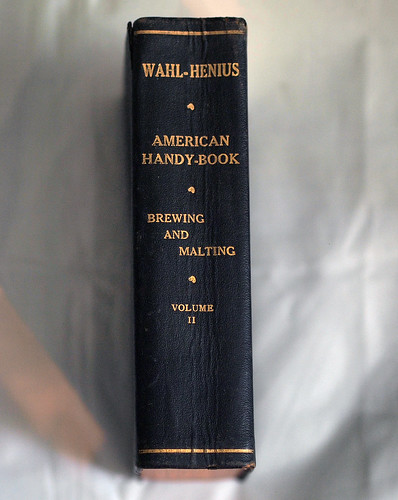
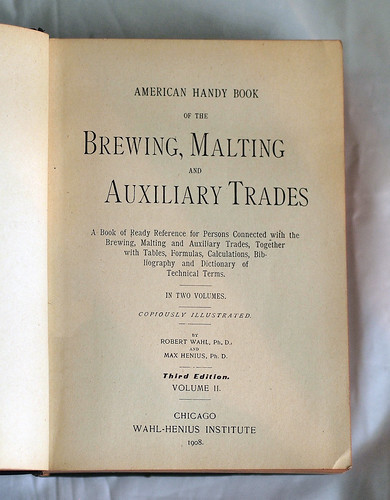
In 1901, preeminent American brewing scientists Max Henius and Robert Wahl, published —

The American Handy-Book of the Brewing, Malting and Auxiliary Trades: A Book of Ready Reference for Persons Connected with the Brewing, Malting and Auxiliary Trades, Together with Tables, Formulas, Calculations, Bibliography and Dictionary of Technical Terms

— which could be considered the Bible of American brewing, or at least the Old Testament thereof: a historical window into the brewing practices of turn-of-the-last-century America.

From their preface:
The American Handy-Book of the Brewing, Malting and Auxiliary Trades is designed to be a book of ready reference for the use of persons connected with the trades designated. It does not pretend to be a text-book, which the student of brewing will read through from beginning to end with a view of becoming acquainted with the principles and practice of this great industry. It aims to be, as it were, a pocket encyclopedia, by reference to which the brewer, maltster, refrigerating machine engineer, bottler, etc., as a person engaged in the commercial activities of a brewery, may find an immediate answer to questions that may come up in connection with the exercise of his calling, without requiring him to wade through bulky volumes and peruse quantities of information in search of a single item of knowledge.


The initial printing quickly sold out; Wahl and Henius released a second edition the following year. They published a revised, third edition in 1908, in two volumes covering 1,266 pages. An excerpt from its preface:
In these days of railroads, telephones, wireless telegraphs and rudimentary airships, six years, measured by achievement rather than by hour-glass, represent a considerable period of time. It is six years since the second edition of the Handy-Book of the Brewing, Malting and Auxiliary Trades was published, and the brewing trade has made rapid strides in that time. Many things current six years ago have been dropped and new even have taken their places. The second edition having been exhausted for over two years, a new one, taking account of the march of progress, has become necessary.

There have been important changes in the general plan of the work, and many changes of detail have been introduced.

Naturally, the more general adoption of electrical machinery in brewery and malthouse operations, growing out of the rapid development of those devices, calls for more extensive consideration. A new chapter has therefore been added on "Electricity and Magnetism." Likewise, the attention devoted of late years to the study of the barley plant and other agricultural products connected with the industry, bringing into prominence the importance of botanical marks of plants, is one of the reasons for the addition of chapters on "Botany" and "Barley." It goes without saying that the constant development of brewing methods, leading in some instances to the elaboration of entirely new systems of brewing, called for the separate treatment of "Special Brewing Systems." Another development of recent years grows out of the agitation for pure food and consequent legislation, affording grounds for a new chapter on "Beer Standards."


Wahl-Henius (03)

**************

Who was Max Henius?

Max Henius was probably America’s greatest brewing scientist, in any era. Yet he is virtually unknown to most beer and brewing fans, even those with some historical knowledge. He co-authored in 1902 the American Handy-Book of the Brewing, Malting, and Auxiliary Trades. The other writer was Dr. Robert Wahl, an American Henius had studied with in Marburg, Germany. The book was a stupendous achievement, a fat tome of 1200 pages covering every conceivable aspect of brewing operations. Many questions of science and theory were addressed but in a way accessible to practical brewing people. [...] Anyone who investigates American brewing history runs into the book sooner or later. The modern beer writer, Michael Jackson, who developed the basic stylistic schema of craft brewing, almost certainly read the book. Jackson’s basic classification seems based on Wahl & Henius’ work, not just the “ur” distinction between bottom-fermentation, top-fermentation, and spontaneous fermentation but the main beer types under each of those heads.
—Gary Gillman ( Beer st Seq.).


**************

What was the Wahl-Henius Institute of Fermentology?

The Wahl-Henius Institute was a brewing research laboratory and school in Chicago that operated between 1886 and 1921. Founded in 1886 by Dr Robert Wahl and Dr Max Henius as the Wahl & Henius, the name was changed to the Scientific Station for Brewing of Chicago and then to the Institute of Fermentology before becoming the Wahl-Henius Institute. Its educational division, the American Brewing Academy, was created in 1891. The school and laboratory operated successfully until Prohibition, when the near dissolution of the brewing trade forced its closure and sale to the American Institute of Baking, which retains the nucleus of the Wahl-Henius library.
—Randy Mosher ( Craft Beer & Brewing Magazine).

-----more-----

Thursday, May 25, 2017

"Ice cold beer lacks the exhilarating effect."

The Wahl-Henius Institute was a brewing research laboratory and school in Chicago that operated between 1886 and 1921. Founded in 1886 by Dr Robert Wahl and Dr Max Henius as the Wahl & Henius, the name was changed to the Scientific Station for Brewing of Chicago and then to the Institute of Fermentology before becoming the Wahl-Henius Institute. Its educational division, the American Brewing Academy, was created in 1891. The school and laboratory operated successfully until Prohibition, when the near dissolution of the brewing trade forced its closure and sale to the American Institute of Baking, which retains the nucleus of the Wahl-Henius library.

The Wahl-Henius Handy Book of Brewing, Malting and the Auxillary Trades, coauthored by Wahl and Henius [in 1901], is a comprehensive and wide-ranging view into American brewing [of the time]. It also contains basic chemical analyses of many contemporary American and European beers, providing an unusually valuable window into the brewing past.
—Randy Mosher ( Craft Beer & Brewing Magazine).

After the repeal of Prohibition in 1933, Robert Wahl and his son, Arnold Spencer Wahl, re-opened the school, but without Max Henius. In 1937, they published Beer From the Expert's Viewpoint, "the first book of what was intended to be a four-volume set designed to educate a new generation of American brewmasters." The elder Wahl died later that year and the school would close soon thereafter.

In 2014, BeerBooks (of Cleveland, Ohio) reprinted Beer From the Expert's Viewpoint. The copyright remains in the family, held now by Roger Wahl.

Beer From the Expert's Viewpoint


**************

Ice cold beer has no flavor or taste.

Among much that is fascinating (and much still valid) in the Wahls' book, here is some "exhilarating" wisdom it imparted. Eighty years on, this advice is often disdained.
Ice cold beer has no flavor or taste. The intense cold does not permit the natural flavor of the beer to become volatile and only what is volatile can be discerned as a flavor. The intense cold benumbs the taste nerves and consequently, the taste of such beer is insipid.

When a stein of beer is taken in one gulp, as is often done, it lies in the stomach like ice, chilling the nerves of the stomach that control digestion. The beer remains ice cold in the stomach until it is gradually warmed up sufficiently so that the digestive processes can begin.

The brewer, in order to have his beer effervesce properly even though ice cold, charges the beer too heavily with carbonic gas, so that, when the beer finally warms up in the stomach, it gives off this surplus gas rapidly, causing bloating or belching. Of course, this beer lacks the exhilarating effect.

Heed that advice. Protect yourself and your beer. Prevent bloating and belching. Don't drink beer ice-cold. Don't be insipid. Be exhilarated.

-----more-----

Saturday, January 14, 2017

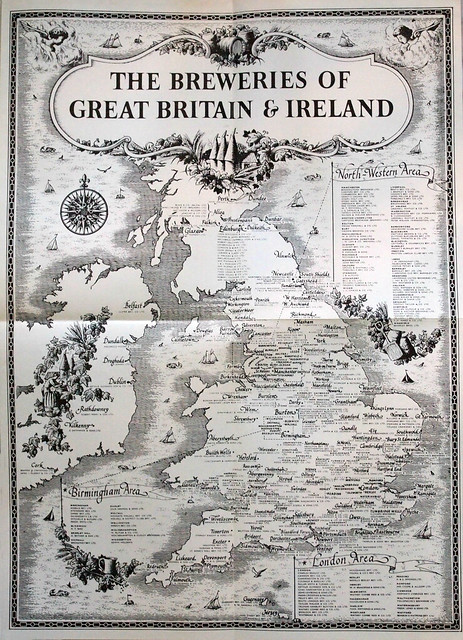
Pic(k) of the Week: The Breweries of Great Britain & Ireland, in 1958.

The Breweries of Great Britain & Ireland (1958)

In April 1958, British newspaper The Times published a month-long special supplement.
It offers a comprehensive survey of the very varied aspects of beer, from barley to consumer. ¶ Beer is known as Britain's national beverage, and this volume contains something of interest to most people.

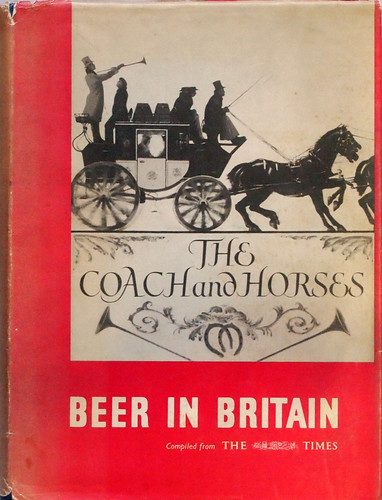
In 1960, The Times compiled the articles, publishing them in a standalone book, Beer In Britain. The map is from that book, long out-of-print. Like the book, many (most) of the breweries depicted are now long gone.

Beer In Britain

-----more-----

Monday, October 10, 2016

A Brown October Ale? Yes, please.

Brown Ale: rich color, malt complexity, and a sweet, deep caramel-like flavor that many beer lovers describe as 'luscious.' The sublime result- a beer that is at once luxurious and quaffable.
Brown Ale: History, Brewing, Techniques, Recipes
Ray Daniels and Jim Parker

Oliver's 3 Lions Brown Ale @spacebar

A Brown October Ale? Yes, please. But quickly, today. Before 'craft' innovation re-renders it as a basket of hops, with dark malt merely the wrapping of a pretty bow.

*************
Brown October Ale was a well-known song from the comic opera Robin Hood, an American light opera first staged in Chicago in 1890. It was revived there as recently as 2004. The music was by Reginald De Koven, and book and lyrics, Harry Smith, both Americans. [...] The opera interprets the Robin Hood legend. The gas lamp era was a time when medieval England had some hold on the public imagination. [...] Brown October Ale, the song, had a long career in the American popular music repertoire and was performed into the 1940s at least.
—Gary Gillman
Beer et seq.


Earl Wrightson sings Brown October Ale, from a radio broadcast of 1944.

And it's will you quaff with me, my lads 
And it's will you quaff with me? 
It is a draught of nut brown ale I offer unto ye. 
All humming in the tankards, lads, 
T'will ease thy heart folorn, 
For here's a friend to everyone, 
'Tis stout John Barleycorn.

So laugh, lads, and quaff lads. 
T'will make you stout and hale. 
For all my days, I'll sing the praise of 
Brown October Ale. 

And it's will you love me true, my lass 
And it's will you love me true? 
If not, I'll drink one flagon more and so farewell to you, 
If Kate or Moll or Nan or Doll has left thy heart forlorn, 
Fill up the pail with nut brown ale 
And toast John Barleycorn. 

So laugh, lads, and quaff lads. 
T'will make you stout and hale. 
For all my days. I'll sing the praise of 
Brown October Ale. 
-----more-----

Tuesday, August 30, 2016

Beer Hunter, Whisky Chaser

Hello, my name is Michael Jackson. No, not that Michael Jackson, but I am on a world tour. My tour is in pursuit of exceptional beer. That’s why they call me the Beer Hunter.

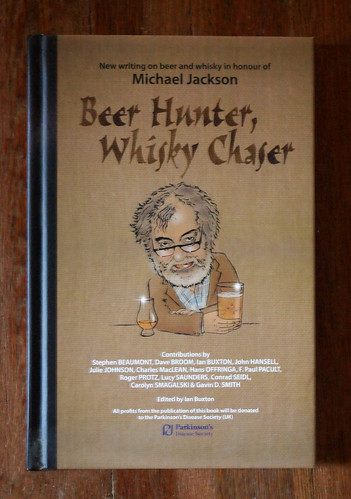
"Beer Hunter, Whisky Chaser"

That other Michael Jackson (1942-2007) died nine years ago, today, of complications related to the neurological Parkinson's Disease. Of his legacy, Gavin D. Smith, a Scottish author on whisk(e)y and beer, wrote this, in a thirteen-writer tribute book, Beer Hunter, Whisky Chaser (2009):
The World Guide To Beer was written by Michael Jackson [in 1977]. Almost immediately, the volume earned him a place as one of the most influential drinks writers around. He was to confirm that position during the succeeding years with a plethora of important titles on the subjects of beer and subsequently whisky. [...] The modern theory of beer 'style' was largely developed by Jackson and expounded in this book, with beer classification being formalized into three essential categories of 'bottom-fermented,' 'wheat beer' (also 'bottom-fermented'), and 'top-fermented,' with many sub-division in each classification.

As well as its categorization-based approach, one of the factors that made Jackson's study of beer highly unusual at the time was a passionate attachment to the locale and the manner in which [beer] was drunk, the food it accompanied, and the heritage of the brewing operations in question. [..] To borrow a phrase from the poet WH Auden, he helped [beers] to become 'like some valley cheese, local, but prized elsewhere.'

In the nine years since Jackson's death, and prior, beer scholarship has advanced much, history researched more at original sources, and 'facts' redacted or debunked, but the kernel of what Jackson planted remains, and the tree has grown fruitful. Here's Portland-based beer writer Jeff Alworth, writing recently at his blog Beervana, re-defining Jackson's legacy:
Jackson was fundamentally an ethnographer. He wasn't a brewer and he wasn't an historian. He called himself a journalist, but his biggest contribution was understanding beer in the context of the culture in which it was brewed. He might have approached beer from the sensory perspective, as much wine writing does, or he could have gone out to breweries and described the beer they made, like a simple journalist. Instead [...] Jackson situated beer in a place. He demonstrated how it was an expression of the culture of the people who made it.

The thing that fueled the American brewing revival was how people fell in love with beer, and Jackson's culture-rich writing was one of the main vectors of that romance.

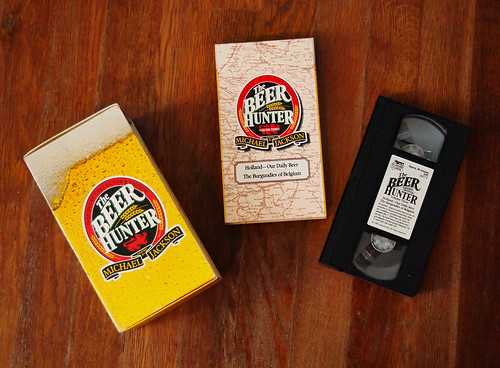
Worth looking for, and looking at, is The Beer Hunter, a four-part video series written and hosted by Jackson, and broadcast in the United States in 1989 by the Discovery Channel. It's a VHS(!) snapshot, now nearly thirty years past, of beer appreciating its nobility but reveling in its common-man freshness (the latter, a joy, that, these days, often seems to be 'experted' and curated away). Jackson provides wit and pith, limning the players, but, as in his books, never upstaging them.

The Beer Hunter VHS (03)

The logical beauty of Jackson's writing remains vibrant even today, when it can still outshine a lot of current writing in praise of 'craft' beer, so fanciful and jargon-draped. Take this Jackson gem, for example, composed on British beer, his first and true love.
Before British beer can be enjoyed, experience is required, but the same could be said for sex. In both cases, mistakes are inevitably made, but the triumphs make the disasters worthwhile.

Beer goggles were never so clear.

-----more-----

Thursday, April 28, 2016

Appreciating a master of malt: Wolfgang Kunze (1926-2016).

Want to be a brewster? Know this man.

Wolfgang Kunze:  “Technology Brewing and Malting”

On January 17, 2016, Wolfgang Kunze died, at 89.

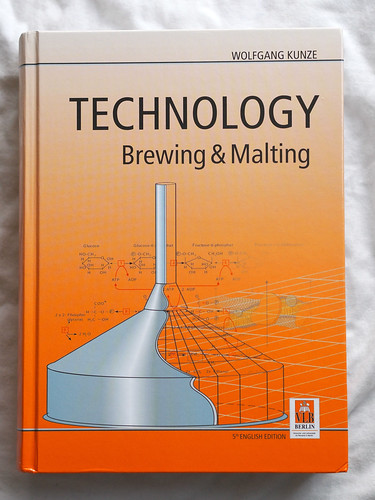
For decades, Mr. Kunze taught brewing, in Communist East Germany. His book, Technology Brewing and Malting, written in his native German — as well as translated into English, Spanish, Polish, Serbian, Hungarian, Chinese, and Russian— has long been a 'textbook' textbook for brewers throughout the world.

Wolfgang Kunze, born on 7 August 1926 in Dresden, made an apprenticeship as “Brewer and Maltster" at the Waldschlößchen Brewery in Dresden (Saxony) from 1947 to 1949. Following he moved to Berlin where he began to study brewing technology at the VLB Berlin and Humboldt University. Against all the odds of the divided postwar Berlin, he graduated as a Diploma Brewing Engineer in 1952. The newly married young father decided - for family reasons - to move back to his home city Dresden which was located in the GDR. There he took a job as a teacher at the Vocational School for brewers and maltsters. What was originally conceived as an interim solution became his professional passion that occupied him for 38 years. So in the course of nearly four decades countless brewers and maltsters from across the GDR went through his classes.

In 1959, he met a request to develop an official textbook for the training of brewers in the GDR. This project was realized in 1961 when the first edition of the book “Technology Brewing and Malting" was published. During the decades the textbook was published in the GDR in six editions, but also became very popular with the brewing trainees in West Germany. Wolfgang Kunzes credo “express complicated matters as simple as possible and in the language of the people” describes one of his key success factors both as a teacher and as an author.

Technology Brewing & Malting

Continuing his career as Director of the Vocational School Dresden, Wolfgang Kunze additionally took over the lessons for brewing technology at the Engineering School for the food industry in Dippoldiswalde (Saxony). However, he refused an offer of the Technical University of Dresden for an unscheduled promotion due to a lack of time. In 1990, Wolfgang Kunze had been replaced by its successor Herwig Bittner, who has been the head of the Vocational School Centre for Agriculture and Food in Dresden until today.

With his retirement in 1991, a new and very active period of his life began. He brought his extensive contacts and experience into the newly founded “VLB Office Dresden”. In this position, he was a respected unifying figure who has rendered great services in the convergence of East and West German brewing industry after the German reunification. In addition, the VLB took over the publishing rights of “Technology Brewing and Malting”, so that the future of this book was secured. In 1994, the 7th revised edition was published by the VLB, later followed by international editions in English, Polish, Chinese, Russian and Spanish as well as three additional German updates. Overall, his work with more than 60,000 printed copies in 7 languages has become one of the most successful textbooks for brewers worldwide.

Wolfgang Kunze was also the initiator of the “Dresdner Brewers’ Day” in 1992. As a joint project of VLB with the Brewers Association of Saxony this meeting devoted mainly to the technical and technological development of the breweries in the new federal states. In its 22nd edition the Dresdner Brewers’ Day takes place on 8 April this year - the first time that Wolfgang Kunze will not be there.

With great dedication, honesty and his Saxon humor, Wolfgang Kunze had accompanied the brewing industry up until old age. He was a regular and welcome guest at numerous trade events and on trade fairs at the stand of the VLB he was always available for an interview, a photo or even for an autograph.

His merits for the brewing industry are documented in numerous awards: He was an honorary member of the VLB Berlin (2001), an honorary member of the German Association of Brewmasters and Maltmasters (DBMB, 2001), an honorary member of the Brewers Association of Saxony (2006), holder of the Bavarian Beer Medal (2008) and awarded with the Golden Badge of Honor of the VLB Berlin (2015).

His withdrawal from public life began two years ago when a serious illness weakened him. Although he temporarily recovered somewhat again, he died on January 17, 2016. Wolfgang Kunze is survived by his wife Christa, with whom he was married since 1948, three children, eight grandchildren, seven great-grandchildren and a dog.
VLB Berlin
17 January 2016.

-----more-----
  • Kunze's obituary was published by the Versuchs- und Lehranstalt für Brauerei (VLB), the organization he captained in Berlin, Germany. I defer to its translation.
    The VLB is a members association and was founded in Berlin in 1883 by German brewers and maltsters. For more than 125 years VLB has been working in the field of research, development and training for the brewing industry. Today, round about 120 people work at the VLB in the fields of research, teaching, information, consulting and service. As a "Registered Association" VLB is an independent institute, which co-operates with Berlin University of Technology in the field of brewing science and has a very close network into the brewing and related industry. Since 2002 VLB is the sole holder of Institut für Gärungsgewerbe und Biotechnologie zu Berlin (IfGB).

  • For more from YFGF:
Saturday, April 09, 2016

"Drinking in the Culture: Tuppers Guide to Drinking in Europe" wins IBPA silver medal.

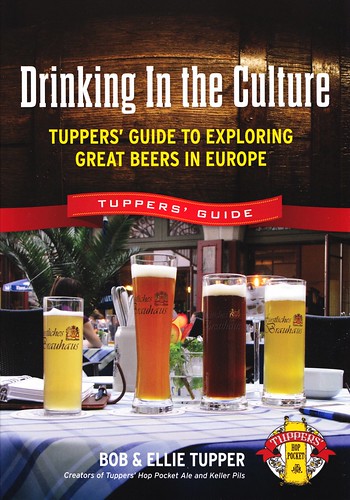
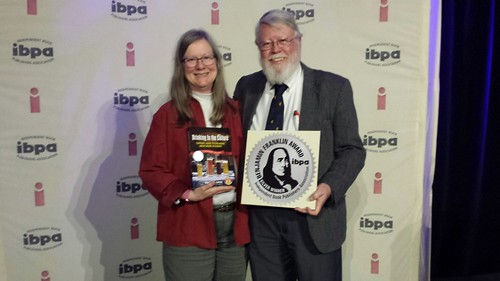
The Independent Book Publishers Association has awarded a 2016 silver medal for “Best New Voice: Non-Fiction” to Drinking in the Culture: Tuppers Guide to Drinking in Europe, a beer-travel book written by Washington, D.C.-area good beer advocates, Bob and Ellie Tupper.

Drinking in the Culture (front cover)

A Travel Book for Beer Lovers • A Beer Book for Travel Lovers

Drinking In the Culture is the first ever guide to finding, not just good beer, but good beer places, in two dozen of the best cities in the world to drink local beer. From the universities of Sheffield, England, to the historic palaces of Prague, from the well-known beer mecca of Brussels to the little Bavarian gem of Passau, here are gardens, cellars, plazas and ancient halls, all featuring unique and superb local brews amid the rich history and culture of Europe.

This is a book not just about beer or about travel, but about the rich connections between beers and the societies that brew them. For each of the 24 cities, this versatile guide offers:
  • A quick orientation to the city as you arrive.
  • The history and culture of the city and how they have affected the local beer culture.
  • A “sixpack” or more of the best places—brewpubs, gardens, festivals, and breweries—to experience the beer culture of that city and region.
  • Suggestions for hotels and out-of-the-ordinary sights.
  • Day trips and excursions for more good beer.
  • Plus local advice, travel strategies, and tips on getting there, getting around, and staying safe.
In Drinking In the Culture, the Tuppers share what they have learned about European beer travel. For everyone from boots-on-the-ground beer geeks to armchair travelers, this book offers an anecdotal and affectionate view of the hundreds of rich and distinctive beer-drinking experiences Europe has to offer.
CulturAle Press


The Tuppers are longtime observers of the good beer scene: locally in their home base of the Washington, D.C.-area, nationally, and internationally. Bob Tupper has taught high school history and government for 45 years; Ellie Tupper is a writer and editor for an international scientific society. The husband-and-wife duo has been hosting beer dinners and tastings since before such things were common or 'craft' beer was called 'craft.' And they continue to do so today. They started taking notes on beers in 1979; , their tasting database has grown to over 30,000 entries.

Tuppers win silver medal for "Drinking in the Culture."

About the IBPA Benjamin Franklin Awards:
The Independent Book Publishers Association (IBPA) is pleased to announce the 2016 Benjamin Franklin Book Award finalists recognizing excellence in independent publishing. Over 150 finalists are featured in 54 categories. Gold winners will be revealed Friday, April 8, 2016 at a special ceremony during IBPA’s annual Publishing University conference in Salt Lake City, Utah. All are welcome.

“This year, the Benjamin Franklin Book Award judges read 1,370 entries from across the independent publishers community, each featuring its own unique voice and perspective,” said Angela Bole, IBPA’s Chief Executive Officer. “Following the tabulation of scores, we’re pleased to honor over 150 finalists across 54 categories – truly the best of the best.”

Each of the 1,370 entrants into the 2016 program were judged by three independent judges. [...]


Winning an IBPA Benjamin Franklin Award remains one of the highest national honors for small and independent publishers. To be a 2016 finalist, a book must have been published in the United States between January 1, 2015 and December 31, 2015.

The Benjamin Franklin Awards ceremony, open to all, is the culminating event of the awards cycle each year. Held Friday, April 8, 2016 during IBPA’s annual Publishing University in Salt Lake City, Utah, the 2016 ceremony will include the announcement of one Gold winner in each of the 54 categories.
—IBPA press release.

-----more-----
  • Who are Bob & Ellie Tupper? Read this profile from Tammy Tuck at the Washington City Paper.
  • Follow their blog of beer-travels and beer-tastings at CultureAlePress.
  • What is the IBPA? From its website:
    Founded in 1983 to support independent publishers nationwide, the Independent Book Publishers Association leads and serves the independent publishing community through advocacy, education, and tools for success. With over 3,100 members, IBPA is the largest publishing association in the U.S. Its vision is a world where every independent publisher has the tools and knowledge needed to professionally engage in all aspects of the publishing industry.

  • For more from YFGF:

Tuesday, March 01, 2016

The 11 styles of American IPA?

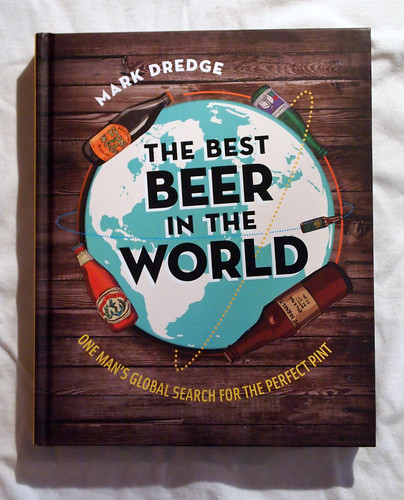
The Best Beer In The World (front cover)

On the back cover of The Best Beer In The World, a new book by British beer writer Mark Dredge, a copy editor at Ryland Peter & Small Ltd. publishing house has written this whopper of a misplaced modifier:
Part travelogue, part city guide, and part reference book, Mark takes you on a journey around the globe through great beers, bars, and brewer, immersing you in the best stories along the way.

Mark Dredge is not a reference book. I'm fairly certain that he is a real person. His book, however, is indeed "part travelogue, part city guide, and part reference book."

Will Mr. Dredge answer the book's title question? As above, that claim may have been an editor's fancy. The Best Beer In The World, as I'm reading it so far, seems more about finding good beers in many places than stalking a golden grail. But done so, written entertainingly and discussion-provokingly.

On page 144, for example, Mr. Dredge engages in an interesting exercise. He attempts to place American IPAs in ten style categories.
  • 1. The original American IPA
    Mid-1990s onward
    Toffee-like malt in the background with a burst of floral, grapefruity hops in the aroma and the flavor. The moderately high bitterness is balanced against the malt sweetness, though still punches hard. These are the early defining American IPAs, and still stand up today.
    Try: Lagunitas IPA; Bear Republic Racer 5.

  • 2. West Coast IPA: the early years
    2000-onward
    The hugest of hop hits, resinous, pithy, citrusy, with a very high bitterness, often completely unbalanced. The use of caramel and crystal malts bulks out the body but you probably won't notice more than the brutal hops. Try: Green Flash Palate Wrecker; Stone IPA

  • 3. West Coast IPA: the less-bitter middle years
    circa 2007-onward
    The huge hop aroma remains, it still gives all the qualities you expect, with lots of dank pine and citrus pitch, only now, there's some balance in the beers, even at the extreme top end —less bitterness, less malt, but still some toasty sweetness.
    Try: Ballast Point Sculpin IPA; Firestone Walker Union Jack IPA

  • 4. West Coast IPA: the next years
    circa 2010-onward
    Seemingly the hops have shifted from being the bittering addition and have instead been added as late or dry-hops. Bodies have slimmed, bitterness reduced, aromas use more recent hop varieties (Mosaic, Citra, etc.) than the classic C-hops [Cascade, Centennial, Chinook, etc.], but flavors are still big and bold.
    Try: Stone Enjoy By IPA; Societe The Pupil

  • 5. East Coast IPA
    circa 2010-onward
    An early form of the style, but still around today. These are maltier than the West, some caramel and toasty depth, less of the harsher malts, more floral and grapefruity instead of resinous and juicy (maybe from British hops), rounder mouthfeel, and less pronounced bitterness.
    Try: Dogfish Head 60 Minute IPA; Brooklyn East India IPA

  • 6. Northwest IPA
    These are all about the hop aroma and flavor where the beers are top-heavy with fruity, citrusy, piney hops. Importantly, they are alos often unfiltered which adds to the simple grain bill and gives body and a general malt richness without sweetness.
    Try: Deschutes Freshly Squeezed; Gigantic IPA

  • 7. Midwest IPA
    Think oranges, marmalade, orange soda, and floral, where a sweetness of malt gives a caramel richness to the brew and balances the bitterness. These likely use the classic American C-hops rather than newer varieties.
    Try: Bell's Two Hearted IPA; Goose Island IPA

  • 8. Colorado IPA
    Lots of caramel malts pack the body with a lip-sticking sweetness and a toasty, toffee-ish flavor, while the hops aggressively come in to balance that bitterness and then throw out some dank, pithy aroma.
    Try: Oskar Blues Gubna; SKA Modus Operandi

  • 9. Vermont IPA
    Similar to Northwest IPAs, these are very aromatic, fruity with citrus and tropical, lots of floral aroma, and the hop flavor is loaded throughout. Expect a hazy and relatively full body because they're unfiltered, where there's a juicy mix of hop and malt to balance the brews.
    Try: The Alchemist Heady Topper; Fiddlehead IPA

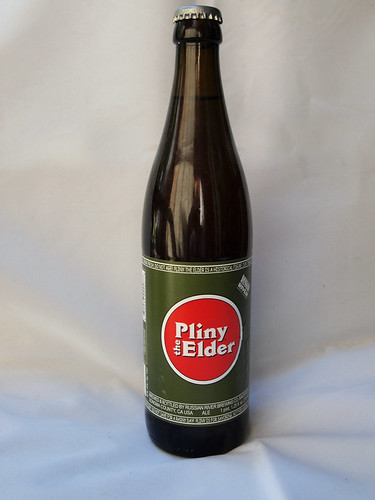
  • Respect your (Pliny the) Elder
  • 10. Russian River IPA
    This arguably stands alone as one brewery's defining impact on the style. Loads of hop aroma, zesty and fresh, piney and floral, citrus, then a very dry, pale, clean body of malt. In many ways, this type of beer is becoming the standard of American IPA today and reflects back to the current West Coast IPA.
    Try: Russian River Blind Pig; Russian River Pliny the Elder

Mr. Dredge does not mention historical American IPAs, such as Ballantine (even though Pabst, of all breweries, has recently resuscitated it). Even so, such a cataloging might be an ever-fungible task. IPA, as Mr. Dredge points out, has become the defacto flagship of all 'craft' beer. Just a month after his book's publication, he added an eleventh paradigm, at his blog, Pencil and Spoon, an IPA-type he called Fresh Tropical Fruit Juice IPA.
These new IPAs are unfiltered (sometimes hazy, sometimes properly murky) and very pale in colour. The intensity bitterness is low and character malts are non-existent. The time of them being super-dry and bitter has shifted towards softer, rounder bodies with some residual sweetness, though you don’t immediately notice that texture because the hop aroma is so dominant, so powerfully wowing, with the aroma sticking to the subtle sweetness in the beer, and giving the unmistakable qualities of fresh fruit juice – pineapple, mango, peaches, melon, papaya, lychee. There’s also a new focus on freshness to capture those aromas at their very juicy best – two weeks old is becoming too old (don’t underestimate this and it's not like these enjoy before they die IPAs: the draft-only, local-only – perhaps brewery-bar-only – hyper fresh IPA is nearby).

Mr. Dredge notes that Black IPA — a jumble of hops and dark malt, ill-begotten to begin with (my thoughts, not his)— is a dying 'subcategory,' as is White IPA — a mash-up of a spiced wheat ale with a hoppy ale.

But not so, the so-called Session IPA, or, as I refer to it, VHPA (Very Hoppy Pale Ale). Really just a subset of any of the above eleven styles but brewed to a lower alcohol level (and that percentage varies brewer to brewer), Session IPA is currently enjoying a me-too rage. As are fruited IPAs, which, contrary to Mr. Dredge's assertion, are still sprouting like over-ripe fruits at farmers' markets.

Mark Dredge's Linnaeic attempt could be considered futile or valiant, but it might stand as a useful reference snapshot of what (American) IPAs are now. As he wrote at his blog:
One thing this change is doing is re-focusing on the American IPA. In the last five years we’ve seen the IPA-ification of all beers ...

... a practice which, now running amok, debases IPAs' very identity. American India Pale Ale? India has little to do with it.

-----more-----
  • The Best Beer In The World
    One Man's Global Search for the Perfect Pint

    Hardcover: 224 pages
    Publisher: Ryland Peters & Small Ltd. (U.K., October 2015)
    Language: English
    ISBN-10: 1909313718
    ISBN-13: 978-1909313712
  • Mark Dredge on Twitter: @MarkDredge
  • Mark Dredge blog: Pencil and Spoon.

  • Hours after I posted here, Oregon beer writer Jeff Alworth published a piece, at his blog Beervana, on how American IPAs have been evolving from hop bitterness predominance toward hop flavor and aroma emphasis.
  • It reminded me of something I had written ... in 1998:
    At the Mid-Atlantic Beer and Food Festival, at least 40% of the attendees were women. This a proportion that had been growing at this festival since its inception five years earlier. For the most part, these women were bucking the conventional wisdom that women only drink sweet, flavored, or fruit beers. They were sampling all of the beers. (This illogic, unfortunately being practiced by some craft breweries, of pandering to the least common denominator, is similar to the process that led the big American brewers to dumb down their offerings.)

    Particularly intriguing was a conversation between two women who appeared to be just past the minimum age. They were standing in line, eagerly waiting to receive refills of Hop Devil Ale, an India Pale Ale, brewed in Pennsylvania by the Victory Brewing Company, that is big, bold, very bitter, and very aromatic. These women, however, were not remarking upon the bitterness of the beer, but, rather, upon its hoppiness, that is, its fresh herbal aromatics.

    Too often, many of us refer only to bitterness when we talk of hop quality, as in the macho muscling in of as much 'hair-on-your-chest' bittering as possible. We forget about the appealing bouquet that hops impart to beer. Hops are herbs, after all. In cooking, spices such as allspice or cinnamon are thought of as sweet spices. They aren't sweet, per se, but, rather, confer a sweet character to the foods in which they used. Similarly, the aromatic character of hops lends a fruity, herbal character to a beer quite distinct from maltiness. This is especially true when dry-hopping with fresh hop blossoms. Compare this process to adding fresh herbs to a meal, after cooking.

  • For more from YFGF:
Saturday, November 28, 2015

Pic(k) of the Week: Beer books in boxes

Beer books in boxes

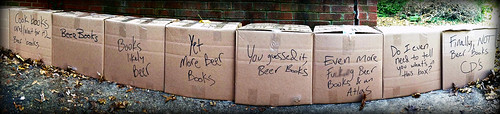
Pictured, packed for moving: a library of books-on-beer, collected over nearly thirty years. I can't't bring myself to write "curated."

Northern Virginia.
16 November 2015.

-----more-----

Friday, October 02, 2015

(Some of) the best beer writing of 2015: The NAGBW Awards.

North American Guild of Beer Writers

The North American Guild of Beer Writers (NAGBW) announced the winners of it 3rd annual NAGBW Awards for writers, bloggers, broadcasters and authors, at the recent Great American Beer Festival, in Denver, Colorado.
The NAGBW Awards honor the best beer and brewing industry coverage in nine categories, restructured this year to organize material by content rather than format.

The NAGBW has members from USA, Canada, United Kingdom and Costa Rica. Guild membership is open to all writers and content producers who cover beer and brewing, although industry and associate memberships are both non-voting categories.

With the formation of the NAGBW and an annual writing competition, the Guild aims to broaden the conversation about beer and brewing, raise the standards of writing and provide leadership and continuing education for practitioners of our profession, while also encouraging and supporting more participation throughout all media channels.

Here is the list of the 2015 winners, with links to their winning submissions. To be eligible, entries must have been published from July 1, 2014 through June 30, 2015. They were then judged on these criteria:
  • Readability 25%
  • Voice and style 25%
  • Knowledge of subject/accuracy/factual content 20%
  • Creativity/originality 15%
  • Interest/newsworthiness 15%
Here's what beer writer Alan McLeod, on the judging panel, had to say about judging the contest.
This was my third year judging in the NAGBW... Or is it NABWG? I don't know if that counts as big enough a sample size but a few observations from what I've seen.

Entries numbers generally were up as far as I saw as was the average quality. There were about 25% of entries which should not have been passed on to the judges, 50% were work-person-like pieces and 25% showed actual independent creative thinking. Not bad. Not like year one.

Like last year, I got to judge writings I would not be bothered to hunt out myself and half the time I felt rewarded. Not bad. It's good that folk want to write. There's little chance of making money out of beer writing, so it's likely out of honest interest. Which is good. It's quite sad that breweries don't support good beer writing, but that doesn't change how I feel about good writing.

Congratulations to all the winners. I recommend folk read what they wrote. Click on the links; they're free. Buy the books; they're enjoyable and educational, and they further a good cause. Beer.

-----more-----