Showing posts with label beer cookery. Show all posts

Sunday, February 02, 2020

Beer-Cheese Dip

Beer-Cheese Dip

There's something to celebrate — beer isn't just "beer' anymore; it; a delightful beverage to share with family and friends who appreciate quality ingredients in cooking and a new experience in American cuisine. There is nothing "common" about beer anymore.

Written in 1989 by Jack Erickson, Great Cooking! With Beer is a snapshot of American beer 'culture' in the 1980s, when 'craft' beers were called "microbrews" and beer 'culture' was a nascent thing to be coddled. 1 Of course, it was also a cookbook: a useful beginning point for learning about beer IN food. And it remains so today (though sadly out-of-print).2

Mr. Erickson lived in the northern Virginia area through the early 1990s, where he evangelized on the goodness of the new-fangled microbrews. I met him there on a few occasions. I never gathered up the nerve to make his recipe for "Beer Syrup" for pancakes (for which he admonished me), but I have prepared (and enjoyed) other of his recipes, including Beer-Cheese Dip.

Today, the Sunday of Super Bowl LIV, it might be a good day to post about that. So, here's the recipe, but with some personal adaptions. 3


***************

Recipe

INGREDIENTS
  • 2 cups (6-8 ounces) shredded cheddar cheese, at room temperature
  • 2 ounces cream cheese, at room temperature
  • 1 tsp dry mustard powder
  • 1 clove garlic, mashed...or 1/4 tsp garlic powder (see note below)
  • 1 tsp (vegan) Worcestershire sauce 4
  • 1/2 tsp black pepper
  • 1/2 tsp turmeric
  • 1/2 tsp onion powder
  • 1/2 tsp cumin
  • 1/4 tsp cayenne pepper (or more to taste)
  • 1 tsp malt vinegar
  • 1/2 cup (4 ounces) light lager (e.g., PBR: Pabst Blue Ribbon)
  • 1 dash smoked Spanish paprika
  • scant handful spring onions, chopped
PROCEDURE
  1. Combine cheddar, cream cheese, mustard, pepper, turmeric, onion powder, cumin, garlic, vinegar, cayenne, and Worcestershire in a food processor or blender. (No salt needed; the cheese will be salty enough!) 
  2. Process/blend 30 seconds to blend. 
  3. NOTE:
    When recently re-making the dip, the taste of the single fresh garlic clove overpowered the dish. So, I would recommend first blending all else and only then adding a little at a time of the smashed garlic to the blender/processor and checking for flavor before (or not) blending more.
  4. With processor/blender running, add the beer gradually, blending until the mixture is 'peanut-butter' smooth, not runny. Add more, only if necessary. 
  5. Transfer the mixture to a serving bowl and refrigerate for at least an hour to allow the flavors blend. 
  6. Before serving, bring to room temperature. Garnish with chopped spring onions and a dash of paprika. Serve with raw vegetables. 

Great Cooking! With Beer

Great Cooking! With Beer
  • Author: Jack Erickson
  • Paperback, hardcover: 146 pages
  • Publisher: Redbrick Press (February 1989)
  • Language: English
  • ISBN-10: 0941397017
  • ISBN-13: 978-0941397018
-----more-----
  • 1 American beer writer Vince Cottone is credited with first using the term "craft brewery" in print in 1986, although it didn't enter the common usage until more than a decade later.
  • 2 Erickson also wrote several beer travelogues, themselves snapshots of 'microbreweries' of the 1980s and early 1990s. These are also out-of-print, but you cna find them if you search for second-hand sources.
  • 3 See Erickson's original recipe: here.
  • 4 Worcestershire sauce, although fermented from barley malt, also contains anchovies. There are non-fish, vegan/vegetarian alternatives.
  • Vegan? Try this 21st-century recipe for a Beer-Cheese Dip, with no actual cheese, from blogger Rabbit and Wolves. Almond milk and nutritional yeast supply the 'cheesiness.' It's tasty.

  • For more from YFGF:

Thursday, September 19, 2019

VeggieDag Thursday: Banana Malt Bread

When life gives you brown bananas, you make Banana Malt Bread.

Banana Malt Bread

I adapted this recipe, almost intact, from Easy Vegan Banana Bread by Nora Cooks Vegan but with a beery twist: for the sweetness, a barley malt substitution à la beer-food writer Melissa Cole. Have your beer and eat it too.

***************

RECIPE

  • INGREDIENTS
    • 2-3 medium overripe bananas
    • 1/3 cup brown sugar
    • 1/3 cup barley malt syrup
    • 1/3 cup extra virgin oil oil
    • 2 tablespoons ground flaxseed
    • 5 tablespoons water
    • 2 teaspoons vanilla extract
    • 1 cup all-purpose flour
    • 1 cup garbanzo flour
    • 1 teaspoon baking soda
    • 1 teaspoon ground nutmeg
    • 1 teaspoon salt
    • 1 cup chopped walnuts

    Banana Malt Bread (02)

  • PROCEDURE
    1. 1) Preheat the oven to 350 °F.

    2. 2) Lightly oil a 9-inch loaf pan and arrange a strip of parchment paper width-wise along the center, with just a bit hanging out over each side.

    3. 3) Make two flax 'eggs.' Use a coffee grinder or mortar-and-pestle to grind the seeds. In a bowl, mix together the ground flaxseed meal with six tablespoons of water. Chill in the refrigerator for 15 minutes to set up and thicken.

    4. 4) Mash peeled bananas in bowl.

    5. 5) Add malt syrup, brown sugar, oil, and vanilla to bowl. Mix well.

    6. 6) Add the flour to the bowl. Mix well. Add baking soda, nutmeg, salt, and reserved flax 'eggs.' Mix well.

    7. 7) Fold in walnuts.

    8. 8) Spoon the batter into loaf pan. Cover with aluminum foil.

    9. 9) Bake, covered, for 30 minutes.

    10. 10) Remove aluminum foil and return loaf to oven, baking for additional ~20 minutes. Test for doneness by inserting a toothpick or fork tine into the center. If it comes out easily and clean, it's done. Don't burn the top!

    11. 11) Remove from the oven and allow the loaf to cool before removing it from the pan.

    12. 12) Slice and serve.

VeggieDag Thursday
VeggieDag Thursday is an occasional Thursday post
on an animal-free diet and on environmental and ecological issues.

-----more-----

Thursday, January 03, 2019

VeggieDag Thursday: The Magnificent Malt Loaf

VeggieDag Thursday
VeggieDag Thursday is an occasional Thursday post
on an animal-free diet and on environmental and ecological issues.

Christmas dinner here is a meatful occasion. If I want a meatless plate, I bring it. But, to be fair and thankful, folk do graciously prepare some side vegetables minus the animal fat.

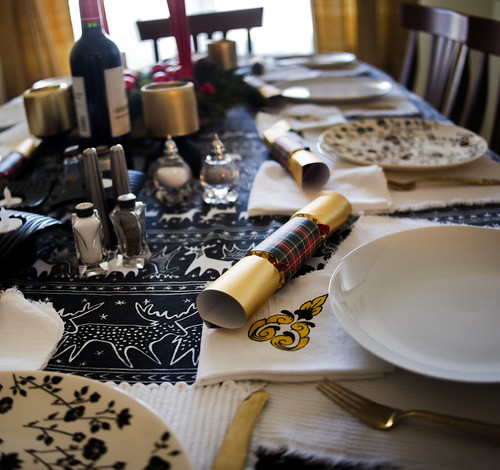
Christmas table setting

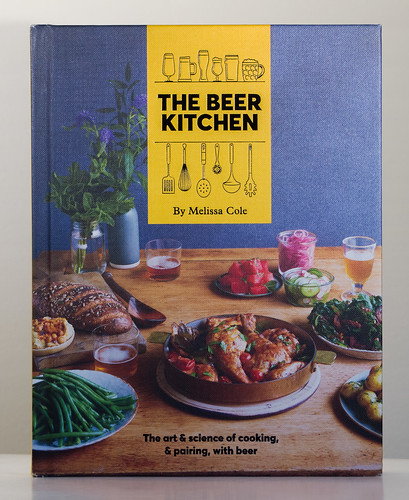
This year (now, last year), for inspiration, I turned to The Beer Kitchen, a new cookbook by U.K.-based beer writer Melissa Cole, which, in December, I picked it as "the best cookbook of 2018, with beer."

To be clear, The Beer Kitchen is not a vegetarian cookbook. To be fair, Ms. Cole did not write it as one. But several of her recipes are —or can be modified to be— animal-free. I mentioned one in particular —Malt Loaf— of which Ms. Cole wrote:
I love malt loaf [made with dried fruits, wholemeal flour, mild ale, and malt extract, among other ingredients]. It's something that was a feature of my childhood because either my Mum had made it or because my friends' Mums had or it was from a yellow packet — whichever way it came, it was always handed to me toasted and with lashings of salted butter on it.

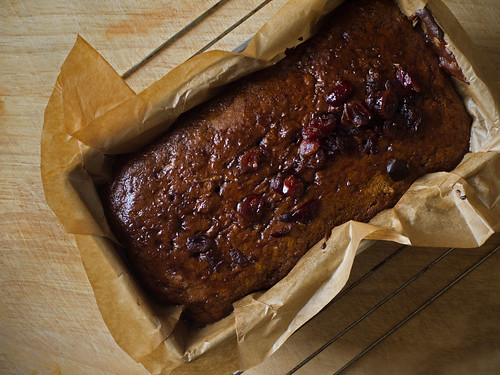
And, so, for Christmas Dinner 2018, I baked the Malt Loaf (not meatloaf!), a bit savory, a bit sweet ... and with a few changes here and there.

Malt Loaf, out of the oven

***************

RECIPE

  • INGREDIENTS
    • 2½ fluid ounces strong, black tea, plus 1 fluid ounce (reserved)
    • 2½ fluid ounces Yuengling Black and Tan, plus 1 fluid ounce (reserved)
    • 4 fluid oz malt extract syrup (9 TBSP), plus 2 TBSP (reserved)
    • 3 dry ounces (~½ cup) soft brown sugar
    • 7 dry ounces (~1⅓ cups) dried cranberries
    • 1 cup plain white flour
    • ⅔ cup garbanzo (chick pea) flour
    • 2 TBSP ground flax seeds + 6 TBSP water
    • 3 tsp baking powder
    • ½ tsp Kosher salt

  • PROCEDURE
    • Make two flax 'eggs.' In a small bowl, mix together two tablespoons ground flaxseed meal with six tablespoons of water. Chill in refrigerator for 15 minutes to set up and thicken.
    • In a saucepan, warm the tea and beer over low heat. Add the cranberries. Remove from the stove and allow to sit for 15 minutes.
    • Set oven to 350 °F.
    • Lightly oil a loaf pan (5-inch wide x 9-inch long x 2½-inch deep). Line the loaf pan with lightly dampened and crinkled cooking parchment paper.
    • Stir the malt extract and brown sugar into the fruit/tea/beer mixture, well enough to dissolve the sugar. Add the flax 'eggs.' Stir to mix.
    • In a separate bowl, whisk together the flours, baking powder, and salt. Add the malt extract mixture. Mix well to make a soft batter. Let stand for 15 minutes.
    • Pour the batter into the loaf pan and bake uncovered for 50-60 minutes. It's done when a skewer, poked in the loaf, comes out clean.
    • Poke a few holes in the loaf with the skewer and baste the loaf with the reserved tea/beer/malt extract. Allow to cool
    • Remove the loaf from the pan. Wrap and cover with more parchment paper. (It will be messy!) Put in an airtight container and keep cool for at least 3 days before eating. Or, as I did, until the next day.

  • NOTES
    • Malt extract syrup is unhopped wort —mashed malted barley and water— derived from the brewing process, that's been dried slightly into a sweet, gooey, dark brown paste. It's like using a concentrated dark beer, but with few bitter compounds. Available through the Jeff Bezos outlets and from better supermarkets.
    • Rather than going all vegan, two eggs, well-beaten, can be used in place of the flaxseed —and, in fact, are used in the original recipe.
    • Ms. Cole, from Britain, did NOT suggest Yuengling Black and Tan as the beer ingredient. Mild Ale, which she did suggest, is hard to find in the U.S., especially in can or bottle. The key is to use a dark beer, but one low on bittering hops. Absent a dark beer, in a pinch: a mainstream lager.
    • Her recipe calls for white flour and whole wheat ("wholemeal") flour. I had garbanzo flour in the pantry, so, voila.
    • The recipe also calls for raisins and diced dried prunes. But, as dried cranberries were the first thing I spied in the supermarket aisle, again, voila.
I once worked with a brewer who said he hated the taste of wort. What? I couldn't understand that. But maybe he would like this loaf. It's only slightly sweet, like a fresh, much less dense, beery fruitcake. Ms. Cole calls it the Magnificent Malt Loaf. I concur.

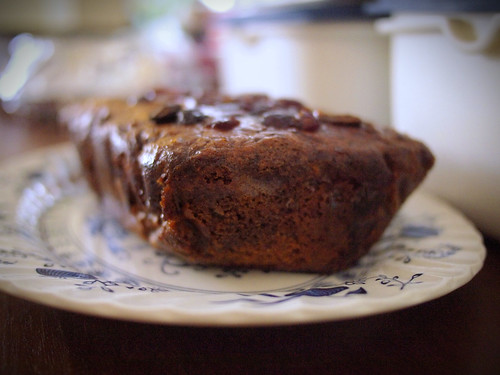
Christmas Malt Loaf

-----more-----

Thursday, December 13, 2018

2018's best cookbook, "with beer."

Melissa Cole's Malt Loaf
I love malt loaf [made with dried fruits, wholemeal flour, mild ale, and malt extract, among other ingredients]. It's something that was a feature of my childhood because either my Mum had made it or because my friends' Mums had or it was from a yellow packet — whichever way it came, it was always handed to me toasted and with lashings of salted butter on it. ¶ My heart doesn't want to give you a beer pairing for this, because I think it should be enjoyed for the innocent treat it is so, just like fish and chips, Grandad Biscuits, and any form of breakfast. I'm not going to directly suggest a pairing, I'm just going to mention that the mild [ale] you cooked it with wouldn't be terrible on the side.
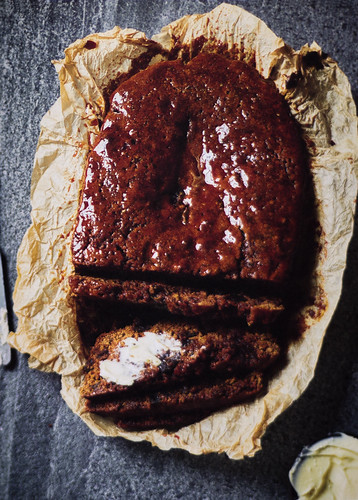
Magnificent Malt Loaf, p. 126.

Published in October, The Beer Kitchen: The Art & Science of Cooking & Pairing, with Beer, by U.K. beer author Melissa Cole, lives up to its subtitle. The chapters:
  • Why Beer & Food
  • How to Assess a Beer
  • How to Pair to Perfection
  • Store-cupboard & Fridge Staples
  • Most-used Bits of Kit
  • So simple [recipes]
  • Some Effort [Ibid.]
  • Show Off! [Ibid.]
  • Sya Cheese! [Ibid.]
  • About the Author
As to the science, or the application thereof, Ms. Cole expounds gently. Take, for example, these two salient points:
Don't deglaze your pan with beer — all this does is burn the sugars in the beer, which creates bitter compounds, concentrates hop bitterness, and drives off all the aroma compounds. ¶ Don't just think about adding beer, think about how it will enhance the flavours — what does it actually add to the dish should always be your first question. If it's basically nothing, then save it for your mouth, not the pot.

Vegetarianism being a subplot of this blog, I should note that the book is far from a vegetarian cookbook. (It wasn't written to be one, although several recipes are vegetarian.) Who's perfect? But there is that Magnificent Malt Loaf (pictured above).

And, of course, there's cheese. (Beer-baked Cheese!)
Cheese and beer are the most perfest of partners. It may sound odd, as we are always told about cheese and wine but, trust me, try it, and you'll never look back.

My snapshot review of The Beer Kitchen? For the home-cook, it's the best cookbook of 2018, "with beer."

The Beer Kitchen

-----more-----

Saturday, September 15, 2018

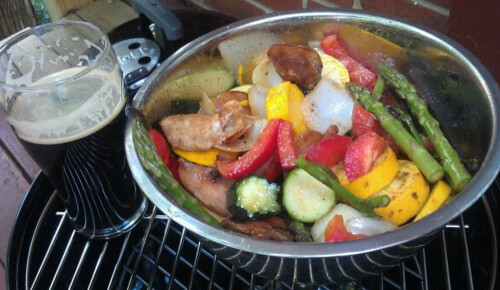
Pic(k) of the Week: Summer vegetable grilling.

Summer vegetable grilling

Vegan grilling ... that is, grilling FOR (not OF) vegans. And some beer cookery.
For this Labor Day 2018 grill, there were also veggie frankfurters (Field Roast) and veggie burgers (Beyond Meat), both soy-free. Other folk brought fried chicken. Can't win 'em all.

***************

Hurricane Florence

Wishing good fortune to all in Hurricane Florence's path. For the rest of us, here are some ways in which we can help.

-----more-----

Thursday, December 01, 2016

#VeggieDag Thursday: Sweet Stout-Roasted Root Vegetables

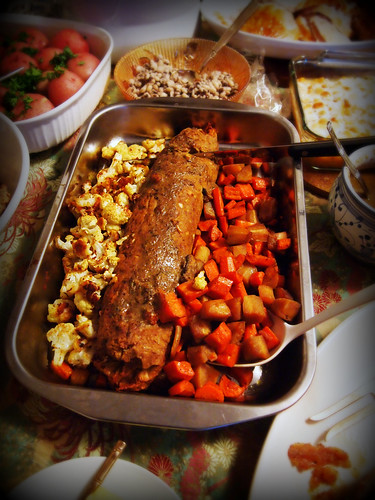
Veggie 'Beastie' Loaf (02)
When my husband tried these, he said he'd been hoping for years to taste a roast vegetable that seemed to have the gravy on the inside instead of on the outside, and I'd finally cracked it. As you simmer a selection of root vegetables in a little sweet stout, you can see the beer being drawn deep into the vegetables. When you finish them in a hot oven, the liquid is sealed inside, while the outside is seared to a roast caramel. I serve them with the Sunday roast, but, for a vegetarian, they are strong-flavoured and substantial enough to be the Sunday roast.

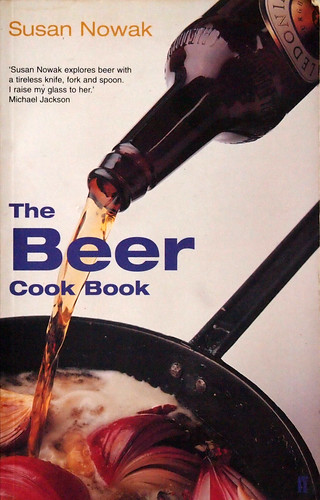
That's British freelance beer and food writer Susan Nowak describing Root Vegetables Roasted with Sweet Stout in her 1999 beer-cuisine cookbook, The Beer Cookbook, now out-of-print, but available online from third-party purveyors.

The Beer Cookbook

***************

The recipe

From page 165:
INGREDIENTS
  • 225 grams (8 oz) each peeled parsnips, swedes, and large carrots, cut into roasting size chunks, roughly equal in size.
  • Approximately 150 ml [5 ounces] sweet stout or brown ale
  • 25 grams (1 oz) butter, for roasting
PROCEDURE
  • Place the vegetables in a large pan and pour in enough stout to half cover. Put on the lid and simmer gently until they start to soften, then remove from the heat, but leave in the pan to cool and draw in the beer, turning the vegetables in the stock from time to time.
  • Remove vegetables from stock and place in an ovenproof dish.
  • Roast towards the top of a hot oven (400 °F) for ten minutes until the vegetables start to caramelize. Glaze with the butter and return to the oven [middle rack] to crisp for a further 20 minutes, basting twice, until soft on the inside and crisp on the outside with an intense sweetness. Simple but effective.

***************

What YFGF did

  • To prevent the reduction from becoming unpleasantly bitter, avoid cooking with an overly roasty or overly hoppy stout (as is the case with many American 'craft' stouts). In fact, I added a tablespoon of agave syrup when basting the vegetables. (I also substituted Earth Balance for the butter.)
  • I used a full bottle, 12 ounces (355 ml), of Milk Stout from The Duck-Rabbit Craft Brewery (of Farmville, North Carolina).
    The Duck-Rabbit Milk Stout is a traditional full-bodied stout brewed with lactose (milk sugar). Because lactose is unfermentable by brewer's yeast, it remains in the beer. The subtle sweetness and fullness of flavor imparted by this sugar balances the sharpness of the highly roasted grains that give this delicious beer its black color. All year long, Milk Stout is our number one selling beer! ABV: 5.7%.

  • Before roasting the vegetables, I simmered them in the beer (and 1/2 cup fresh-squeezed orange juice) for 20 minutes, then let them marinate, refrigerated, overnight.
  • If you're vegetarian, you would want to avoid Guinness Stout, which is was made with fish-derived isinglass for clarification. The brewery has announced its intention to change that procedure [and since 2016 is vegan]. Most American 'craft' stouts are not made with isinglass.

    Guinness is no longer made with any animal products in any part of the process. So: fine for vegans/vegetarians. That being said, if you're vegan, you would want to avoid so-called "milk stouts", which, although they do not contain milk per se, contain lactose (i.e., milk sugar).

  • After roasting the vegetables, I whisked a tablespoon of arrowroot into the beer-vegetable stock. Presto, a gravy.
  • A British "swede" is an American rutabaga. Nowak suggests a dry hoppy bitter as beer accompaniment. England and America are two countries divided by a common language...and beer.

***************

In the Photo


VeggieDag Thursday
VeggieDag Thursday is an occasional Thursday post
on an animal-free diet and ecological issues.
-----more-----

Saturday, December 19, 2015

Pic(k) of the Week: Kale Ale Cheese Fondue

Kale Ale Cheese Fondue

Pic(k) of the Week is a weekly series of personal photos, usually posted on Saturdays, and often, but not always, with a good fermentable as a subject. Today, it's a photo of fondue. The good fermentable is in the fondue.

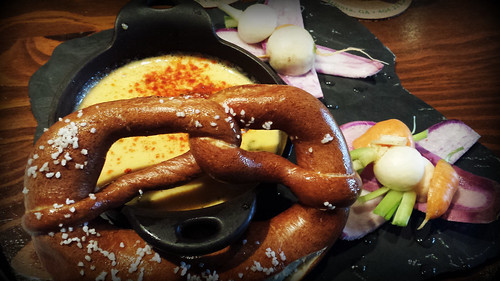
Aged gouda, sharp cheddar cheese, chopped kale, and house-brewed ale. On the side for dipping: sunchokes, baby carrots, and a house-made pretzel. Tasty but maybe the texture was a wee bit thin from too much ale in the mix. Accompanied with good beers in interesting subterranean stone surroundings.

As served at the Wrecking Bar Brewpub, in Atlanta, Georgia (in the Little 5 Points/Inman Park neighborhood), 12 December 2015.

-----more-----

Saturday, November 14, 2015

Pic(k) of the Week: Cheese with Trappists

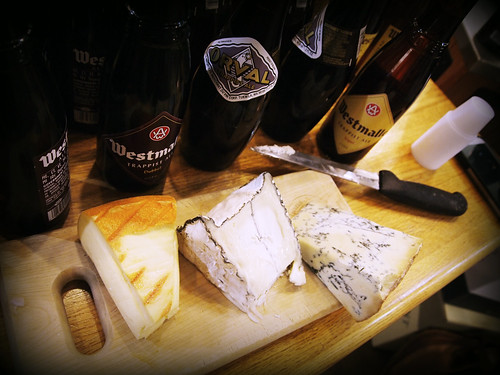
Yours For Good Fermentables was recently press'd into service; mentioned, that is, photographically (with credit) in a broadcast story on beer-with-cheese pairing.

Cheese with Trappists (03)

Beer-cookbook writer Lucy Saunders and cheese-writer Jeanette Hurt discussed the topic on Lake Effect, a "magazine program" of Milwaukee Public Radio station, WUWM 89.7, on 4 November 2015.

"Beer and cheese are fermented friends," Lucy Saunders said "And we are fermented friends, too," laughed Jeanette Hurt.

"There's nothing against wine and cheese pairings, said Saunders, "but one of the most interesting things is that beer and cheese have more of a similar profile of aromatic compounds."

"When I'm looking at wine and food pairings, and beer and food pairings (and beverage and food pairings, in general)," Hurt said. "I'm looking for that perfect marriage. By themselves they taste great, but together, they taste even better."

"Beer and cheese complement each other very well," she continued. "Beer is liquid bread, and milk is hardened milk, the makings of a sandwich in your mouth."

"Beer is bubbly," said Saunders. "The effervescence of the bubbles cleanses the palate of the cloying creaminess of the cheese."

The pair discussed the importance of food pairing 'bridges.'
"Foods and accouterments can bridge the cheese and the beer (or the cheese and the wine) to bring them together," Hurt said. "One of the bridges we're using is honey, which is an amazing accessory for cheese. Just a little bit drizzled is just so, so good, and it goes so well with the honey aspect of a beer."

"Also dried fruits," added Saunders, "and some of the spices like cocao nibs, and a dusting of pepper can really elevate the tastes of a cheddar or a creamy, really soft cheese."

And then there was this wonderful exchange on the spice of beer, the hops.
Hurt observed that, "The fragrance of the hops tends to be a little resinous, piney, and that citrusy note elevates the butterfat in cheese, and you get a really nice harmony going on with that."

To which Saunders replied, ""With the hops, you have the aroma and the aftereffect. When you swallow, which is really important in beer, you get that retro-nasal reverb. It's really delightful when you have a beer and cheese pairing, because there's a before, during, and after."

Retro-nasal reverb, indeed! Listen to Hurt and Saunders' entire discussion: here.


*****

About the photo

A beer sampling Balducci's Food Market (in McLean, Virginia, 9 April 2015), in which I served three Belgian Trappist ales (brewed by monks) with three cheeses.
-----more-----

Thursday, October 22, 2015

#VeggieDag Thursday: Beer Pickles!

VeggieDag Thursday
VeggieDag Thursday is an occasional Thursday post
on an animal-free diet and ecological issues.

I discovered this recipe for Beer-Brined Pickles in Brooklyn BrewShop's Beer Making Book, a how-to-homebrew book published in 2011. Beer stands in for some of the vinegar.
  • 8 Kirby cucumbers
  • 1 1/2 tablespoon Kosher salt
  • 5 tablespoons sugar
  • 1 cup white wine vinegar
  • 2 ounces IPA (India Pale Ale) *
  • 1 tablespoon coriander seeds
  • 1/2 tablespoon juniper berries
Cut the cucumbers in half lengthwise, then in half again to get four spears per cucumber. Whisk together salt, sugar, and vinegar, until sugar has dissolved. Add beer, coriander, and juniper to mixture. Pack cucumbers into glass container with a tight-fitting lid (such as a mason jar or a re-used pickle jar, cleaned, of course) and pour the mixture over the cucumbers. Top off with cold water (or up to 2 ounces more beer) until the cucumbers are submerged.

Refrigerate for three days. Eat! (The pickles will last for up to three weeks, refrigerated.)

Cannon-ized pickles (02)

* The authors of Brooklyn BrewShop's Beer Making Book suggest a Belgian-style ale as the beer ingredient. But, for the beer-pickles pictured above —the creation of Stephen Marsh, the past long-time cask cellarman for Heavy Seas Brewing (Halethorpe, Maryland)— the cucumbers were prepared with that brewery's Loose Cannon IPA. Since there was no heat involved in the 'cooking',  the beer was not merely a substitute for a similar measure of vinegar (or water); the beer's flavors —hop aromatics and bitterness— were readily apparent when crunching on a pickle. Delicious.

As to the rest of Mr. Marsh's recipe: How much Loose Cannon IPA to add? (I suspect he marinated with more than two ounces!) Which herbs and spices to use? He's kept that a secret.

-----more-----

Saturday, June 27, 2015

Pic(k) of the Week: Brunch with hefeweizen.

Brunch with hefeweizen

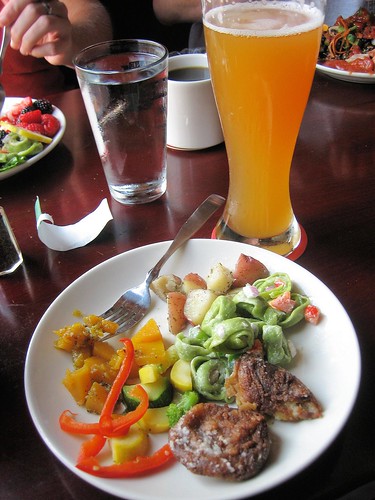
Brunch with hefeweizen, at the Great Dane Brewpub, in Madison, Wisconsin (at its Hilldale neighborhood location). Great Dane is a venerable upper midwest 'craft' beer institution. Its original downtown location opened in 1994, and is still thriving.

Pairing food with beer really isn't complicated, and shouldn't be. Just enjoy it (although I would recommend a well-made hefeweizen (as this was) as wonderful refreshment for morning brunch).

Marty Nachel, author of Beer For Dummies, recently wrote a useful guide to beer-with-food-pairing, online at Jollity Magazine (Part I and Part II).
The all-important “Four C’s” of pairing:
  • Calm. To soothe or diminish spicy heat or intense flavors.
  • Cut. To mitigate or minimize richness or fattiness.
  • Contrast. To emphasize dissimilarities such as sweet-and-sour or sweet-and-salty.
  • Complement. To marry common or similar flavors.
There is also a lesser-known “Fifth C” that is somewhat unique to beer (it’s a benefit wine can’t provide): Cleansing plays a default role in beer and food pairing because beer is carbonated. The tingly carbon dioxide bubbles help to scrub the palate of heavy or cloying flavors and keep your taste buds lively.

The photo itself is a blast from the (2009) past.

It was taken on 9 August 2009, the morning after that year's Great Taste of The Midwest. The GTMW is North America's second longest-running 'craft' beer festival, held annually in Madison. This year's iteration is scheduled for 8 August 2015, but has already sold out, as it has every year.

-----more-----

Thursday, April 16, 2015

#VeggieDag Thursday. Beer and food pairing with Lucy Saunders.

VeggieDag Thursday
VeggieDag Thursday is an occasional Thursday post
on an animal-free diet and ecological issues.

Spring-like weather is here, it being spring and all that. Seemed like a long winter.

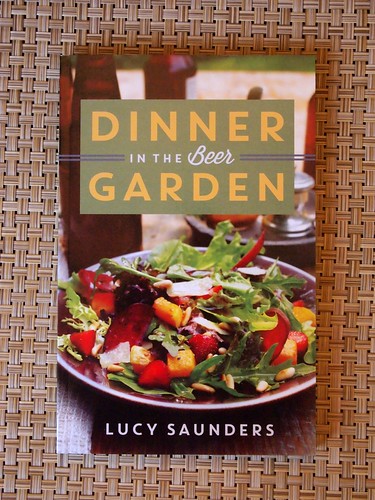
The bounty at farmers' markets is growing more bountiful. Here's a timely YouTube upload from Lucy Saunders, author of several beer-in-food cookbooks, including her most recent, Dinner In The Beer Garden.

Saunders likes her grilled meats and her barbeque (and has written about those in prior books) but it's fresh vegetables, fruits, legumes, herbs, and grains that are the stars of Dinner in the Beer Garden, which she has written for people who "love craft beer, who love cooking with fresh produce, and who love sharing meals in sociable garden spaces."

"Brewers are a lot like chefs," Saunders says, "in that they take ingredients and transform them." For the drinker and home-cook, "building bridges with beer and food" is pairing the flavors of beer ingredients and food ingredients, whether together in the recipe, or together at table (or in a beer garden).


-----more-----

Wednesday, November 19, 2014

"Cheeses fight with dry wines," says the Wine Spectator. "Try beer," I say.

Wine Spectator_Encyclopedia of Food

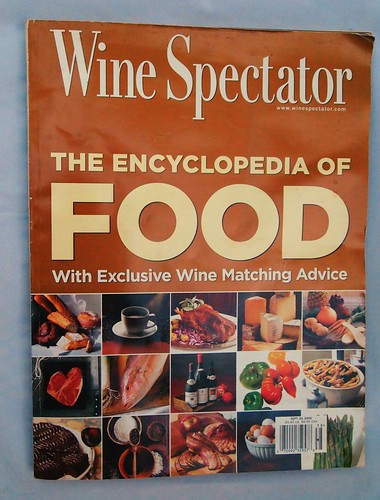
If you had turned to page 132 of the Wine Spectator's The Encyclopedia of Food "With Exclusive Wine Matching Advice," in September 2005, and read the chapter on cheese, you would have seen this:
Cheese and wine have long stood at the top of the gourmet pyramid.

But then, on the very next page, you would have seen this:
The mouthcoating texture of soft cheeses can make red wines taste thin and tough, but the sparkle of Champagne cuts through beautifully. Crisp, aromatic whites such as German or Austrian Riesling also do well, especially if they have a bit of sweetness.

And, of blue cheese and wine?
Many people find that the moldy flavors of these cheeses fight with dry wines. Their creaminess is especially tough on reds. Sweet wines are the answer.

And, with washed-rind cheeses, which the Wine Spectator refers to as "extreme cheeses"?
Over-the-top flavors make these cheese irresistible to some, but few wines can retain much personality when paired with them. [...] As much fun as these cheeses are to eat, in most cases only very sweet or fortified wines can hold their own against them.

To be fair, the Wine Spectator did, with no hesitation, praise the pairing of red wines with hard cheeses like Cheddar, and of Sauvignon Blancs and fruity reds like Zinfandel with goat and sheep's-milk cheeses. But, with the other great cheeses of the world —soft cheese (like Brie), blue cheese (like Stilton), and washed-rind cheese (like Meadow Creek's Grayson)— the magazine struggled to find gastronomically logical pairings, relying on sweeter dessert wines and their antithesis, tart Champagnes.

Even though this 'bible' of the wine world didn't suggest beer as a mate for cheese (now, really, would it?), it is indeed beer which is the answer.

Beer doesn't 'fight' with cheese; and vice-versa. The flavors of the two complement each other: fermentation character, spices and herbs, fruits and fungi, and the flavors of the kitchen and cooking. And, both share a unique affinity. Wine is like fruit jam slathered on the cheese, but beer, made from grains (such as barley and wheat), is like the cracker served with the cheese, already there, liquid in the glass.

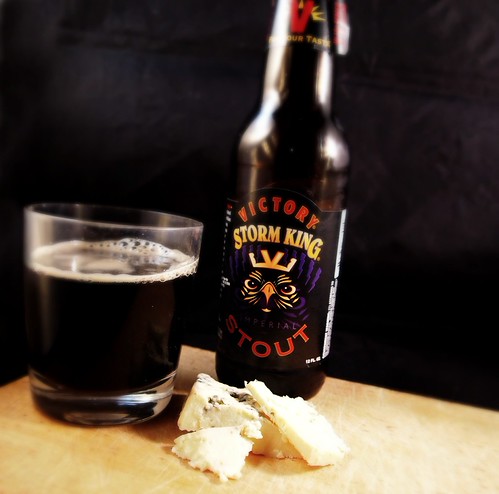
Storm King & Stilton

Some combinations of beer and cheese might be more delightful than others —goat cheese with a pilsner, washed rind cheese with an abbey ale or an American IPA, blue cheese with a stout or barleywine (no 'fight' there!), cheddar with a pale ale or brown ale— but one would be hard-pressed to find a poor pairing of the two. Simply apply the the first rule of serving cheese-with-beer: there are no rules, only enthusiastic suggestions.

And remember that Wine Spectator suggestion of Champagne with soft cheese? It's all about bubbly texture and acidity, to cut through the milkfat. Why not, next time, with your Camembert, drink a tart/funky gueuze-lambic instead? Same idea, only with more flavor in the beer. Or why not try that same funky gueuze but with a stinky (in a good way) Epoisses? Or ... so it goes. This is such an easy and rewarding thing to do with beer.

As Stephen Beaumont and Brian Morin wrote, in 2009, in their gorgeous —not coffee table book; kitchen counter book?— The BeerBistro Cookbook:
Any honest wine professional will admit that the motto in the grape trade is "taste with bread, sell with cheese." [...] Beer and cheese, on the other hand, well, that's just a match made in gastronomic heaven. [...] So put away your corkscrews and break out the beer the next time cheese is on the menu. You may get a curious sideways glance from the wine snobs in the crowd, but everyone else will likely enjoy themselves immeasurably more.

Hold the cracker. Hold the wine. "Cheeses fight with dry wines," says the Wine Spectator. "Try beer," I say. (And, how about an update?)

Sunday, May 25, 2014

A #MemorialDay Sunday grilling edition of #VeggieDag Thursday

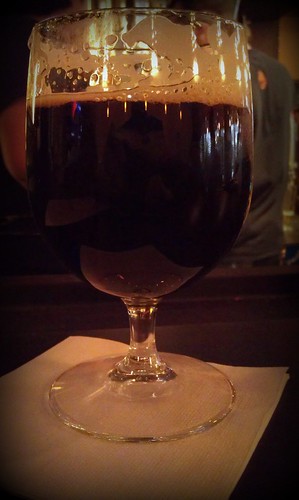
Port City's "One" Stout

Here's how the Beer Judge Certification Program (BJCP) describes a Russian Imperial Stout:
Rich, deep, complex and frequently quite intense, with variable amounts of roasted malt/grains, maltiness, fruity esters, hop bitterness and flavor, and alcohol. High roasted malt/grain flavors can suggest bittersweet or unsweetened chocolate, cocoa, and/or strong coffee. A slightly burnt grain, burnt currant or tarry character may be evident. Fruity esters can take on a dark fruit character (raisins, plums, or prunes). Malt backbone can show some supporting caramel, bready, or toasty flavors. Alcohol strength should be evident, but not hot, sharp, or solventy. No diacetyl. The balance and intensity of flavors can be affected by aging, with some flavors becoming more subdued over time and some aged, vinous or port-like qualities developing.

And, here's why scientists say that, for your Memorial Day picnic, you should switch from fizzy yellow beer to dark, roasty, full-bodied stout.
  • According to the National Cancer Institute, HCAs (heterocyclic amines) and polycyclic aromatic hydrocarbons (PAHs) are chemicals formed when muscle meat from beef, pork, poultry and fish is cooked using high-temperature methods, such as pan frying or grilling directly over an open flame. The American Institute of Cancer Research adds there is "limited, but suggestive evidence that compounds produced in meat through the grilling process factor in human cancer." Studies have suggested that marinating meat and fish before grilling can decrease the formation of HCAs; scientists point to antioxidants in marinades as possible HCA blockers.
    —More via Chicago Daily Herald
    .

  • Researchers at the University of Porto, in Portugal, tested the effect of marinating meat with a Pilsner, a non-alcohol beer, and a dark beer, against a control sampling of raw meat. Dark beer showed the strongest "inhibitory effect," reducing the formation of carcinogenic PAHs by 53 percent. Pilsners and non-alcoholic beers showed less significant results: 13 percent and 25 percent respectively. The scientists aren't entirely sure why a beer marinade has this effect; they speculate that it might be the antioxidant compounds in beer, especially darker varieties, which inhibit the movement of free radicals necessary for the formation of PAHs.
    —More via Mother Jones.

Be careful, here. The research isn't stating that (dark) beer is good for you, but rather that the anthocyanins in beer may reduce the amount of potentially dangerous HCAs and PAHs in grilled foods. On the other hand, there is indeed plenty of evidence to support the supposition that beer, in and of itself, is a health-promoting foodstuff.

So, now that you know how to be prophylactic while grilling, it's on to the recipes, with a few appetizers to begin with.

************

RECIPES

  • Mango-avocado salad with cilantro-lime-serrano-pepper dressing. Via Cooking Stoned.

  • Chilled radish soup. Via The Beekman 1802 Heirloom Vegetable Cookbook, by Josh Kilmer-Purcell and Brent Ridge. As their recipe uses buttermilk, here's a simple process for making vegan 'buttermilk', via Southern Vegan Food: "Add 1 tbsp vinegar to 1 cup of non-dairy milk. Let stand for 5 minutes. The milk curdles immediately."

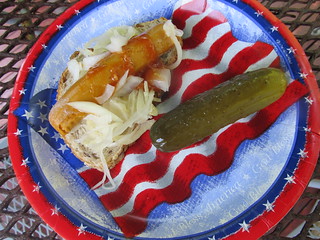
  • Veggie Hot Dogs in beer (04)

  • Steam soy 'hot dogs' in beer. Do not grill them; they blister unattractively. Via YFGF.

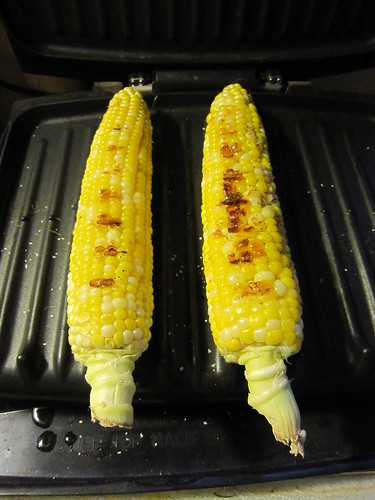
  • 'Grilling' corn on a George Foreman Grill. Via YFGF.

  • Grilling Corn with George Foreman (03)

  • "Oh She Glows" blogger Angela Liddon has seven requirements for "Perfect" Veggie-Burgers:
    • Can’t be mushy in the middle.
    • Crispy outer shell.
    • Lots of flavor from fresh herbs & spices.
    • No tofu.
    • Crunchy, chewy texture is a must.
    • No cracking or falling apart.
    • Must cook well 3 ways: frying pan, oven, and BBQ.
    A video tutorial on how to prep and freeze the 'burgers.'

  • Grilling spiced olives. Via Primal Palate.

  • A trio of grilled vegetables:

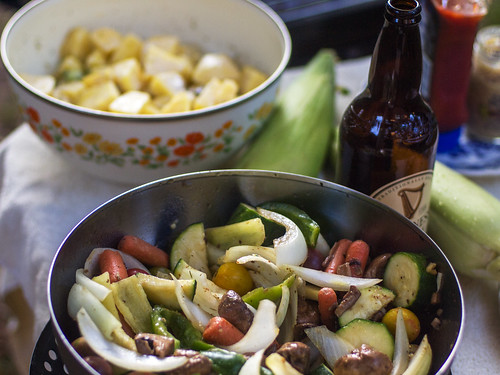
  • Stout-marinaded Grilled Veggies (02)

  • Salad of Grilled Vegetables. "A marinade can add flavor in as little as 20 to 30 minutes, and can be used on vegetables, as well as meats, seafood, and poultry," * says cookbook author Lucy Saunders, who wrote this year's Dinner in the Beer Garden [a —mostly— vegetarian beer-with-food cookbook], and 2006's "Grilling with Beer."

    For a basic marinade, use olive oil, vinegar, juice of lemon or lime, fresh herbs, and soy sauce ... for umami. Toss the cut vegetables and marinade into a locking plastic bag, and press out as much air as possible. Refrigerate for at least a couple hours.

    Saunders is partial to beer in marinades and adds this advice: "If adding a malty amber ale or stout to a marinade, the malts will add to the caramel color of the food, turning white onions or pale lobes of endive into gilded and browned beauties. I prefer milder kölsch or weissbiers for grilled fruits and tender vegetables, and brown ales or stouts for richer flavored grilled onions, eggplant, or sweet potatoes," she says. "I use fresh beer, but not the most expensive or rare beer. Very hoppy beers can make food too bitter."

  • And, for dessert:
    • Grilled peaches with ginger-coconut vegan 'ice cream.' Via Isa Chandra Moskowitz of Post Punk Kitchen.
    • "Grilled, strawberries become pockets of warm jam, bursting in your mouth." Via Forks in the Road.

Veterans' Commons

Tomorrow, on Memorial Day, please remember those who gave the "last full measure of devotion" toward protecting the ideals of America.

And, maybe, in their honor, enjoy good grilling and good eating. But don't forget the stout. For health purposes, of course.

VeggieDag Thursday
VeggieDag Thursday is an occasional Thursday post
on an animal-free diet and ecological issues.

-----Read more-----

Saturday, May 24, 2014

Pic(k) of the Week: Chocolate Stout Crème Brûlée

It may have been a case of accidental 'beer cuisine'.

A Neapolitan chef at an Italian restaurant in northern Virginia was not a fan of American beer, but when he took to the task of creating a menu for a 'craft' beer dinner, the results were delicious.

For his final course of the evening, he baked a crème brûlée. He infused the custard with an 'imperial', bourbon-aged, chocolate-nibbed stout. Then, he served it with the very same stout, on the side.

Beer, bourbon, and chocolate: it was syzygy.

Chocolate Stout Crème Brulee
  • The beer:
    Siren Noire from Heavy Seas Brewing (of Baltimore, Maryland).
    Our Siren Noire isn’t your father’s chocolate stout. We’ve used almost 3 pounds of Belgian cocoa nibs per barrel. We’ve aged it for five weeks in bourbon barrel, with vanilla beans added. A mix of dark malts gives Siren Noire a well-rounded body that is decidedly chocolatey—but without being extraordinarily sweet. Brewers Gold hops contribute an earthy spiciness, with notes of black current.
    ABV: 9.5%. IBUs: 18.5
  • The restaurant:
    Ovvio Osteria (of Merrifield, Fairfax, Virginia).
    15 May 2014.
-----more-----

Sunday, May 11, 2014

"Dinner In the Beer Garden": Lucy Saunders cooks veggies; serves beers.

Beer is food: "in cooking, at the table, and by the glass."

Beer cookbooks usually come in one of two flavors: a collection of recipes of dishes that should be served with beer (but don't have to be) and a compendium of recipes using beer as an integral ingredient. Combining both approaches, four of the better beer cookbooks, currently in-print, have been written by one person, Lucy Saunders.

Now, Saunders —who hails from Milwaukee, Wisconsin— has written her fifth cookbook, self-publishing it with the assistance of a successful Kickstarter campaign. And, it's a cookbook for vegetarians. That's something long anticipated, because beer is, after all, a fine vegetarian foodstuff itself.

"Dinner in the Beer Garden" title=

Dinner in the Beer Garden is my new cookbook about pairing craft beer with plant-based recipes, enjoyed outdoors in gardens and other social spaces. This isn't about traditional biergarten food like ham hocks and bratwurst. It's a cookbook for people who like carrots and kale - as well as butter, fish, cheese and chocolate! Profiles of gorgeous brewery gardens, a chapter on the history and design of beer gardens, and juicy color photographs of recipes turn the book into a tasty read. Recipes are both original and contributed by home cooks and chefs in the craft brewing community.

Saunders likes her grilled meats and her barbeque (and has written about those in prior books) but it's fresh vegetables, fruits, legumes, herbs, and grains that are the stars of Dinner in the Beer Garden. She may include a few recipes for fish, eggs, and cheese (Saunders is from Wisconsin), but, as Saunders writes, her new cookbook is for people who "love craft beer, who love cooking with fresh produce, and who love sharing meals in sociable garden spaces."

Saunders divides the book into eleven chapters of recipes, each centered about a family of ingredients:
  • Appetizers
  • Beans & Legumes
  • Cheese
  • Eggs
  • Fish & Seafood
  • Greens
  • Noodles & Pasta
  • Roots
  • Squash & Vegetables
  • Grains
  • Sauces & Soups
  • Fruits & Desserts
Saunders depicts each recipe with a photograph of the finished plate. She suggests a beer for each —with a reason why— such as, with Cauliflower-Chickpea Cakes and Cucumber-Onion Relish, a recommendation for Debutante, a farmhouse ale brewed as a collaboration between Baltimore, Maryland's The Brewer's Art and Stillwater Artisinal Ales.
I love falafel, one of the easiest and fastest vegan bar snacks around. Here's a tasty riff on a baked version, adapted from Lauren Downey, author of the blog Veg-ology. It's a blend of cauliflower and spices folded into a red lentil and chickpea cake. <...> Downey likes a farmhouse ale for its refreshing, yeasty character to balance the seasonings and earthy lentils. I also like an English bitter, which is malty and bracing for a refreshing finish.

Often, what are the only 'vegan' snacks that brewpubs and beer bars offer on their menus? Baked pretzels and French fries (or variants thereof). No more excuses, guys! Why not falafel (or chickpea cakes)? But, then again, Saunders does include a recipe for pretzels: Bock Beer Pretzels, with the strong lager contributing caramel color, aroma, and flavor. It's one of the over 100 recipes in her book, for such things such as:
  • Butternut Squash and Beet Salad
  • Roasted Corn with Chile and Cotija Sauce
  • Fresh Beet Gnocchi
  • Hop-Infused Grilled Cheese with Heirloom Tomatoes
  • IPA-brined Potato Salad
  • Millet Flatbread with Manchego Cheese and Rosemary
  • Summer Rolls with Coconut-Sriracha Dipping Sauce.
  • Thai Carrot Burgers with Cucumber Relish
... to name but a few. The recipes are approachable for a home-cook —never too complicated, or too multi-stepped, or too ingredient-unusual— but they are not simple-tasting. You really do need to try Brown Ale Bananas, grilled, and served over rice or as dessert.

Beer Gardens

So, what is a beer garden? Saunders writes this:
A welcoming social space outdoors, designed with seating where you can relax in the shade, chat and sip beverages in the company of friends and family. <..> Plantings for a beer garden provide shade, enclosure, color, texture, foliage, and flowers. <...> And training bines on a trellis above an entry gate always makes a welcome symbol for the beer garden.

A guest essay describes the beer gardens ubiquitous in Bavaria, Germany.
To the Germans, beer gardens seem to be a way of life —a part of the community where everyone gathers to discuss politics and the weather over liters of dunkel and some crispy fried potatoes. <...> For the most part, everyone [is] content to relax and enjoy the food, beer, conversation, and setting. There is a respect for the shared space and all who are experiencing it, be they tourists or locals. <...>If you go to a beer garden, don't just go thirsty. They offer so much more than giant pretzels and beer —even for the vegetarians among us.

Unfortunately, it's much rarer to find the same here in the U.S. "Washington, D.C. doesn't have beer gardens," Greg Kitsock, editor of the Mid-Atlantic Brewing News, once said to Washington D.C. historian Garrett Peck. "It has beer patios."

Things may be changing, and Saunders writes on that. Interspersed among her recipes, Saunders identifies and describes beer gardens in the U.S., including one at the Boundary Bay Brewery & Bistro. The National Wildlife Federation has designated this Bellingham, Washington, brewpub's beer garden as an official Wildlife Habitat, the only brewpub so honored. Saunders gives a shout out to Virginia's own Brew Ridge Trail, closer to YFGF's home territory.

Blue Mt. Sunset (03)


In a short essay "About Tasting and Pairing Beer with Vegetables", Saunders muses:
On a warm summer evening, I love to watch light filter through the leaves of the dogwood and viburnum with a beer in hand, salad on table, listening to the conversation of friends as I refill their glasses. "Why is it," I wonder, "that food and beer taste so much better together when we're in the beer garden?"

Camaraderie and environment are essential ingredients of good beer flavor, and good food. This is something that 'craft' beer folk —not Ms. Saunders— can on occasion neglect when trumpeting the newest, 'special-est' beer. A beer garden could be anodyne: a calm third-place for slow-beer. And, maybe more. During the spring through early autumn seasons, as fresh vegetables march in their annual parade, a beer garden could not only be an ornamental place in which to enjoy a beer, but home-ground to many of the very ingredients featured in Dinner in the Beer Garden. Grow 'em; cook 'em; enjoy 'em. With beer. With friends, outdoors.

**************

About Lucy Saunders

Lucy Saunders on TV


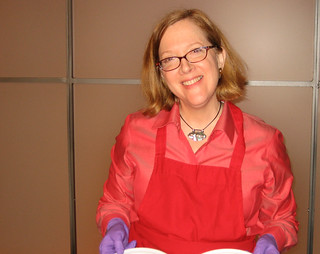
At BeerCook.com, Lucy Saunders has chronicled American brewing since 1987. Her work has been featured in publications such as Saveur, USA Today, USA Today, Chicago Tribune, the Washington Post, and elsewhere (such as here at YFGF!). She teaches cooking-with-beer-classes and tastings at the Siebel Institute and throughout the U.S. Saunders is a co-founder of the newly-resuscitated North American Guild of Beer Writers, on whose board she serves as Director.

-----more-----

Thursday, April 03, 2014

#VeggieDag Thursday. Recipe: Black Pepper Beer Bread

VeggieDag Thursday
VeggieDag Thursday is an occasional Thursday post
on an animal-free diet and ecological issues.


As the weather pivots from winter to spring, there's still time for a hearty loaf of Black Pepper Beer Bread. In fact, plenty of time: this recipe requires no more than sixty minutes from start to slice. And, there's no yeast kneaded needed.

INGREDIENTS

  • 2 cups white flour
  • 1 cup whole wheat pastry flour
  • 1 tablespoon baking powder
  • 1/2 tablespoon kosher salt
  • 1/8 cup brown sugar
  • 1 teaspoon freshly ground black pepper
  • 6-12 ounces lightly hopped lager or ale
  • 1 tablespoon melted non-dairy butter substitute.

DIRECTIONS

  • Preheat the oven to 375°F. Lightly grease a nine-inch loaf pan.
  • Sift the flour, baking powder, salt, sugar, and pepper. Whisk together.
  • Pour in the beer, a few ounces at a time, and whisk gently until combined. (Cold beer is easier to use that room temperature: it won't foam as much.) Use only enough beer to make the dough just the moist side of stiff, balling up and separating from the bowl. (Any beer remaining in the bottle is reserved for the baker.)
  • Dump the batter into the loaf pan, and smooth out the top. Create a crease, and top with the ersatz butter.
  • Bake, uncovered, for 45 minutes, or until golden brown and crusty in appearance.
Black Pepper Beer Bread (01)

NOTES

  • Recipe adapted from Pop Sugar.
  • I substituted a portion of the all-purpose flour with whole-wheat pastry flour to produce a less dense consistency. I halved the sugar and doubled the pepper, and, since this is a no-yeast recipe, all of the sugar could be omitted.
  • Avoid a hoppy beer. The hops will impart an unpleasant bitterness. Similarly, avoid a roasty beer, such as a strong stout. (Guinness Stout —neither particularly roasty nor strong— would be okay.)
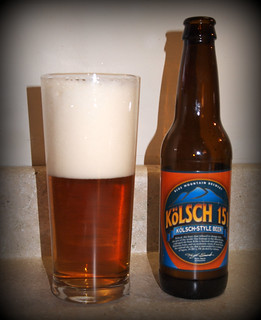
  • I used Kolsch 151, a delightful golden ale from Blue Mountain Brewery (in Afton, Virginia).

    A light German-style ale indigenous to Cologne. This ale is treated like a lager, undergoing extensive cold aging to produce a clean, crisp beer. German Pilsen and Vienna malts, and Hallertau region hops, lend a balanced flavor to our lightest beer.
    5% abv; 18 IBUs.

    Blue Mountain Kölsch 151

  • Serve with a hearty soup, such as this Split Pea Soup from Moosewood. Vegetarian, of course. (Well, okay, vegan. How, I detest that ugly word!)
-----more-----

Thursday, September 05, 2013

VeggieDag Thursday: Help publish Lucy Saunder's "Dinner in the Beer Garden."

VeggieDag Thursday
VeggieDag is an occasional Thursday post on an animal-free diet and its issues.


Beer cookbooks usually come in one of two flavors: a collection of recipes that should be served with beer (but don't have to be) and a compendium of recipes using beer as an integral ingredient. Combining both approaches, four of the possibly best beer cookbooks, currently in-print, have been written by one person, Lucy Saunders.

Now, Chef Saunders has gone and written a fifth. And, she's asking for our help to get it published.

Dinner in the Beer Garden is my new cookbook about pairing craft beer with plant-based recipes, enjoyed outdoors in gardens and other social spaces. This isn't about traditional biergarten food like ham hocks and bratwurst. It's a cookbook for people who like carrots and kale - as well as butter, fish, cheese and chocolate! Profiles of gorgeous brewery gardens, a chapter on the history and design of beer gardens, and juicy color photographs of recipes turn the book into a tasty read. Recipes are both original and contributed by home cooks and chefs in the craft brewing community.


Ms. Saunders, to be honest, likes her grilled meats and her barbeque. But she also likes her fresh fruits, herbs, and vegetables. And it's those flora that are the main ingredients of this, her fifth book, Dinner in the Beer Garden.

It's taken Ms. Saunders 3 years to write this book. For me, a non-animal eater of twenty-two years, Dinner in the Beer Garden sounds as if it'll be quite worth the anticipation. After all, beer isn't just for pizza and schnitzel anymore. As Ms. Saunders writes on her website, BeerCook.com, beer itself is food: "in cooking, at the table, and in the glass."

But the feast isn't quite ready; the book hasn't yet been published. To raise the funds necessary for publication, Ms. Saunders has opened a Kickstarter account. I'm supporting Lucy, and I'm asking you to consider doing so as well. Remember, that, with Kickstarter, even a small donation can make a big difference ... if enough of us contribute.


Lucy Saunders promises that Dinner in the Beer Garden will be a cookbook for people who love craft beer, who love cooking with fresh produce, and who love sharing meals in sociable garden spaces. She explains that more than 50 recipe testers in home and professional kitchens across the country have tested every one of the more than 100 recipes. She teases with a few titles of the contents: butternut squash and beets salad, roasted corn with chile and Cotija sauce, fresh beet gnocchi, hop-infused grilled cheese and heirloom tomatoes, millet flatbread with Manchego and rosemary, summer rolls with coconut-Sriracha dipping sauce.

So ... What's not to like? Click on that green button.

UPDATE: 8 September 2013.
While I was sleeping, the dream came true - overnight, the cookbook project achieved 101 percent funding! Huzza! Thank you!! I'm thrilled and excited to share Dinner in the Beer Garden both in print and as an ebook. From here on, any extra funding will go toward creating short videos to illustrate techniques and recipes. The wonderful team at Trillium Productions in Evanston will work with me (they produced the video for this kickstarter). Many thanks to all the backers, and look for a personal note from me later today.

Please continue to share and let people know about this cookbook - and you can learn more about the inspiration for the cookbook by listening to my interview with Lisa Morrison, the Beer Goddess, who hosts the Beer O'Clock radio show on Portland's KXL-FM.

Thank you! Heading back to work in the beer garden,
Cheers,
Lucy @lucybeercook

-----more-----

Wednesday, November 14, 2012

"Allagash: The Cookbook" visits D.C.

Mix in equal parts love of cooking, dissatisfaction with a PhD program, a chance encounter with Roxanne Quimby of Burt's Bees, curricula at the Culinary Institute of America, wanderlust, love of beer, chutzpah, preparing a private dinner for Allagash Brewery owner Rob Todd and brewer Jason Perkins, and the attention of an independent publisher/photographer.

Allagash: The Cookbook (02)

That's the recipe for the genesis of chef James Simpkins' new cookbook, Allagash: The Cookbook, published by "boutique" publishing house Blue Tree.

Simpkins —and Brian Smestad, photographer and publisher— were in Washington, D.C. tonight, signing copies of the The Cookbook for the public and media at beer bistro Churchkey.

Author, publisher, & brewery ( Allagash: The Cookbook)
l-r: Brian Smestad (publisher/photographer;
Suzanne Woods (mid-Atlantic representative for Allagash);
James Simpkins (author/chef).

Over a two year period, Simpkins has created a book of recipes inspired by the Belgian-styled beers of Allagash Brewing, of Portland, Maine. Not so much cooking with beer as an ingredient, but cooking a meal to be served with beer. As brewery owner Rob Todd says in a foreward:
Great food had been a part of our lives at Allagash for well over a decade, and this book seemed like a perfect natural progression.

Chef Simpkins divides the cookbook into ten principal chapters, in which several different recipes are paired with each of ten different beers from Allagash: White, Dubbel, Tripel, Four, Curieux (pictured below), Interlude, Black, Victoria, Hugh Malone, Coolship (spontaneously fermented beers).

Curieux by candlelight

In well-written comments, Simpkins explains and describes the flavor hooks for each association. He offers not only an index of the recipes, but a pre-index, if you will, by culinary region: New England (e.g., Maine Scallops with Caramelized Onions and Bourbon Butter), Mid-Atlantic (Sweet Potato Bisque with Sourdough Croutons), South (Chicken Plantain Roulades), Heartland (Double Cheddar Grilled Cheese Sandwich), West (Stuffed Poblano Peppers).

The book itself is a gorgeous creation: glossy card-stock, well-bound pages, and beautiful photographs, all done under the care of publisher Smestad. There's one final, nice touch: a built-in old-fashioned, ribbon bookmark. Mine opens to page 37: the poblanos stuffed with quinoa.

If you weren't at Churchkey tonight, look for Allagash: The Cookbook at independent bookshops, wine/beer shops and restaurants, and on-line: here. Amazon? Nope! You can't buy it there.

***************
  • More photos from the book signing: here.
  • Caveat lector: As a representative for Select Wines, Inc. —a wine and beer wholesaler in northern Virginia— I sell the beers of Allagash.

Saturday, December 17, 2011

Cool Yule #8! Beer Books for 2011: The Best of American Beer & Food

Cool Yule! #8
Cool Yule! 12 Beer Books for 2011

Not a list of the dozen best-of-the-best books about beer of 2011, but, rather, my list of 12, some personal delights, others of unique or deserved merit. Some of the books have been published this year, while others are worthy chestnuts.

Between 20 November and the Winter Solstice, I'll reveal my selections. Then, on Christmas Day: put your feet up, pour yourself a good beer, and read a good book. Or, better yet: give a friend the gift of a beer and a book. December 22nd may be too late to arrange shipping by Christmas (unless available as an e-book), but it's time sufficient to pay a visit to your local brick and mortar —and book— store.


******************************

So ... cue eight maids a-milking


Cool Yule Beer Book for 2011: #8


the Best of American Beer & Food

The Best of American Beer & Food
Pairing and Cooking with Craft Beer
Lucy Saunders
paperback: 240 pages
Publisher: Brewers Publications (US, 2007)
ISBN: 0937381918


Lucy Saunders —the BeerCook— released The Best of American Beer & Food in 2007. It's just as fresh today.

The book is divided into roughly two sections. The first reminds me of Real Beer And Good Eats by Bruce Aidells and Denis Kelly. Ms. Saunders interviews chefs, restaurant owners, and other beer celebrities. As well, Ms. Saunders writes several extended essays on beer styles, matching beer with food, on beer and cheese, and beer and chocolate).
Please don't dismiss Pilseners as being unworthy of being served at the table with lighter or simpler fare, as many craft-brewers are restoring the brightness and luster to a style that suffered commercial debasement in the last century. A bready yet crisp Pilsener tastes outstanding with a freshly grilled burger - it's simple and very good.

That said, some of the recipes included in this book are far from simple and could only be termed ambitious. These time-consuming recipes show that craft beer can pair with complex foods just as well as with burgers, sausages, and pizza.

Lucy Saunders indeed knows food ... and beer.

The second section features recipes from those chefs and celebrities, reminding me of a similar format in Cooking & Eating with Beer by Peter LaFrance. Some of the recipes include beer as an ingredient; others suggest appropriate pairings. Considering that many of these recipes come from brewpubs, those pairings make great sense: they have worked well and repeatedly. A partial listing of the folk featured includes Carol Stoudt, Diane Alexander, Lisa Morrison, Tom Peters, Garrett Oliver, Chuck Skypeck, Brewchef Tim Schafer, Larry Bell, Rob Tod, Natalie and Vinnie Cirluzo, Dan Gordon and Dean Biersch, Charles and Rose Ann Finkel, Jim Koch, Tomme Arthur, and Barton Seaver.

Lucy gives props to some Washington, D.C. and Baltimore, Maryland, area restaurants (home to this blog): The Brewers Art, Brasserie Beck, Restaurant Nora, Birreria Paradiso, Rustico, R.F.D./Brickskeller, Tuscarora Mill, and Royal Mile Pub.

There are two recipes from Diane Alexander of R.F.D., including Chicken and Artichoke Hearts in Anchor Steam Beer. Chef Patrick Dinh of Tuscarora Mill contributed his Asiago Soup with Smoked Ham. Royal Mile Pub's past owner/chef Ian Morrison provided his recipe for Lemon Thai Basil Sorbet.

Saunders offers a recipe from Chef Barton Seaver, well known for his work for sustainable seafood. It's not seafood, but Grilled Lamb Top Round Steaks with Caramelized Tomato Risotto, which he prepared for a Clipper City Beer Dinner several years ago when he was chef at Washington, D.C.'s Cafe Saint-Ex.

When the book was first released, some reviewers complained about the complexity of the recipes. These aren't as simple as bratwurst boiled in beer, one seemed to grouse. Yes, that's true. The Best of American Food & Beer is not a cookbook about technique. It's about, what else, beer with food, and about beer in food. But too complicated? If one is even a fair at-home-kitchen cook, most of the recipes are well within that skill set. Take this one, for example, which Ms. Saunders prepared for a Washington, D.C. morning news broadcast.
Creamy Cavatappi with Fresh Corn, Fennel and Wild Mushrooms p.106

Chef Bruce Paton of the Cathedral Hill Hotel, San Francisco, CA, pairs this warm creamy pasta salad with the Twist of Fate Bitter from Moonlight Brewing of Santa Rosa, CA. You could pair it with your favorite ESB.
  • 1 tablespoon olive oil
  • 1/2 teaspoon red pepper flakes
  • 2 tablespoons minced garlic
  • 2 bulbs fennel, trimmed and sliced very thin
  • 2 cups fresh corn kernels (about 6 ears)
  • 1 cup shiitake mushrooms, trimmed and diced
  • 1 cup cremini or chanterelle mushrooms, trimmed and diced
  • 1/2 teaspoon ground fennel
  • Salt and ground black pepper to taste
  • 1 1/2 cups light cream
  • 1 pound cavatappi pasta, cooked al dente
  • 1 medium red bell pepper, seeded and minced
Lucy Saunders on TV
  • 1. Heat oil in a large saucepan over medium heat, add crushed pepper and garlic and cook, stirring often, two minutes. Add corn and diced fennel, stir well and cook 5 minutes. Add mushrooms, ground fennel, salt and pepper and cook until tender, about 5 minutes
  • 2. Add cream and bring to a boil. Reduce heat and simmer 20 minutes. Drain pasta and toss with vegetables and cream. Garnish with red bell pepper and freshly ground black pepper
  • Makes 4 to 6 servings.
The Best of American Beer & Food is a special and usable cookbook, very usable: I've prepared several of the recipes. But therein lies its only demerit. The binding for this 'hard' paperback is not good: it falls apart after only a few uses. I hope that Brewers Publications releases a second edition in better condition.

Ms. Saunders maintains a website at beercook.com (with links to her other cookbooks: Cooking With Beer and Grilling with Beer. Follow her on Twitter @LucyBeerCook. And, cook with this book!

Cool Yule for 2011, so far:
  • #9: Beer & Philosophy
  • #10: Evaluating Beer
  • #11: Windows on The World
  • #12: The Story of Brewing in Burton on Trent

***************
  • This review has been plagiarized. I admit it. I've cribbed it from ... MY earlier review, written in 2007, when the book was first released.
  • For on-line purchasing, I link to the Brewers Association book store, or to the marvelous resource, BeerBooks.com. When not available there, or if published as an ebook, I link to Amazon.com.
  • The 12 Books for Christmas 2009: here.