Showing posts with label draught. Show all posts

Tuesday, August 05, 2025

The return of Red Sky at Night

Saison + hummus
“Red sky at night, sailor’s delight.
Red sky in morning, sailor take warning.
”
— old sailing adage

Heavy Seas Brewing's Red Sky at Night Saison, served on draught (with a side scoop of hummus) at My Parents' Basement (a combination good-beer pub, graphic novel shop, and arcade game parler) in the City of Avondale Estates, Georgia, USA (some 570 miles south of the brewery).

22 July 2025.


***************

About Red Sky at Night

Heavy Seas is a thirty-year-old 'craft' brewery, founded in 1995 (née Clipper City Brewing) in Baltimore County, Maryland, USA. The Red Sky at Night appears to be a limited re-release for the brewery's anniversary. Here's the brewery's description of the beer in 2010, when it was an annual spring release:

Brewed in the style of Belgian farmhouse ales – using a unique Belgian yeast and authentic Belgian candi sugar. It is a potent and spicy ale with deep complexity. Pairs well with Thai cuisine and mussels.
  • ABV: 7.5% [alcohol by volume]
  • IBUs: 17.5 [international bittering units]
  • Hops: French Strisselspalt
  • Malts: Pale, 2-Row, Wheat Malt

My impression (now, in 2025):
The beer poured with a pleasantly hazy appearance, typical of the saison style. In flavor, there were hints of spice (such as anise), notes of candi sugar fusel alcohols, and a 'red delicious' apple character. Tasty!

My Parents' Basement mistakenly, but humorously, referred to the beer as Red Rum Sky at Night, mixing a cinematic horror allusion with a nautical aphorism (quoted above). To be fair, so had the beer-review app, Untappd.

About Saison

(pronounced: "say ZAWWN")
Beers in this category are gold to light amber in color. Often bottle-conditioned, with some yeast character and high carbonation. Belgian-style saison may have Brettanomyces or lactic character, and fruity, horsey, goaty, and/or leather-like aromas and flavors. Specialty ingredients, including spices, may contribute a unique and signature character. Commonly called 'farmhouse ales' and originating as summertime beers in Belgium, these are not just warm-weather treats. U.S. craft brewers brew them year-round and have taken to adding a variety of additional ingredients.
— CraftBeer
a website of the [U.S.] Brewers Association


A series of occasional reviews of beer (and wine and spirits).
No scores; only descriptions.
-----more-----

Saturday, July 11, 2020

Pic(k) of the Week: ESB in happier times

Beer on Small Brewery Sunday

On 1 December 2019, this was Origination ESB, on draught in the taproom at Lost Druid Brewery for Small Brewery Sunday, in the (small) city of Avondale Estates, Georgia, USA.

If this image looks familiar, it's because I originally posted it to YFGF's Facebook page that same day. It deserves an overdue elevation to Pic(k) of the Week status.

Considering the craft beer world's current state of affairs (let alone, the world), remembering Small Brewery Sunday on any day might not be a bad thing. In better times,
Every dollar a beer lover spent at a craft brewery fueled a small business that supports the economic health of its local community.
The 'craft' beer industry:
  • Contributed $79.1 billion to the U.S. economy.
  • Provided 559,545 total jobs.
  • Gave an estimated $92.6 million to charitable organizations.
—the [U.S.] Brewers Association's 2018 Economic Impact Report

And Origination, itself?
An autumnal interplay of malts and hops provides for exquisite balance in this English extra special bitter [ESB]. Light earthy, herbal hop character intermingles with bready, toffee-like malt notes to produce a highly sessionable ale for the fall season. 5.7 % abv [alcohol-by-volume].

Extra specially tasty, it was.

-----more-----

Thursday, March 19, 2020

What to do if your bar must shut down its tap system for an extended period of time.

Draught Beer Quality Manual 2019

If beer is left stagnant in draught lines for too long, 
the system will be at risk of 
AN IRREVERSIBLE BACTERIAL CONTAMINATION. 

As more and more jurisdictions order closures of meeting places, such as bars, restaurants, and brewery taprooms, as a defense against the spread of the coronavirus, Neil Witte —the [U.S.] Brewers Association Quality/Draught Quality Ambassador— has posted timely instructions on how a taproom/bar should properly care for its draught system if shut down for an extended period of time.
In the event of an extended shutdown of your brewery, it is important to take some steps to make sure your draught system stays healthy and you are not faced with an unexpected expense or quality concerns when starting it back up.

If beer is left stagnant in draught lines for too long, the system will be at risk of AN IRREVERSIBLE BACTERIAL CONTAMINATION [emphasis mine].

Taking the right steps can prevent you from having to deal with dangerous gas leak hazards, costly draught line contamination, or even more expensive draught line replacement.
[U.S.] Brewers Association

Quick tips

  • Disconnect draught lines from kegs/serving tanks.
  • Clean the lines.
  • Disassemble and clean faucets.
  • Do NOT leave lines filled with a chemical solution!
  • Any part/piece of your draught system that comes in contact with beer —that is not cleansed during a line cleaning— should be cleaned and sanitized separately.
Do NOT pack the lines with chlorinated water: they'll be permanently tainted with that fresh-from-the-swimming pool flavor and you'll need to replace them. And as to leaving beer in the lines, don't do it! Experts are predicting a possible shutdown of 8 weeks or more. At that point any beer in the lines, even if it has been kept at 38 °F, will not be tasting its best self. And, far worse than that, to repeat the warning above from the BA: "If beer is left stagnant in draught lines for too long, the system will be at risk of AN IRREVERSIBLE BACTERIAL CONTAMINATION."

Without a doubt, read and follow the entire list of procedures. Direct link to procedures (pdf): here.

Good luck and be safe. And we'll see you on the flip side with many a fresh draught pint.

Cleaning the tap

-----more-----

Saturday, June 29, 2019

Pic(k) of the Week: Hourglass 'Lithuanian Farmhouse' Ale

Hourglass Lithuanian Farmhouse Ale

The day I visited the Hourglass Brewing taproom in Longwood, Florida, there were 38 beers on tap. This 'Lithuanian Farmhouse' ale was one of them. Can there be too many?

According to the website, the beer is prepared by:
  • Mashing (heating with water) malted barley, wheat, rye, and oats.
  • Lautering (washing and straining) the wort (a sticky solution of malt sugar derived from the mash) through a bed of hay and hops.
  • "Pasteurizing" the wort in the kettle —but not boiling it.
  • Cooling and then fermenting it with yeast from a "famous Lithuanian brewery."
Reddish-brown and very hazy (as would be expected), but not murky. A long-lasting head, if not spumous. For aroma: apricot and white pepper. For flavor: slightly sour and definitely funky with a suggestion of toffee, lemon rind, and apricot. The finish: abrupt, slightly astringent, and, again, slightly sour, but with a green pepper aftertaste. 5.7% alcohol-by-volume (abv).
"Yeast from Švyturys or Utenos?," I asked the bartender. *
"I'm sorry?" he replied, puzzled.
"Those are two famous Lithuanian breweries," I remarked.
"Oh. I'm not sure," he answered.
"Who among the staff is Lithuanian," I wondered. "No one," he replied.

Hourglass Brewing facade

I took these photos on 17 June 2019. I didn't spy a farmhouse nearby.

-----more-----

Wednesday, May 15, 2019

Draught Beer Quality in the U.S.?

Foamy draught

The number one problem affecting 'craft' beer in the United States is not the beer itself. It's not the infantilization of beer flavors (Ninkasi: make it stop!). It's not even shelf-stability, although beer staling within days of receipt in a store is indeed a problem.

The biggest fault in 'craft' beer is the much-too-often-encountered poor condition of draught beer, as it is poured at pubs and at breweries themselves. Dumping pints of foam down a bar drain, repeatedly, is a gross loss of profit; it's an alteration to the carbonated quality of the beer itself. If a brewery cannot understand the basics of draught technology sufficiently enough to pour a good pint in its own taproom, how can it expect or demand that a commercial account do better?

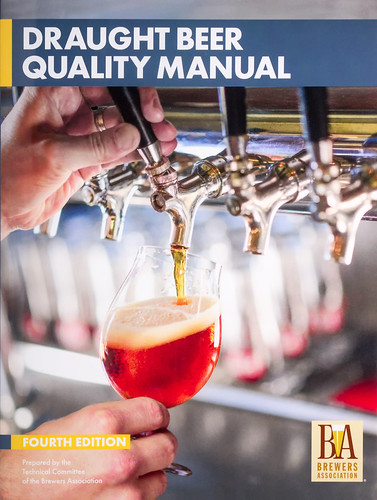
To that end —even though it wouldn't couch it in those terms— the [U.S.] Brewers Association released the 4th edition of its Draught Beer Quality Manual, in April of this year. The new edition has been expanded from the 87 pages of the 3rd edition to 117, adding an index, among other things.

Draught Beer Quality Manual 2019
Prepared by the Technical Committee of the Brewers Association, the Draught Beer Quality Manual presents well-researched, detailed information on draught line cleaning, system components and design, pressure and gas balance, proper pouring technique, glassware sanitation, and other valuable advice from the experts. Also included is information on both direct- and long-draw draught systems, important safety tips, and helpful visuals for easy reference.

The manual even contains four pages —as one of four extensive appendices— on serving cask ale. Taproom managers would be well-served to read those before simply tossing (ugh!) a firkin onto a bartop.

The Brewers Association Draught Beer Quality Working Group began focusing on draught beer quality at retail in 2007. Under the guidance of Ken Grossman, Founder of Sierra Nevada Brewing Co. and 2008 Chair of the Brewers Association Technical Committee, the brewing community came together to develop a set of best practices and standards to help brewers, wholesalers, retailers, and draught system installers improve and maintain the quality of available draught beer. The Draught Beer Quality Manual continues to evolve through collaborative efforts within the brewing community.

The information on how to serve a good —if not perfect— pint is out there; it's been so for years. There simply is no good excuse for bartenders (and brewery taprooms, for #$%!@! sake) to claim ignorance and serve bad draught beer. It's their product. They should take pride in it.

-----more-----

Sunday, December 02, 2018

A warming St. Bernardus Christmas Ale

A warming St. Bernardus Christmas Ale
St. Bernardus Christmas Ale
— Brouwerij St. Bernardus (Watou, Belgium)

☞ BREWERY:
Not Trappist, but derived from that ecclesiastical pedigree.

☞ SAMPLE:
On draught, at My Parents' Basement, a pub (and comic book shop) in Avondale Estates, Georgia, 30 November 2018.

☞ BEER:
Dark brown/red, tinged with purple. Scant head, but lasting carbonation. Tasting of (but not derived from) raisins, peaches, apples, anise, cinnamon, circus peanuts, marzipan, malt syrup. At 10% alcohol-by-volume (abv), you know it's strong, but, by Yule, it's smoothly sweet, finishing only just off-dry. Delicious.

☞ CODA:
Fire extinguished; beer not char-boiled; drinker warmed.

Drinking, Again!
A series of occasional reviews of beers (and wine and spirits).
No scores; only descriptions.

-----more-----

Friday, June 17, 2016

"Buy local, buy good, and buy on draft." [a borrowed maxim]


Bart Watson is the Chief Economist for the [U.S.] Brewers Association. In a recent post, he examined data concerning on-the-premises 'craft' beer draught sales and their correlation to 'craft' brewery success, especially that of smaller breweries.

  • Most of the data reported in the beer media comes from off-premise[s].
    • Off-premise[s] is more than 80 percent of overall beer volume.
    • Data are easier to obtain [for off-the-premises], thanks to the magic of the barcode and sophisticated scanner systems.

  • 35 percent of craft’s volume coming via on-premise[s] channels
    • Brewpubs less than 1,000 barrels have production that is 95 percent draught
    • Production brewers less than 1,000 barrels are on average 89 percent draught
    • Median 'craft' brewery survyed] has 78 percent draught production.

  • Size of the on-premise[s] beer market varies wildly by state, due to a variety of factors.
    • Beer’s share of beverage alcohol
    • Overall beer consumption levels
    • Number of on-premise[s] outlets
    • On-premise[s] culture
    • Consumer preferences
    • Socioeconomic factors.
    • [Surprisingly not mentioned because ii is such an important factor: laws and regulations which permit or prohibit on-premises sales at breweries and brewpubs.]

  • When you know both the size of the draught market in a state and the size of the total beer market, the size of the draught market is a much better predictor of the number of small and independent breweries.

  • The on-premise[s] market has shifted over the past few years, with the continued spread of “rotation nation” and an increasingly fractured and competitive market for tap handles. This has likely created some challenges for regional craft brewers, the companies that are typically doing the heavy lifting in off-premise[s] channels. Given the greater dominance of chains in off-premise[s], those channels will likely never reach the diversity we are seeing in on-premise[s] markets.


The takeaway is, as Mr. Watson writes:
The data suggest that states where on-premise[s] is more important to the beer market, craft does better in the off-premise[s] [emphasis mine].

The logic is fairly simple: in places where more beer lovers are in bars and restaurants drinking beer and thus encountering craft, off-premise locations have better sales for craft brewers as well.

Pints of beer per adult per U.S. state (2013)
Pints of beer per adult per U.S. state (2013).
Where does your state rank?

Beer author Jeff Alworth succinctly summarized all this at his blog, Beervana (doing his best beer reference of author Michael Pollan's food maxim):
Buy local, buy good, and buy on draft. [...] Drink on draft and you will create a virtuous cycle that buoys local breweries.

-----more-----

Saturday, September 12, 2015

Pic(k) of the week: Cask & draught

Cask & draught

A pretty pair: a glass of cask-conditioned double IPA * on the left, and, on the right, a glass of draught pilsner.

William Jeffrey's Tavern
Arlington, Virginia.
10 September 2015.

-----more-----

Saturday, February 21, 2015

Pic(k) of the Week: Abita frost-brew

Abita frost brew (01)

The camera shivered, but the beer flowed. It may have been 20 °F outside, but a festive Mardi Gras good times 'rolled' inside a heated tent. "Frost-brewed Coors" ain't got nothing on these snow-capped kegs from Abita Brewery (of Louisiana).

Abita frost brew (02)

As seen outside Bayou Bakery, in Arlington (Court House), Virginia.
17 February 2015.

-----more-----

Wednesday, February 27, 2013

Guest post: Top 5 Draft Beer Mistakes

After twenty plus years in the beer business, I still see bartenders repeating the same mistakes of twenty years ago, when pouring draught beer. Ignorance of best draught practices —and, by that, I mean not knowing— is inexcusable when draught is your product. A chef knows to (and how to) change fryer oil; a bar manager must know to (and how to) clean his draught lines and how to pressure-balance his draught system.

My offers of demonstration are sometimes met with indifference or annoyance. "I know how to pour a beer," I'm told, as I see profligate quantities of foaming profit poured down a bar drain, or as I taste a beer obviously tainted by a dirty line. Or as I am presented with a beer with no head whatsoever.

"That's how it's supposed to be," I'm told. Well, no!

I don't often post guest blogs from commercial sources, but this might be an occasion to make an exception. Here, from from Micro Matic —"the industry leader in draft beer equipment and draft beer systems"— is a look at five simple practices that can dramatically improve your draught service.

************

Top 5 Draft Beer Mistakes


Few things compare to a glass of cold draft beer. However, as alluring as draft beer is, home and commercial bar equipment require care and expertise to make sure that they’re dispensing beer in ideal condition. Here are some of the top mistakes that people make with draft beer systems, and how to avoid them.

  1. Dirty beer lines
Not keeping beer lines clean is one of the biggest mistakes that beer system owners can make. Without regular cleaning, the lines that connect the keg to the tap can grow bacteria, mold, and yeast, all of which will affect the taste of the beer and make the drinking process less enjoyable. In addition, natural minerals found in the beer can leave deposits known as “beer stone” on the insides of the beer lines, in some cases actually blocking the flow of the beer. To ensure that your beer is flowing freely and without any extra bacteria or mold spores, clean your beer lines once every two weeks.

  1. Poorly regulated temperature
Another common mistake in draft beer systems is not paying attention to the temperature of the beer at all stages of its journey from the keg to the glass. Tape a thermometer strip to the keg and place another at the tap to be sure that your beer maintains a nice 38° the whole way. If you allow your beer to warm up, it will dislodge its carbonation and go flat quickly. If the temperature gets too cold, the beer’s carbonated bubbles will shrink, causing you to overfill the glasses and lose out on profits—not to mention causing your guests considerable distress when the carbonated bubbles resume their normal size inside of their stomachs.

Keg Rx
  1. Poorly regulated pressure
Along with temperature, pressure is another component vital for draft beer quality. Regardless of the gas you’re using (either pure CO2 or CO2 and nitrogen) to maintain pressure in your system, you’ll need a gas regulator for each tank, and you may need secondary regulators if you have different beers with different carbonation levels on tap. Just like temperature, pressure affects whether beer is over or under carbonated, and so storing beer at the appropriate pressure rating is key.

The PSIG* at the keg using mixed gas normally ranges from 20 to 25 PSIG for ales and lagers, and up to 30-40 PSIG for stouts. To acquire equilibrium with stouts, a 25% CO2 / 75% nitrogen mix is ideal, and for ales and lagers a 60% CO2 / 40% nitrogen ratio is required. Domestic lagers from large American breweries will require up to a 75% CO2/25% N2 ratio. For specific details on individual beers, contact the brewery or the distributor from which you got the keg.

  1. Dirty glasses
Beyond what happens within your beer system, you also need to think about how your beer turns out once it’s actually been poured. One of the biggest hidden culprits in making an otherwise perfect pint turn problematic is the cleanliness of the glassware. Ordinary dishwashing detergents can leave an oily film on the glass surface, which will affect the taste of the beer and flatten out the head. To solve this problem, use a cleaning solution specifically designed for bar glassware.

  1. Improper pouring
After all that work, the last thing you want to do is ruin your beer by pouring it badly. Many people try to pour beer like water, with poor results. To dispense beer properly, hold the glass at a 45 degree angle about an inch below the tap. Open the tap in one smooth motion, and when the glass is half full begin to straighten it to an upright position. Let the last of the beer fall straight into the center of the glass, then close the tap quickly and completely once the glass is full.

If you diligently avoid these five big mistakes, you’ll have great success with your draft beer system. By keeping the beer lines clean, appropriately maintaining temperature and pressure, using clean glassware, and pouring correctly, you’ll avoid some of the most common pitfalls in draft beer dispensing, and you’ll be rewarded with perfect glasses of brew.

—Diana Carlton is a writer for Micro Matic. "In bars, restaurants, and venues nationwide, Micro Matic commercial bar equipment and expertise brings patrons and beer lovers the highest quality draft beer. Micro Matic is also proud to conduct its Dispense Institute, where trainees learn to improve draft beer quality through education."

30 of 50 taps

********************
  • The term 'PSIG' stands for "pound-force per square inch gauge." Consider PSIG as the practical equivalent of pressure per square inch, even though that wouldn't be altogether correct. If only straight CO2 is used, such as with a short run of line, 10-15 psig is usual. Micro Matic added a slight alteration to the text after the post was originally uploaded.
  • See an earlier post about the Draft Whisperer, a bar manager in Washington, D.C., who cares deeply about presenting draught beer in the best possible manner: here.
  • The Brewers Association has published an extremely useful —free— guide to draught maintenance. Download it: here.
  • Clean your pipes. A series of photos demonstrating one method of beer-line-cleaning: here.
  • Caveat lector: I received no remuneration from Micro Matic.

  • Friday, February 22, 2013

    The Draft Whisperer

    I don't normally re-direct here at the blog; I reserve that for Twitter. I'll make an exception today.

    DC-Beer —a blog and website on things beer in the greater Washington, D.C. metro area— published a story yesterday entitled "Meet the Draft Whisperer: Jack Rose's Nahem Simon." It's a piece by the site's editor Bill DeBaun on Nahem Simon.

    Beginning a few years ago, Mr. Simon made his mark upon the D.C. 'craft' beer scene by maintaining the draught and cask lines for the Neighborhood Restaurant Group —parent to Rustico, Churchkey, and several other locations. Now, he runs the beer lines at two Washington, D.C. restaurants: Jack Rose and Bourbon D.C.

    Nahem opens the Bran Riserva (02)

    Read the piece. It's a good essay on what a bar owner or manager should think about when he or she serves draught beer. There's a lot more to serving draught than simply opening a tap. There's maintenance and knowledge of product. Don't get me started on ignorance. Mr. Simon is much more diplomatic.
    Having seen so many badly maintained systems, he feels a responsibility to the consumer. “So many times you have people having the idea that 'draft beer will be better,' but it is often not true because you have employees dipping faucets [into beer], not pouring properly, not cleaning couplers properly,” he points out. “Beer is food, and everything should be maintained to the highest standard of hygiene that you'd treat food with.” It's also out of a sense of duty to folks on the production side of things.

    Keg room at Ale House (02)


    “The retailer is responsible for the packaging [of the beer]. It's a disservice, and I would think rude and irresponsible and careless, to just not hear about the hard work that all these owners and brewers are putting into their product. Ultimately, if someone comes in and gets X beer and it's a flagship beer, and it tastes completely off, that one experience can keep people from trying so many other products. If that product should taste completely different, it can affect a brewery's perceptions in the long run. So many breweries that have to compete with macros, it's up to us to take care of things.”


    After you've read the piece, resolve to serve better draught beer, if you're a bar owner, or to expect better draught beer, if you're a beer drinker. Start by reading this manual from the Brewers Association.

    ***************
  • Look for some guest posts here soon, at YFGF, on best (and worst) practices for draught beer service. The author will probably spell it "draft".
  • Here, something similar from YFGF: Clean your pipes.
  • WAMU —a Washington, D.C. NPR station— recently interviewed Bill Thomas, co-owner of Jack Rose and Bourbon. Read the transcript: here.
  • On a personal note, Simon, an artist and friend, designed the logo for Yours For Good Fermentables.

  • Thursday, April 23, 2009

    No excuses for foamy beer

    This is when the Brewers Association shines.

    Not with videos decrying the evil of the large breweries. Not with self-congratulatory pats on the back. Not with unseemly resentments of success.

    But with real work, real acknowledgment, and with real information. Here is such an example:

    The Draught Quality Guidelines group formed in March 2007 under the direction of the Brewers Association Technical committee. Our overriding mission was to improve the quality of draught beer dispensed to our customers.

    Distributors, wholesalers, retailers or draught installation teams may install a draught system. But once in place, each system commonly pours a wide range of brewers’ and suppliers’ products. We have sought to bring the industry together to agree upon standards that present everyone’s beer in an optimal condition.

    When handled properly from brewery to bar, draught beer delivers what many consider to be the freshest, most flavorful beer available to the customer. But the job does not end once the keg is tapped and the beer begins to flow. Good beer quality depends on proper alignment of the dispense variables and consistent housekeeping practices.
    Draught Beer Quality ManualThe draught quality group focused on these and other areas to develop a clear and well researched resource of best practices for draught beer. Of course, individual brewers may have additional quality requirements or recommendations for various brands beyond these commonly agreed upon standards.


    With the Brewers Association release of its 2009 Draught Beer Quality Manual, there will be no more excuses for bars wasting beer across their taps, of pouring foaming beer (and MONEY) literally down the drain.

    If you're a pub owner or bar manager: read this manual. If you're a bartender, read this. If you're a brewer, read this. If you're a ballpark owner (or other large venue), read this, If you're a beer distributor, read this.

    The Brewers Association has thrown down the gauntlet: no more excuses for foamy draft beer. Well done!

    Related posts:

    Tuesday, April 07, 2009

    Restaurants: waste, costs, and woes

    Illustrating waste, costs, and woes of restaurants in the current recession, especially as it concerns beer ....

    From the London Free Press, 6 April 2009: School of Labatt suds (as linked to by A Good Beer Blog):

    "The biggest goal, from my customers' standpoint, is to reduce wastage and preserve profit," says Steve MacGillivary [territory manager for Labatt in London]. <...>

    "In a typical bar, five to 10 pitchers of beer are spilled during each (bar server's) shift because of poor pouring practice. <...> He explains that pressure within the draft-beer line and the new keg have to be properly balanced "or beer spews out," not only making a mess, but subtracting from profit. "Between $50 and $100 a shift can be going down the drain," he says.

    At how many bars have you seen bartenders pour beer after beer through foam, sending beer literally down the drain? I'd wager the loss is greater than $100 per shift on a busy night.

    Training of staff on how a draft system works and 'balancing' that system properly will quickly pay for itself. A restaurant or bar that does not would serve itself better by ripping out that system and switching to bottles only.

    Reducing losses would be important at any time, but crucial in a recessionary environment. From the Wall Street Journal Online, 3 April 2009 : Bar Wars as linked to by Brookston Beer Bulletin):
    Technomic, a Chicago restaurant consultant, predicts that this year fine dining sales will plunge at least 12%, after falling 4% last year.

    Meanwhile, analysts are predicting a less painful contraction in alcohol sales: Technomic predicts a 1.6% decline in sales of alcohol consumed where it is sold.

    And why? This breakdown of costs vs. prices in a restaurant, fairly accurate, might explain:
    Selling alcohol, and cocktails in particular, is typically a better business than selling restaurant food because the margins are higher. While ingredient costs may account for as much as 35% of the price of an entrée in a high-end restaurant, they typically only account for about 14% of the price of a cocktail or 25% of the price of a glass of wine. [Beer has even a lower cost, the exact percentage depending on draft (more) vs. bottles, craft/import vs. mainstream.]

    Bar snacks, which often include inexpensive items like pizzas, can also have better margins than fine-dining dishes.

    From the New York Times, 3 April 2009: Empty Tables Threaten Some Restaurant Chains
    Since 1990, the number of restaurants and bars has grown to 537,000 from 361,000, a 49 percent increase, according to the National Restaurant Association. Population in the United States grew 23 percent in that period. <...>

    Now consumers are cutting back, and dining out is among the casualties. Finer restaurant chains have been hit hard, and so have the casual sit-down places that flooded suburban shopping center <...>

    After 16 years of sales growth, inflation-adjusted sales declined 1.2 percent last year, an already tough year for restaurateurs as ingredient costs hit record highs. Sales are expected to decrease another 1 percent in 2009, according to the National Restaurant Association. <...>

    Many of the companies going out of business are small enterprises with one to three locations; they are struggling because of slower sales and limited access to credit <...> But larger chains have struggled too, particularly those with a more expensive menu than competitors, or onerous levels of debt.

    So, to recapitulate:
    1. Know how to serve your beer.
    2. Know how much your beer costs; price it accordingly.
    3. Serve good beer.

    Thursday, December 18, 2008

    Clean your pipes

    The old brewmaster said:

    • Know your water.
    • Keep good notes.
    • Clean your pipes.
    Brewing is 5% inspiration and 95% perspiration. Clean, clean, clean! And then clean again.

    Then, when the beer has departed the brewery, and is gone from the brewer's control ...

    A good draught beer is only as good as a clean draught line. A chef changes the fryer oil; a car owner changes the engine oil; a bartender must clean the draught pipes (lines), and often.

    Two months is too long to wait: a dirty line can easily develop an anaerobic infection. It's harmless, medically, but foul, organoleptically. Translation: it tastes terrible.

    Gunk, like yeast and beer stone (calcium deposits), accumulates. Clean the pipes at least once every two weeks, if not every time you change a keg.

    Cleaning the tap

    ********************
    A series of photos demonstrating line-cleaning technique: here.