Showing posts with label beer review. Show all posts

Tuesday, August 05, 2025

The return of Red Sky at Night

Saison + hummus
Red sky at night, sailor’s delight.
Red sky in morning, sailor take warning.

old sailing adage

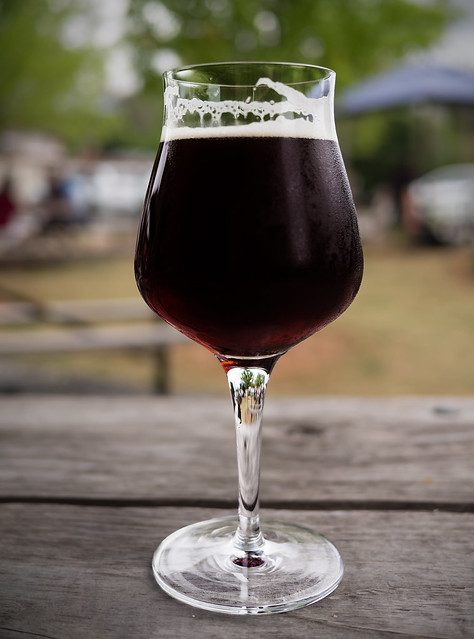
Heavy Seas Brewing's Red Sky at Night Saison, served on draught (with a side scoop of hummus) at My Parents' Basement (a combination good-beer pub, graphic novel shop, and arcade game parler) in the City of Avondale Estates, Georgia, USA (some 570 miles south of the brewery).

22 July 2025.


***************

About Red Sky at Night

Heavy Seas is a thirty-year-old 'craft' brewery, founded in 1995 (née Clipper City Brewing) in Baltimore County, Maryland, USA. The Red Sky at Night appears to be a limited re-release for the brewery's anniversary. Here's the brewery's description of the beer in 2010, when it was an annual spring release:

Brewed in the style of Belgian farmhouse ales – using a unique Belgian yeast and authentic Belgian candi sugar. It is a potent and spicy ale with deep complexity. Pairs well with Thai cuisine and mussels.
  • ABV: 7.5% [alcohol by volume]
  • IBUs: 17.5 [international bittering units]
  • Hops: French Strisselspalt
  • Malts: Pale, 2-Row, Wheat Malt

My impression (now, in 2025):
The beer poured with a pleasantly hazy appearance, typical of the saison style. In flavor, there were hints of spice (such as anise), notes of candi sugar fusel alcohols, and a 'red delicious' apple character. Tasty!

My Parents' Basement mistakenly, but humorously, referred to the beer as Red Rum Sky at Night, mixing a cinematic horror allusion with a nautical aphorism (quoted above). To be fair, so had the beer-review app, Untappd.

About Saison

(pronounced: "say ZAWWN")
Beers in this category are gold to light amber in color. Often bottle-conditioned, with some yeast character and high carbonation. Belgian-style saison may have Brettanomyces or lactic character, and fruity, horsey, goaty, and/or leather-like aromas and flavors. Specialty ingredients, including spices, may contribute a unique and signature character. Commonly called 'farmhouse ales' and originating as summertime beers in Belgium, these are not just warm-weather treats. U.S. craft brewers brew them year-round and have taken to adding a variety of additional ingredients.
CraftBeer
a website of the [U.S.] Brewers Association


A series of occasional reviews of beer (and wine and spirits).
No scores; only descriptions.
-----more-----

Saturday, July 12, 2025

Pic(k) of the Week: Halfway Crooks' draught "Farina"

Halfway Crooks' draught Farina
Click on the image for a larger, hi-res version (on Flickr).

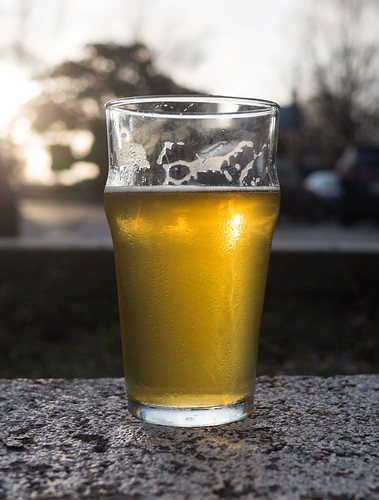
"Farina": a delightfully delicate 'Kölsch-style' beer brewed by Halfway Crooks Brewery (in Atlanta, Georgia, USA).

Here, served on draught (in its own glassware!), at the Brick Store Pub in Decatur, Georgia, USA, on 24 May 2025.

"Farina" is a top-fermenting lager brewed with German pilsner malt, hops sourced directly from Seitzfarm in Bavaria, a classic Kölsch yeast, Atlanta water. Notes of white wine, pear, German pilsner malt, floral German hops, and a refreshing dry finish. 4.8% ABV [alcohol-by-volume]
Halfway Crooks
Light herbal, earthy aromas. Mild bitterness, moderate spicy, earthy hop flavors, then some light white-grape acidity. Subdued soft fruit esters come out in the middle. Nicely balanced sweetness and bitterness.
Craft Beer & Brewing


***************

What is Kölsch (-style beer)?

1) Kölsch has the pale color of a fine Pilsner but the fruitiness of a fine ale. It has an aromatic bitterness and noticeable hop character, is well-fermented [like an ale], but is lagered cold for 14-40 days. Kölsch is properly served in a tall, narrow, straight-sided 200-ml (6.8 US fl oz) glass about 5 inches (13 cm) tall, at 55 °F (13 °C), with a pale white collar about an inch deep.

Kölsch is defined by German law as top-warm-fermented and cold-aged, with an alcohol content of 4.4 to 4.9 percent by volume. Also by German law, the beer must be brewed from Pilsner and Vienna malts, but may also contain up to 20% wheat malt.
Encyclopedia of Beer (1995). Christine Rhodes, Thomas Bedell, Fred Eckhardt, et al.
2) Since 1997, the term 'Kölsch' has had a protected geographical indication (PGI) within the European Union, indicating a beer that is made within 50 km (31 mi) of the city of Cologne (Köln) and brewed according to the Kölsch Konvention as defined by the members of the Cologne Brewery Association (Kölner Brauerei-Verband).
Wikipedia.

***************

A series of occasional reviews of beer (and wine and spirits).
No 'scores'; only descriptions.

-----more-----

Saturday, December 21, 2024

Pic(k) of the Week: Zat you, Santa Claus?

Zat you, Santa Claus?
It was an early Christmas gift from Santa Claus.

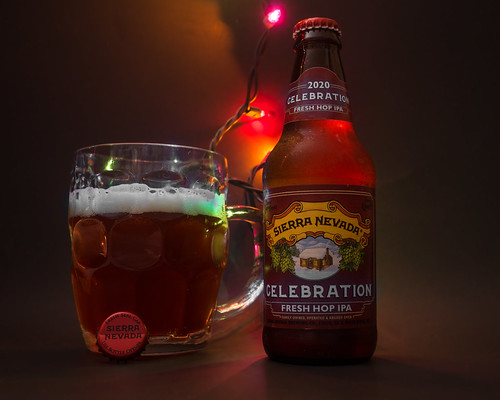
With eleven hand-pulls (!) of a beer engine, publican Adrian poured a delicious pint of cask-conditioned Celebration Ale (brewed by Sierra Nevada Brewing Company, in Chico, California).

The Brick Store Pub (in Decatur, Georgia) was one of only a few pubs nationwide given a cask of this classic American winter-season ale. 3 December 2024.


***************

About Celebration Ale

Hop harvest happens once a year, sending brewers to the Pacific Northwest to choose the hops they’ll use for months to come. We certainly do that—'hop selection' for all our beers—but Celebration Fresh Hop IPA gets its own 800-mile road trip through Washington and Oregon to hand-pick the ultimate fresh hops for citrus, pine, and floral flavors at their most intense.Once the hops come down, we race the harvest home [to Chico, California] to brew Celebration IPA within a few weeks. That’s the core of fresh hop beers: brew right away for maximum hop aroma and flavor. For more than four decades, it has been the holiday beer to start the celebration.


Specifications
  • Alcohol by volume: 6.8%
  • Bitterness Units: 65
  • Malts: Caramelized, Two-row Pale
  • Hops: Cascade, Centennial, Chinook
  • Yeast: American Ale

***************

-----more-----

Saturday, April 13, 2024

Pic(k) of the Week: Nitrogenated abbey

Nitrogenated abbey

Abt 12 is a 'quadrupel' abbey ale, brewed by Brouwerij St. Bernardus in Watou, West Flanders, Belgium.

Seen here, served, on draught in appropriate glassware, at My Parents' Basement —a combination pub and graphic novel/arcade game emporium— in Avondale Estates, Georgia, USA, on 6 March 2024.

Monks making beer? Why not? Beer —brewed from water, hops, yeast, and barley malt— is, after all, liquid bread. So, please give us this day our daily bread!

But, like any good story, there's more to it than meets the glass.


***************

St. Benedict and the Trappists

In 529 CE, an ascetic Christian monk, St. Benedict of Nursia, founded a monastery in Italy wholly centered on prayer, sacred contemplation, and manual labor (“ora et labora”). With the founding of several other monasteries, his group of followers became known as the Order of Saint Benedict or Benedictines.

In 1098, Saint Bernard of Clairvaux (co-founder of the Knights Templar) believed that the original purpose of the Benedictines had become diluted. Desiring to more closely follow the Rule of St. Benedict, he founded a new 'reformed' order at Citeaux Abbey near Dijon, France. His followers became known as Cistercians.

So, we come to 1664, when yet another splinter goup of monks wished to further reform the Cistercians. Led by Armand Jean le Bouthillier de Rancé, the abbot of La Trappe Abbey in Normandy, France, they created the Order of Cistercians of the Strict Observance, or, more commonly, the Trappists (officially becoming a religious order in 1892).

To this day, Trappist monasteries self-support themselves by producing and selling goods such as cheese, bread, fruit preserves — and beer (!)— in order not to make a profit but to simply sustain the necessities for life and prayer.
Let them not be discontented;
for then are they truly monastics
when they live by the labor of their hands,
as did our Fathers and the Apostles
Rule of St. Benedict (c. 530 CE).

***************

Trappist breweries

By the mid 20th-century, six Trappist monasteries were producing beer:
  1. Scourmont Abbey (producing Chimay)
  2. Abbaye Notre-Dame d'Orval (Orval)
  3. Abbey of Notre-Dame de Saint-Rémy (Rochefort)
  4. Brouwerij der Trappisten van Westmalle (Westmalle)
  5. Saint Sixtus (Westvleteren)
  6. Koningshoeven Abbey (La Trappe).
And, not really world-wide, but Beneluxian: the first five were established in Belgium, the last in the Netherlands.

Fast-forward to now, in 2024. There are three more added to the register:
  1. Brouwerij Abdij Maria Toevlucht (brewing Zundert) in the Netherlands
  2. Abbey of Saints Vincent and Anastasius (Tre Fontane) in Italy
  3. Mount St. Bernard Abbey (Tynt Meadow) in the UK.
Since the 1990s, a few other Trappist monasteries also have opened breweries, only to close them for various reasons —including one in the United States.

***************

Trappist trademark

Even before Word War II, Trappist monasteries had begun to take legal action against non-monastic businesses which made use of the name “Trappist” for their products. In 1985, the Commercial Court (now, Commerical Tribunal) in Brussels made this protection even more explicit:
It is now common knowledge that customers attribute special standards of quality to products made by monastic communities, and this is especially true of Trappist monasteries.

And, in 1997, the International Trappist Association (ITA) was established, creating standards and a trademark of “Authentic Trappist Products.”
Our label guarantees the monastic origin of the products as well as the fact that they measure up to the quality and traditional standards rooted in the monastic life of a real Trappist community. Even though this label can be used on other products, at present it is only used on beer, liqueur, cheese, bread, biscuits and chocolates.
Imagine receiving a cease-and-desist letter from a legal agent for God!

***************

Abbey beers and St. Bernardus

Per Wikipedia:
In 1945, the Belgian Trappist monastery, St. Sixtus essentially stopped selling its Westvleteren beer, brewing only for themselves...and limited sales at the monastery and local taverns. The monks gave a license to a local cheese factory to brew Saint Sixtus beers for outside sales and Brewery St. Bernard was founded. The brew master from Westvleteren, Mathieu Szafranski, became a partner in the brewery and brought along the recipes, the know-how, and the St. Sixtus yeast strain. Since 1992, these beers brewed in Watou, West Flanders, Belgium, have been sold under the brand name St. Bernardus.


So, St. Bernardus, although not brewed in Trappist monastery and not ITA-approved, does have an easily traceable Trappist provenance. Beers such as these — and others brewed to resemble the taste and appearance of Trappist beers or simply pay homage to them— are commonly refered to as “Abbey” or “Abbey-style” beers, without any strict legal standard.


***************

St. Bernardus Abt 12

As an old brewmaster once growled: “That's all well and good, but how does the beer taste?”

Generally speaking, the Trappist monks (and their imitators) brew their ales with distinctive yeasts (producing spicy, fruity, and estery/phenolic character), with extra ingredients, such as candi sugar (disdained by the Reinheitsgebot, the German Beer Purity Law), and often high in alcohol (even though that's not always the case).

The ales often are given the appellations of Singel, Dubbel, Tripel, and Quadrupel. These designations are ordinal numbers, indicating a ranking (1,2,3,4) of the brewery's beers in order of alcohol content, from less than 6% to more than 10% (by volume). They are NOT cardinal numbers; they do NOT imply double, triple, or quadruple anything.

So, St. Bernardus Abt 12 —a 'strong' Abbey-style ale of 10% alcohol— is designated a 'quadrupel.' It pours a dark reddish-brown but, unlike today's 'hazy' beers, if you hold the beer up to the light, you can see through it. The body is lush and somewhat unctious. After aromas of raisins, caramel apples and sweet cooking spice, the flavors are bittersweet chocolate, dark stone fruit, coconut, and malted milk balls. And finally, the finish is warming, with a smooth burn.


***************

Conclusion and the trouble with quibbles

One more thing, though. And, it's a quibble.

All Trappist ales and most Abbey ales — including St. Bernardus — traditionally have been carboanated. However, the kegged Abt 12 I drank at the pub pictured above had been nitrogenated — that is, infused with nitrogen gas— at the brewery.

The bubbles of beer come from carbon dioxide (CO2), a gas naturally produced by yeast during fermentation. Yes, many, if not most, beers today are fermented flat — that is, the carbon dioxide is allowed to escape during fermentation and, then, when the beer is packaged (be that in keg, bottle, or can), carbon dioxide is reinjected, under pressure, to create beloved beer bubbles.

But, the fact remains, those bubbles produced by carbon dioxide are part of the natural character of beer. They add, shall we say, 'life' to a beer, a satiating texture (as opposed to a 'flat,' uncarbonated beer).

The bubbles literally transport volatile beer aromatics to the human nose; simply put, without those bubbles, there's less aroma in your beer. Furthermore, the bubbles impart a tactile sharp yang to the yin of beer's residual malt sweetness. And, in the human mouth, some of those CO2 bubbles are even converted enzymatically into carbonic acid, adding more balancing 'bite.'

As to nitrogen gas in beer: it's artificially added. It's produced nowhere in the beer fermentation process. Nitrogen does not waft aromas to your nose; it adds no balancing bite to the finished beer. It doesn't even dissolve into the beer well; in fact, the beer under that creamy nitro-head is essentially flat! Nitrogen bubbles just sit there and look pretty. And, I guess that's the point. Creaminess, gentleness, and dimunition of aroma.

So, even though I prefer the get-at-you carbonated, cellar-ageable, and traditional bottled version...how did the nitrogenated draught St. Bernardus Abt 12 taste? Like a comfortable, boozy, pretty, malted milkshake. And that's not a bad thing!


A series of occasional reviews of beer (and wine and spirits).
No scores; only descriptions.

-----more-----

Wednesday, December 06, 2023

Happy Samichlaus Day!

This image and post were originally uploaded to Flickr, in 2014.

Samichlaus Barrique 2013

Samichlaus —aka Santa Claus or, more 'properly, Saint Nicholas— is the Roman Catholic patron saint of brewers. His 'feast day' —St. Nicholas Day— is celebrated annually on 6 December.

Samichlaus is also the name of a potent doppelbock (dark lager) of 14% alcohol! Brauerei Schloss Eggenberg —a family-owned brewery founded in Austria in 1681— brews the beer once a year on St. Nicholas Day, ages it for nearly a year, and then releases it for sale.

Eggenberg also produces a special version of SamichlausSamichlaus Barrique, pictured above— which, in addition to a year's maturation, is aged five weeks in oak wine barrels. Those barrels come from the Anton Bauer Winery, also in Austria.

A happier St. Nicholas Day!

-----more-----

Saturday, May 20, 2023

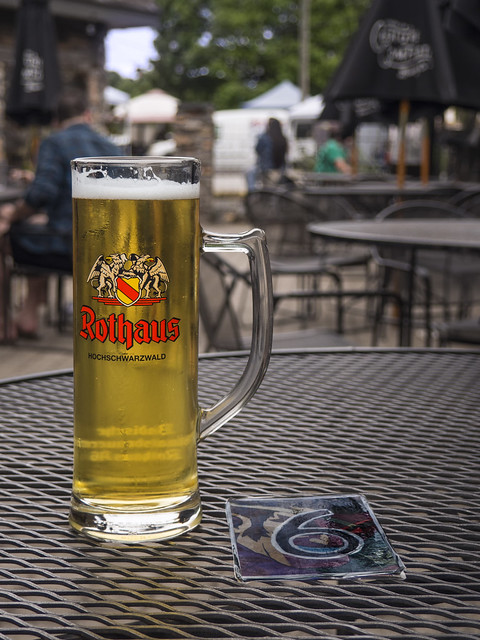
Pic(k) of the Week: Rothaus Tannenzäpfle Pils, on draught

Rothaus Tannenzäpfle Pils, on draught
The Rothaus Tannenzäpfle 1 is the absolute classic among our beers - and has been since 1956. That is why it is also the namesake and figurehead of the Gäpfle family. The best aromatic hops from Tettnang and the Hallertau as well as local malt made from summer barley and the purest spring water from the Black Forest give Rothaus Tannenzäpfle its uniquely spicy and fresh taste.
Badische Staatsbrauerei Rothaus 2 (Baden State Brewery Rothaus)

Rothaus Tannenzäpfle Pils — served out-of-doors on a spring afternoon, on draught in a brewery serving glass, on the pub patio at My Parents Basement 3, in Avondale Estates, Georgia, USA. 7 May 2023.

***************

Yes, but how does the beer taste?

For having traveled so far, the beer was in good form. Brilliant clarity under a long-lasting white collar of foam. Slightly grassy nose; subtle cracker-wafer malt; hints of honey and green apple; subdued tree-sap and mowed-grass hops; dry, slightly sulfury finish. A glorious German pilsner. Delightful.

A series of occasional reviews of beer (and wine and spirits).
No scores; only descriptions.

-----more-----

Friday, April 07, 2023

Happy National Beer Day, 2023!

Happy National Beer Day 2023!

7 April 2023: It's National Beer Day ... in the U.S., that is.

Then, again, is not every day, "beer day"? Ah, but there's more to the 90-year-old story. Read more at: YFGF.

***************

Now, as to those two lovelies...

  • Deathstill (left)
    • "German Style dopplebock." 8% alcohol-by-volume (abv).
    • In Dune —a series of science fiction novels (and films) by writer Frank Herbert and his estate— a deathstill is a "device used to extract all moisture from a living or dead human or creature. This is traditionally done to reclaim precious water from the dead, who no longer require it; but in Children of Dune the device is used as a method of execution."
  • A Night on Ponce (right)
    • "American IPA with Citra, Palisade, and Magnum hops." 7.5% alcohol-by-volume (abv).
    • Ponce de Leon Avenue is a major thoroughfare in Atlanta, named for the eponymous 16th-century Spanish conquistador, who searched for the legendary fountain of youth in Florida. Atlanta natives simply refer to the street as "Ponce."
Both beers brewed by Three Taverns Brewery, in Decatur, Georgia, USA. Both beers enjoyed, al fresco, on the brewery's beer patio, 11 March 2023.

A series of occasional reviews of beer (and wine and spirits).
No scores; only descriptions.
-----more-----

Saturday, February 11, 2023

Pic(k) of the Week: Tynt Meadow English Trappist Ale

Tynt Meadow English Trappist Ale

Tynt Meadow English Trappist Ale is an English Trappist beer, brewed by Trappist monks (precisely: the Order of Cistercians of the Strict Observance, a Roman Catholic monastic order) at Mount St Bernard Abbey, located in the town of Coalville, in Leicestershire, England, UK.

The monastery was founded in 1835. Brewing only commenced in 2018, when the abbey's small-scale dairy farm had become non-viable (vs. large agribusiness). Tynt Meadow English Trappist Ale is its only beer.

***************

HOW DOES IT TASTE?

Short answer: delicious. Long answer:

In color, Tynt Meadow is burnished-copper; clarity is good. The beer is well-conditioned, pouring with a long-lived, off-white head and some nice lacing down the glass...possibly because of bottle-conditioning (with live yeast). That also may have contributed a measure of oxygen-scavenging (i.e, active protection against staling). The beer tasted fresh, despite its trans-Atlantic voyage.

The principal flavor is dark fruit with lesser motifs of bitter chocolate and treacle. Interestingly, the monastery does NOT use Belgian yeast (which is the norm for most Trappist ales) but an unidentified English yeast-strain (in addition to English barley and hops, both also unspecified) that is noticeable in a fruit-cake flavor. The ale finishes smooth (I detest the illogical neologism "drinkable"), although the alcohol does seem to create a strong presence in the aftertaste. 7.4% alcohol-by-volume (abv).

Imported bottle (330 ml / 11.2 fl.oz), tasted in Atlanta, Georgia, USA. 20 September 2022.

***************

ERGO

Based upon their Cistercian adherence solely to prayer and work, the monks of Mount St Bernard Abbey literally produce only enough beer to pay their bills and support their charities. They quote Psalm 104:
You make the grass grow for the cattle and the plants to serve man’s needs, that he may bring forth bread from the earth and wine to cheer man’s heart.

I say, beer is liquid bread. So, please, "give us this day our daily bread."

A series of occasional reviews of beer (and wine and spirits).
No scores; only descriptions.

-----more-----

Saturday, September 17, 2022

Pic(k) of the Week: O'zapft is!


O'zapft is! *

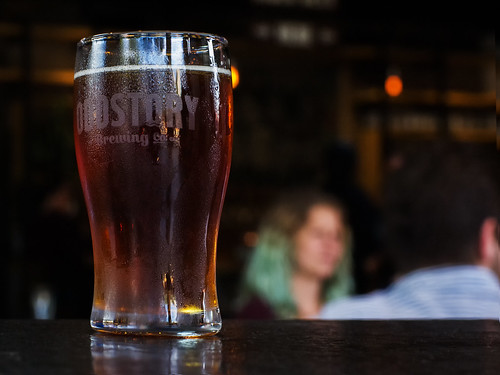
A refreshing draught pint of Oktoberfest lager is served in the beer patio at Odd Story Brewing, in Chattanooga, Tennessee, USA.
Oktoberfest/Marzen lager is a beer rich in malt with a balance of clean, hop bitterness, similar to the Vienna lager. Toasted bread or biscuit-like malt aroma and flavor is to be expected. Originating in Germany, this style was traditionally brewed in the spring (“Marzen” meaning “March”) and aged, or lagered, throughout the summer. A stronger version was served at early Oktoberfest celebrations and became known as Oktoberfest. Today, the festival’s version of an Oktoberfest is quite a bit lighter than what American craft brewers consider an Oktoberfest. 5.1-6% alcohol-by-volume (abv)
Craft Beer.com

***************

Oktoberfest in Munich

After a dry, two-year absence, the 'official' —and original— Oktoberfest returns today to Munich, the capital of the state of Bavaria in Germany. Since 1810 —when Bavarian Crown Prince Ludwig I organized the first Oktoberfest in Munich to celebrate his nuptials with Princess Teresa of the duchy of Saxe-Hildburghausen (now subsumed in the German state of Thuringia)— there only have been only twenty-six occasions on which the Oktoberfest festival has not been held. Of those, the most recent were last year and 2020, both cancellations due to the COVID-19 pandemic. Twice before that, disease also aborted Oktoberfest —in 1854 and 1874— but then because of cholera epidemics.

Munich's Oktoberfest —often referred to as the word's biggest party, with in excess of six million vistors expected— usually runs for sixteen days, counting backward from the first Sunday in October. Since the 1990s, however, if the sixteenth day falls before 3 October (which is the German Unity Day national holiday), the festival continues until and including the 3rd. Thus, this year, Oktoberfest comprises seventeen days: 17 September through 3 October.

Munich's name, by the way, is derived from the Old German term "Munichen," meaning "by the monks," referring to Benedictine monks who founded a monastery in what would later become the city. Trappist monks —a stricter, offshoot of the order— became known in 20th-century Belgium (and, in the 21st-century, elsewhere as well) for their eponymous wine-like ales.

-----more-----

Saturday, July 10, 2021

Pic(k) of the Week: OCA x2

OCA x 2

Old Coast Ales is a production brewery (with taproom) that opened in 2017. It's located in St. Augustine *, Florida, USA, a few blocks southeast of the Bridge of Lions, a 100-year-old drawbridge that connects Anastasia Island to downtown St. Augustine.

We visited on 1 July 2021. Here are two draught beers we ordered (and enjoyed) in the brewery's taproom.

Left to right:
  • Oh-8-Oh
    5.7% ABV
    (alcohol-by-volume)
    "Mildly bitter and balanced between malt and hop flavors, this pale ale features Sultana and Sabro Cryo hops."
    ---> Me: Yep. More like a classic pale ale's bitter and earthy than a latter day's fruity or cat-stinky. Had two.

  • Empirical
    American IPA
    6.6 % ABV
    "Old skool American IPA with a solid malt backbone and a heavy hop of Amarillo, Simcoe, and Centennial hops."
    ---> Me: Yep. Bonus points for beauty.
Old Coast Ales is a production brewery: meaning that it does not have a kitchen as would a brewpub. But, 'not to worry.' Innately connected to the brewery is a taco eatery that was busy when we visited. After purchasing some fare (which we ate while pairing drinking our beers in the brewery), we understood why.

***************

Hop geeky

Hops —the female (and non-seed bearing) flowers of herb bines— are used by brewsters in beer:
  • for their herbal/spicy/fruity flavors and aromas
  • to add drying bitterness as a counterbalance to malt sweetness
  • to lesser extents as beer-foam enhancers, beer shelf-life stabilizers, and anti-microbial agents.
There are many varieties of hops grown (such as Amarillo and Sultana, above), propagated for their flavor, aroma, bittering potential, farming yield, and resistance to agricultural disease.

-----more-----

Sunday, May 30, 2021

Pic(k) of the Week: Little Cottage Brewery (and pale ale)

Little Cottage Brewery (and pale ale)

On a delightful spring afternoon, Hymn Songs of an Alternate Universe —a 6.1% alcohol pale ale— was on draught, alfresco on the patio, at Little Cottage Brewery, in Avondale Estates, Georgia, USA. 29 May 2021.

Little Cottage —a production brewery— first opened on 15 May 2021. Its brewer/owner is Jon Shari, a successful Atlanta, Georgia-area homebrewer. The facilities, especially considering the light-industrial confines, are quite pleasant.

-----more-----

Saturday, April 17, 2021

Pic(k) of the Week: Avonator Doppelbock

Avonator Doppelbock

Small beer?

USA Today recently selected the small city of Avondale Estates, Georgia, as comprising “the nation's best small-town beer scene for 2021” (the nation being the USA). The town (population: est. 3,093) defeated nineteen others for the honor.
The charming town of Avondale Estates, just east of Decatur, Georgia, has a small downtown area packed with unique food and beverage offerings. For beer lovers, there’s Wild Heaven Beer (brewery), The Lost Druid Brewery, The Beer Growler & Pint Haus, and (soon) Little Cottage Brewery. *
USA Today 10 Best
26 March 2021

Pictured above is a beer enjoyed at one of those emporia in that winning beer scene: to wit, Avonator Doppelbock, on draught, in the beer-garden at Lost Druid Brewery, on 9 April 2021.


***************

But how did the beer taste?

Bock is a traditional, strong, malty Bavarian lager. ... Dopplebock is a strong [bock] beer with a typical alcohol content beyond 7% ABV. The style originated in the Bavarian capital of Munich, Germany, and was for a fairly long time synonymous with the Salvator beer brewed by Paulaner. Other breweries indicate the style by amending “-ator” to the beer's name. While they can be brewed to any color and made by different methods, doppelbocks are usually reddish-brown bottom-fermented lagers, and generally show a toffee-like, bready aroma and rich malty palate with notable residual sweetness. Hops are usually robust enough to offer some balance, but rarely about 25 IBU.
The Oxford Companion to Beer (Oxford University Press, 2012).

***************

Yes, but how did the beer taste?

Nose of plum, dark bread, and black olives. Flavor follows suit. Medium-sweet body and medium-full mouthfeel; off-dry finish. Tasty and sipping strong. (The brewery provides little online description although the label on a take-out can certified alcohol by volume to be 9.6%.)

Many latter day American 'craft' breweries tend to eschew 'traditional' European beer-styles (although there may be a guerilla return). So, it was refreshing (pun intended) to find one and enjoy it, close to home and, indeed, during bock season.

A series of occasional reviews of beer (and wine and spirits).
No scores; only descriptions.

-----more-----

Saturday, March 27, 2021

Pic(k) of the Week: Beware the mercaptans!

Beware the mercaptans!

Alfresco may be beautiful but beware the mercaptans. Beer lovers don't allow their beers to get 'skunked.'

About beer, hops, sunlight, and mercaptans (aka thiols):
Certain compounds in hops are light-sensitive and when exposed to strong light a photo-oxidation reaction takes place, creating the intensely flavor-active compound 3-methyl-2-butene-1-thiol (MBT), one of the most powerful flavor substances known to man. Commonly referred to as 'skunky,' the pungent odor resembles that of the famously malodorous defense spray deployed by skunks.
The Oxford Companion to Beer: Oxford University Press, 2012.

To ward off the stank, keep beer out of direct sunlight or fluorescent light. Cans (and kegs) are best for that and brown glass is ok. But green glass? In sunlight, it's nearly worthless (e.g., that 'Dutch' beer) and clear glass (or plastic) is merely a vessel for liquid skunk (e.g., almost every 'craft' beer patio). Yummy...not.

Light-struck vs. oxidized

PS. Light-struck 'skunkiness' is NOT the same off-flavor (or biochemical mechanism) as that in a beer left warm. Beer exposed to heat (and over time, such as an old beer) will oxidize. The beer will develop malodors such as cardboard (!) and sherry and quickly lose its hop aroma. This can happen to any beer left warm, whether in direct sunlight or not, whether in a can, in brown glass, or in a keg.

By the way, when a beer is pasteurized, it is deliberately exposed to high heat over a short period of time. Draw your own conclusion.

A series of occasional reviews of beer (and wine and spirits).
No scores; only descriptions.

-----more-----

Saturday, February 06, 2021

Pic(k) of the Week: Harvest Ale Vintage 2000 (21 years later)

Havest Ale Vintage 2000

This happened.

On 29 January 2021, I tasted an aged bottle of J.W. Lees & Co. Harvest Ale (11.5% alcohol barleywine 1), that the Middleton, England-brewery had brewed and bottled twenty-one years earlier, in Y2K. And that had resided in my 'cellar' since.
Though J.W. Lees Brewery of Middleton, England, has been crafting quality beer since 1876, it wasn't until 1986 that it released its delectable sipper into the world. Brewed with the choicest [me: ugh] Maris Otter malt [me: sublime] and East Kent Goldings hops [Ibid.] , it has the legs to go the distance. The brewery uses a house-developed yeast strain to ferment the brew in original open copper-lined vessels.
Vintage Beer (Patrick Dawson): Storey Publishing, 2014.


"But," the old brewmaster asked, "How did the beer TASTE?"

Gently prying the crown cap, I heard a faint fizz. (Listen to your beer.) Considering the Harvest Ale's venerable age, its carbonic condition 2 and head retention were remarkably good. In fact, they were that of a 'fresh' beer. Likewise the clarity —just see-through deep garnet color— was good.

In the beer's aroma, I sniffed chocolate and dark berries. Taking a sip, I tasted the same but with secondary flavors of oloroso sherry and ruby port. Taking a gulp, I was drinking a semi-sweet beer with an unctuous finish (in a good way). Any burn from its alcoholic strength (11.5%) had been mellowed by two-decades-and-one-year of time.

I might have enjoyed a flourless chocolate dessert (or a fine Stilton cheese) as an accompaniment but, given such a divine taste of liquid history, I enjoyed it per ipsum. Alas, the bottle contained only 275 milliliters (9.3 U.S. fluid ounces) of beer. Waiting so long for pleasure so brief.

-----more-----

Saturday, December 26, 2020

Pic(k) of the Week: Happy Celebration 2020.

Happy Celebration 2020

I began this damnable year with a beer. Let me end it likewise but with a celebration for a better year, next.

Sierra Nevada Celebration Ale
Sierra Nevada Brewing Company
Chico, California / Mills River, North Carolina.

The brewery released the beer in mid-October 2020 for the winter season. My particular bottle —which I purchased and sampled (uhh, drank) on Christmas Eve, 24 December 2020— the brewery had packaged on 16 October.

From the bottle's label:
Fresh hop 1 IPA.
6.8% alcohol-by-volume.
We first brewed Celebration IPA in the winter of 1981. Each year, we use only the first fresh hops of the growing season to create this complex and robust ale. Layered pine and citrus hop aromas balance delicately against rich malt sweetness to shape this bold, wintertime classic.

From me:

Bright hops, citrusy and piney, chased by an off-dry biscuity middle and a white pepper finish. Two months after bottling, the hop aroma might have been a bit diminished but not the overall hop presence and not the firm malt backbone. Indeed a holiday celebration.


And, so, to all my readers: Linksmų Kalėdų tau ir tavo! (On the off chance you're not fluent in Lithuanian, that's "Happy Christmas to you and yours!") 2

-----more-----

Saturday, December 05, 2020

Pic(k) of the Week: Delirium trashed!

Delirium trashed!

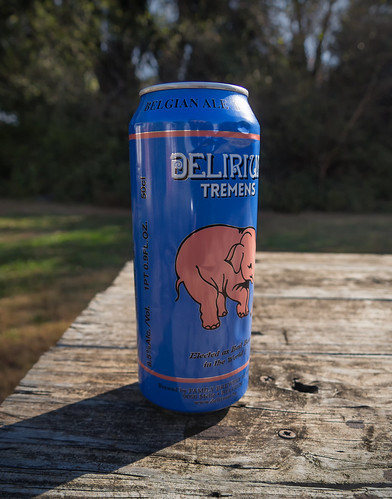
Just as Pabst Brewing continues to milk a blue ribbon it once received for its beer at a long-ago competition, the Huyge Brewery —located near Ghent, Belgium— touts its Delirium Tremens as the "best beer in the world" for one accolade it received in one competition in 2008.

The beer, named for symptoms brought on by alcohol withdrawal, is, fittingly, a strong beer, containing 9% alcohol. More importantly, how does the beer taste?

In his 2005 book, The Great Beers of Belgium, the late, great beer sage Michael Jackson described Delerium Tremens as:
Very bright [golden]. It has a dense head; a very fruity (greengage? gooseberry?) bouquet; a sweetish palate; and a lot of warming alcohol in an abrupt finish.

I didn't pose that empty beer can, by the way. It was already there, emptied of its contents, sitting on the picnic table, as I and the dog walked by on our morning constitutional. There must have been quite the beer party the day before.

-----more-----

Saturday, November 07, 2020

Pic(k) of the Week: Beau Geste

Beau Geste

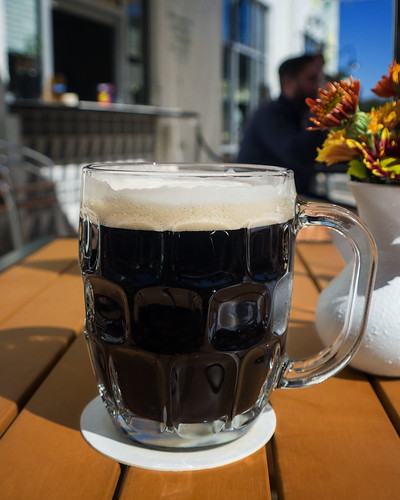
A mug of Geste, in the beer garden, at Elsewhere Brewing, in Atlanta (Grant Park), Georgia, USA. 31 October 2020.

Brewery description:
Dark Czech [style] Lager
ABV: 4.7%
IBU: 18
A tale of adventure! Stories from Prague praise a dark lager that delights the palate year-round. [Tastes of] rye bread, dried dates, and chocolate.

In style, Geste might be this new brewery's nod to a Czech-style tmavé pivo. Now, I don't know whether or not Elsewhere decocts Geste, as would be de regueur for tmavé pivo brewed in the Czech Republic. Nonetheless, the lager pours with a long-lived, creamy off-white head (via a side-pull tap); spicy hop and, yes, toasted rye-bread aromas; an off-dry body, alchemically full in such a small beer; flavors of toasted rye bread, chocolate, licorice, and dried dark fruit; and a spicy, Czech-style hop finish.

Elswhere pronounces Geste as "jest." I've added the adjective beau to my caption. The phrase "beau geste" is from the French, meaning "a graceful or magnanimous gesture." Fitting.

The brewpub is new. Its grand opening occurred over the previous weekend, on 24 October. That its brewer Josh Watterson has already produced such a sublime beer is tasty testament and auspicious augur.

Elsewhere Brewing

-----more-----

Saturday, September 19, 2020

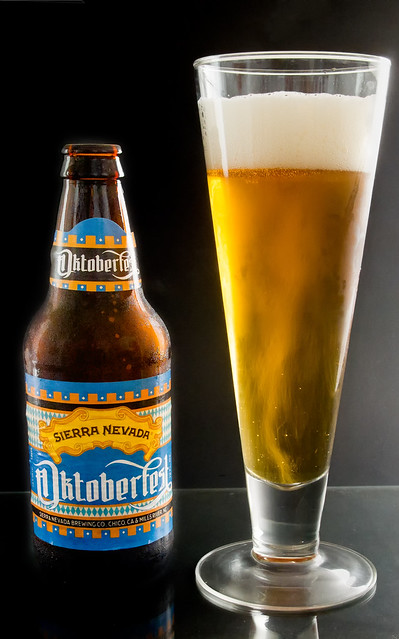
Pic(k) of the Week: Sierra Nevada Oktoberfest 2020, 'pro se'

Oktoberfest 2020
Since 1810, when Bavarian Crown Prince Ludwig I organized the first Oktoberfest in Munich —to celebrate his nuptials with Princess Therese— there only have been twenty-five occasions on which the festival has not been held. And that includes this year.

In April, Markus Söder (Minister-President of Bavaria, Germany) and Dieter Reiter (mayor of Munich) jointly, sadly, announced the official cancellation of the 2020 Oktoberfest, citing the ongoing coronavirus pandemic: “The risks are simply too high.” The last time Oktoberfest was canceled was seventy-two years ago, in 1948, due to post-war deprivation (temporarily replaced by a small-scale, small-beer celebration). And disease itself has canceled Oktoberfest twice before this year: in 1854 and 1874, in both years because of European cholera epidemics.

If the festival had occurred this year, it would have begun today, Saturday, 19 September, and concluded in sixteen days, on Sunday 4, October.

***************

Meanwhile, 5,700 miles west of Munich...

In 'normal' years, Sierra Nevada Brewing of Chico, California, USA (and Mills River, North Carolina) has partnered with a different German brewery each year to produce its seasonal Oktoberfest. But, in 2020, as with the Bavarian celebration, such a collaboration has proven pandemically unfeasible.

So, this year, Sierra Nevada brewed pro se.
Our Festbier is a refreshing ode to beer’s biggest party. Toasty malts and German hops yield notes of fresh bread and floral, fruity character for a balanced, crisp lager that makes any moment festive.
  • Malts: Two-row Pale, Munich, Vienna
  • Hops: Spalter, Spalter Select
  • Yeast: Lager Yeast
  • Original gravity: 13.9 °P
  • Alcohol-by-volume (abv): 6%
  • Bittering Units (IBU): 28
My impression?

Deep golden hue with a white head and good bead. Aromas of toasted malt, gently pungent flowers, and circus-peanut candy. Off-dry interior of sweet malt and light caramel. Spicy/medium-dry finish. Straightforward...and recommended. Going solo didn't hurt much.

Sierra Nevada Oktoberfest 2020
Note: I purchased my tasting 'samples' in Atlanta, Georgia, on 4 September. Per a bottle imprint, Sierra Nevada had packaged the beer on 23 July, but whether that had occurred at the California or North Carolina plant was not indicated.


***************

More Oktoberfests

Mr. Alistair Reece is a Scot ex-pat who makes his home in central Virginia, USA (arriving there after a detour to Prague, Czech Republic). And he loves his Oktoberfests. For the past several years, around this time of year, he has courageously consumed dozens of Oktoberfests, Fest-styles, Märzens, and American 'craft' interpretations in order to rank them by style fealty and quality, tangible and ineffable. This year, his top ten list goes thus:
  1. 1. New Realm (Georgia/Virginia, USA) - Bavarian Prince
  2. 2/3. (tie) Great Lakes (Ohio, USA) - Oktoberfest
  3. 2/3. (tie) Sierra Nevada - Oktoberfest
  4. 4/5/6. (tie) Left Hand (Colorado, USA) - Oktoberfest
  5. 4/5/6. (tie) Von Trapp (Vermont, USA) - Oktoberfest
  6. 4/5/6. (tie) Benediktiner (Bavaria, Germany) - Festbier
  7. 7/8. (tie) Ayinger (Bavaria, Germany) - Oktober Fest-Märzen
  8. 7/8. (tie) Samuel Adams (Massachusetts, USA, etc.) - Octoberfest
  9. 9/10. (tie) Devils Backbone (Virginia, USA) - O'Fest
  10. 9/10. (tie) Warsteiner (North-Rhine Westphalia, Germany) - Oktoberfest
Caveat: Your mileage may differ. Mr. Reece tasted/judged only those beers available in his neck of the central Virginia woods. For his full list, his scoring and criteria, and his tasting notes, go to his website, Fuggled (the name of which reveals his additional affinity for British-style bitters and milds).

-----more-----

Saturday, July 11, 2020

Pic(k) of the Week: ESB in happier times

Beer on Small Brewery Sunday

On 1 December 2019, this was Origination ESB, on draught in the taproom at Lost Druid Brewery for Small Brewery Sunday, in the (small) city of Avondale Estates, Georgia, USA.

If this image looks familiar, it's because I originally posted it to YFGF's Facebook page that same day. It deserves an overdue elevation to Pic(k) of the Week status.

Considering the craft beer world's current state of affairs (let alone, the world), remembering Small Brewery Sunday on any day might not be a bad thing. In better times,
Every dollar a beer lover spent at a craft brewery fueled a small business that supports the economic health of its local community.
The 'craft' beer industry:
  • Contributed $79.1 billion to the U.S. economy.
  • Provided 559,545 total jobs.
  • Gave an estimated $92.6 million to charitable organizations.
—the [U.S.] Brewers Association's 2018 Economic Impact Report

And Origination, itself?
An autumnal interplay of malts and hops provides for exquisite balance in this English extra special bitter [ESB]. Light earthy, herbal hop character intermingles with bready, toffee-like malt notes to produce a highly sessionable ale for the fall season. 5.7 % abv [alcohol-by-volume].

Extra specially tasty, it was.

-----more-----

Saturday, May 09, 2020

Pic(k) of the Week: Zwickel-Teasing

Mad Mild (03)

Zwickel is the German word for a type of stainless steel valve designed for taking samples [from] enclosed containers, possibly under pressure. [...] The Zwickel cock is built with a highly sanitary design and is generally found on bright beer tanks and uni-vessels.
The Encyclopedia of Beer (1995)

'Zwickel-teasing' is a euphemism for taking a sample large enough for, uh, quaffing.

In the photo, a brewer was zwickel-teasing a 'Mild Ale' from a fermenting/conditioning vessel. He offered me the 'sample' to taste. I accepted.

May is American Mild Month, the sixth such iteration of this nationwide celebration. I've written about that: here.

-----more-----