Thursday, May 19, 2016

Eight facets of beer.

The Session: Beer Blogging Friday is a monthly blog-in, held on the first Friday of each month, in which beer bloggers write on a given beer-related topic. The topic on 6 May was "Surviving a Beer Mid-Life Crisis." At his blog, Literature & Libation, Oliver Gray, May's host, asked:

Recently, I’ve found my interest in said hobby waning. The brilliant luster of new beers and new breweries looks now, a few pounds heavier and a bunch of dollars lighter, more like dull aluminum oxide. Do you find it hard to muster the same zeal for beer as you did a few years ago? Are you suffering through a beer-life crisis like I am? If so, how do you deal with it?


I answered his question with a contribution entitled, "Enjoy the beer; forget the hype." But it was something I had written as an aside, weeks before The Session —as a comment at another beer blog— in which I may have better drilled down to the lode.

Call it the seven ur-facets of beer.
There’s beer as a business; beer as tax revenue; beer as science and technology; beer as one (small) study point in history; beer as an alcohol delivery system; beer as a diverting avocation. Each except the last is specific to a limited concern. A loss of interest in the last calls for a new hobby. There’s little semiotic about it.

I had forgotten that I had written that until Mr. Gray kindly reminded me. In his summary of the sixteen submissions to The Session, he found that almost all the contributors had written, independently, on an identical monad: "Embrace the mania."

Mania, indeed! Let's call pleasure the eighth ur-facet of beer. Then, let's go grab a beer.

Weizen al fresco

-----more-----

Tuesday, May 17, 2016

American Craft BREWERS Week

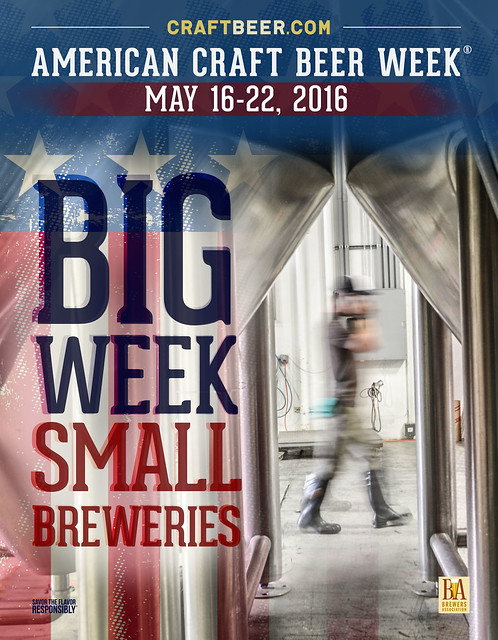
The American 'craft' brewing industry —and make no mistake, a business is what it is— congratulates itself this week during American Craft Beer Week (16-22 May 2016).

For the 11th year in a row, the [U.S.] Brewers Association has declared American Craft Beer Week (ACBW), the nationwide celebration of U.S. small and independent craft brewers. The weeklong tribute provides an opportunity for craft brewers to share their diversity, creativity and passion for the beverage they love with the greater craft beer community. From May 16 – 22, 2016, all 50 states will be holding events including exclusive brewery tours, special craft beer releases, food and beer pairings, tap takeovers and more to celebrate the ever-advancing beer culture in the United States.

In 2015, more than 60,000 beer lovers across all 50 states were also part of the ACBW Facebook Community. With over 4,100 craft breweries now open—an all-time high for our country—there’s even more to celebrate.

American Craft Beer Week is a fitting time to reflect on how craft brewers revolutionized not only the way beer is viewed, but also the landscape of American beer distribution and retail sales in a single generation. Consider that in 1980 there were a mere 42 brewing companies left after decades of consolidation producing, among them, a handful of different beer styles. Today we have more than 4,300 breweries—99% of them small and independent contributing myriad beer styles to a vibrant beer marketplace.

In the last four years alone, the snowballing interest in craft beer has resulted in a doubling of the number of breweries, while the mergers and acquisitions involving multi-national conglomerates and local favorites alike continue to create new challenges. There is little argument that craft beer is booming, but it’s imperative to understand how far we’ve come and do what’s necessary to protect the choices that our craft beer ancestors have enabled. Let’s celebrate and educate, all while inspiring others to join us—either through raising a well-crafted pint or pulling on those boots to brew themselves.

Big Week, Small Breweries

I'll commemorate these seven days in May in a different fashion.

I will not be honoring 'craft' beer's rock stars or its self-regarded revolutionaries; not the tribunes of "epic" nor the 'craft' solipsists; not the markete(e)rs, style promulgators, or experts.

Nope.

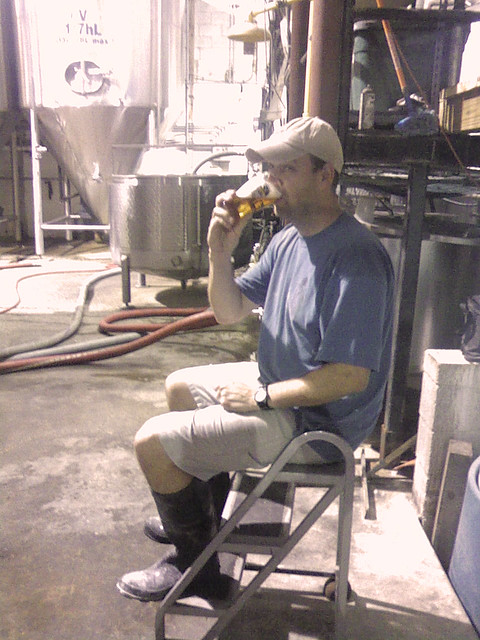
In honor of the gals and guys who actually make our beer, I'll be commemorating the week, instead, as American Craft Brewers Week.

Thank you, brewsters and brewers, all 121,843 of you. This beer's for you.

Ah!!

-----more-----

Monday, May 16, 2016

Clamps & Gaskets: News Roundup for Weeks 17/18, 2016.

Clamps and Gaskets: weekly roundup
A bi-weekly, non-comprehensive roundup
of news of beer and other things.

Weeks 17/18
24 April - 7 May 2016

  • 7 May 2016
    The biennial World Beer Cup was held in Phildelphia, Pennsylvania, concurrent with the 2016 Craft Brewers Conference. 6,596 beers from 1,907 breweries in 55 countries competed in 96 'styles.' 287 medals were awarded and six breweries were judged as overall champions.
    —Via YFGF.

  • Beer Flavor Map
  • 6 May 2016
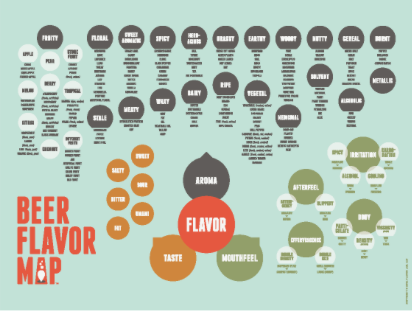
    Two scientists have updated the Beer Flavor Wheel —thirty-seven years after its creation by brewing chemist Morten Meilgaard— with the Beer Flavor Map.
    —Via CraftBeer.

  • 5 May 2016
    The American History Museum of the Smithsonian Institution, in collaboration with the [U.S.] Brewers Association, to document the history of brewing in the United States, including 'craft' brewing.
    —Via BeerPulse.

  • 5 May 2016
    In the U.S., Cinco de Mayo (the 5th of May) is celebrated with beers and margaritas, Donald Trump, notwithstanding. In Mexico, not so much. It's a 19th-century story of France, Austria, and Mexico, but not one of Mexican independence.
    —Via Long Beach Post.

  • 3 May 2016
    Antibiotic abuse and consequences
    • Nearly a third of antibiotics prescribed annually are not needed, according to a study by the Centers for Disease Control and Prevention (CDC) and the Pew Charitable Trust. The finding, which has implications for antibiotics' diminished efficacy, translates to about 47 million unnecessary prescriptions given out each year.
      —Via Washington Post.
    • Antimicrobial resistance threatens the effective prevention and treatment of an ever-increasing range of infections caused by bacteria, parasites, viruses and fungi. Antimicrobial resistance is present in all parts of the world. New resistance mechanisms emerge and spread globally. It is an increasingly serious threat to global public health that requires action across all government sectors and society.
      —Via World Health Organization WHO.

  • 5 May 2016
    The American History Museum of the Smithsonian Institution, in collaboration with the [U.S.] Brewers Association, has announced its plans to document the history of brewing in the United States, including 'craft' brewing.
    —Via BeerPulse.

  • 2 May 2016
    Concerning eating well, Michael Pollan wrote: “Eat food. Not too much. Mostly plants.” Concerning drinking (beer) well, Jeff Alworth writes: "Buy local, buy good, drink on tap."
    —Via Beervana.

  • May is... American Mild Month 2016
  • 1 May 2016
    May 2016 is the second annual American Mild Month.

  • 1 May 2016
    On 1 May 1844, Bavarian workers rioted after King Ludwig I decreed a tax on beer. Civil order was restored five days later after the King decreed a ten percent reduction in the price of beer. Resentment remained. Four years later, in the aftermath of the Revolution of 1848, Ludwig I abdicated in favor of his son, Maximilian II.
    —Via Wikipedia.


  • Michael Ash (1917-2016)
    Photo: Lucy Ash, via Twitter.
  • 30 April 2016
    Michael Ash (1927-2016), the mathematician who invented nitrogen dispense for Guinness Brewing in 1959, has died at age 88. Many craft breweries and pubs today utilize similar nitrogen dispense for their beers, calling the procedure "nitro."
    —Via Jeff Alworth at Beervana.

  • 30 April 2016
    The era of big 'craft' beer is dead. RIP: 2005-2015.
    The big craft era of 2005-15 is relatively late to the game. And, let's be honest, if these guys didn't become the millionaires and billionaires someone else would have. It's not like they invented beer. Folk will say that good beer is in crisis and point to this odd news as some sort of life raft in an ocean of evil big beer and big money. Have none of it. This is just the new boss meeting the old boss all in the great cause of money. Which is good. Because that is success. Rejoice. Big craft is dead. Brewing continues to move on and on, becoming more affordable and more excellent and more diverse and more interesting because this era of craft is dead.
    —Via Alan McLeod at A Good Beer Blog.

  • 30 April 2016
    "Mr. Beer" and the rise of the "Aleholes." When the simple enjoyment of beer enjoyment becomes distracted by the complicated, the esoteric, and elitism.
    —Via Beer Simple.

  • 25 April 2016
    In December 2015, writer Dave Infante wrote an essay for Thrillist: "There Are Almost No Black People Brewing Craft Beer. Here's Why." In April 2016, the essay won a James Beard award for best writing on "Wine, Spirits, and Other Beverages." The James Beard Foundation Awards are annual awards presented by the James Beard Foundation for excellence in cuisine, culinary writing, and culinary education in the United States.
    —Via Thrillist.

  • 25 April 2016
    How can civil asset forfeiture not be a violation of the 4th, 5th, and 14th amendments to the U.S. Constitution? How police legally took $53,000 from a Christian band, an orphanage, and a church, none guilty of any crime.
    —Via Washington Post.

  • 24 April 2016
    "The world’s biggest breweries now have diverse portfolios and brands that they bought and make within their massive facilities to sell to their extremely powerful and increasingly unilateral distribution networks. All of this is done in an effort to marginalize craft brewers’ access to ingredients and market."
    —Via Sam Calagione of Dogfish Head Brewery at Imbibe.

-----more-----

Saturday, May 14, 2016

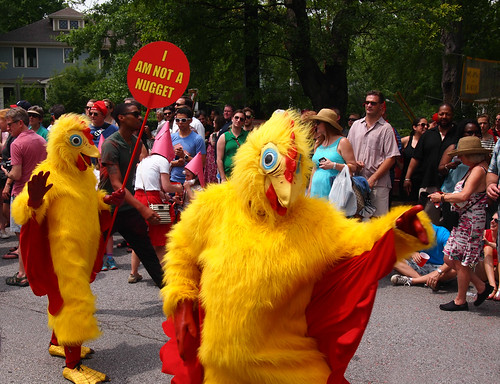
Pic(k) of the Week: I am NOT a nugget!

I Am Not A Nugget (04)

Two chickens protest against fowl carnivores, marching for GARP (Georgia Animal Rights & Protection), as seen at the Inman Park Festival, in Atlanta, Georgia, on 30 April 2016.
GARP is a non-profit organization dedicated to the abolition of animal exploitation and suffering. GARP focuses on educating the public about the abuse and cruelty that is inherent in the use of animals for food, entertainment, research and fashion.

-----more-----

Thursday, May 12, 2016

The paucity of Mild (and why that's changing in the U.S.).

It's nearly the middle of May, and I have yet to drink one drop of Mild Ale this month. None of the breweries in Georgia brew one. And that's a pity. They haven't heard the news. [Happy update: They have!]

It's the second annual American Mild Month. Throughout the month of May and throughout the rest of the United States, breweries are brewing American Mild Ales.

May is... American Mild Month 2016

American Mild Month is the idea of Alistair Reece: an ex-pat Scotsman and past Prague resident, who now lives in Virginia in the U.S., where he blogs at Fuggled. The Campaign for Real Ale (CAMRA) has been hosting a "May is for Milds" campaign for many years. So, Reece thought, why not here in the U.S.?

What is Mild Ale? Start with the concept of 'session' beer. Lew Bryson, a long-time fighter for 'session' beer, defines American Session Ale as:
  • 4.5% alcohol by volume or less
  • flavorful enough to be interesting
  • balanced enough for multiple pints
  • conducive to conversation
  • reasonably priced

Before the 20th century (and even into it), Mild Ale referred to something very different than it does today: then, a non-aged ale, often quite strong. Today, it's a low alcohol, not bitter, often darker ale. Of Mild's character, I'll defer to British authors Jessica Bloak and Ray Bailey:
First, it has to put sweet malt and flavours from sugar at the forefront, but that doesn’t have to mean that it has to be sickly or lacking in character. Bitterness can work, but excessive perfume just seems wrong. Roastiness also jars, suggesting that some brewers remain in thrall to out-of-date history that declares mild to be a degeneration of porter, which it isn’t.

Reece interprets American Mild as a form of modern Mild Ale, but with an American twist: a "restrained, darkish ale, with gentle hopping and a clean finish so that the malt and what [American] hops are present shine through." I should add "would be," because American Mild has not yet been 'recognized' by this nation's beer-style poobahs.
  • Alcohol-content-by-volume (abv) of 4.5% or less.
  • Color greater than 17 SRM (i.e., darker than a golden ale).
  • Bitterness level of 30 International Bittering Units (IBU) or fewer. Thus, more bitter than an English Mild, but much less hoppy than an American IPA.
  • American —thus, not-so-fruity— ale yeast strains.
American Mild is not a hop bomb, but neither need it be a hop free zone. 'Low' is not the same as 'none;' it is all about restraint, and with the wide variety of American hops available the range of hop flavors is actually quite broad, whether its the spiciness of Cluster, the grapefruit of Amarillo, or the tropical fruit of El Dorado, there is room here for differentiation, and dry hopping is ok too.

Remember though, before going crazy with the hops, an American Mild is not a Session IPA, or a Session Cascadian Dark Ale, it's still a mild. Traditional English milds top out at 25 IBUs, but for an American Mild we would suggest an upper limit of 30 IBUs.

Alcoholic restraint is a hallmark of the modern mild ale, and we believe that an American mild should follow that tradition, topping out at 4.5% abv. We imagine most American milds would fall between 3.5% and 4.5% abv.

One major departure from the English mild style in a theoretical American mild is the yeast. The classic American yeast strain used by many an American craft brewery is known for being very clean, allowing the other ingredients to shine through without contributing the fruity flavors of the British yeasts.

American Mild Ale is NOT a 'session' IPA; it is not an over-hopped ale; it does not contain alcohol of greater than 4.5% by volume. Do any of those things, and you're playing with 'session' semantics.

Do things right, and Mild Ale — 'more-ish' and (ugh, how I detest this word) 'drinkable'— might just be the quintessential 'session' beer. So, why isn't your brewery brewing one?

Some brewers will tell you that the word "mild" itself dampens sales, as in mundane or not dangerous enough. A few years back, a Virginia brewer was experiencing slow sales of his draft and cask Dark Mild Ale, called such. He re-christened it as Atomic Monkey, and sales boomed.

So, U.S. breweries: call it what you will. Just please brew it! And please serve it cask-conditioned (without extraneous stuff). And please do it, now, in May, or, while you're at it, year-round. Please, and thank you.
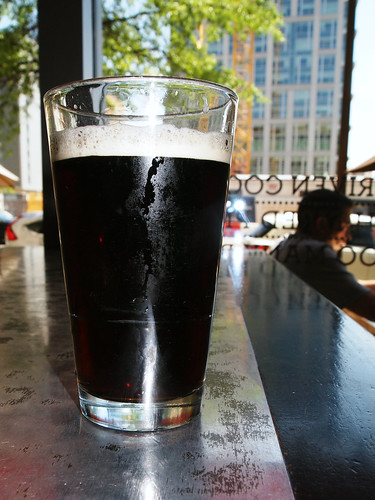
Mild Ale for Mild Month (03)

-----more-----
  • *UPDATE. After I posted, I received this welcome Georgia update from American Mild Month: "Georgia has a mild going on tap today - Monday Night Brewing's Sad Stove Mild in their tap room."

  • American Mild Ale:
  • An in-depth examination of modern British Mild Ale, from Jessica Boak and Ray Bailey, at All About Beer: here.
  • Irony notwithstanding, these are the specifications for English Mild Ale, as defined by the [U.S.] Brewers Association.
    A. Subcategory: English-Style Pale Mild Ale
    English Pale Milds are light amber to medium amber. Chill haze is allowable at cold temperatures. Fruity-ester aroma is very low to medium low. Hop aroma is very low or low. Malt flavor dominates the flavor profile. Hop flavor is very low to low. Hop bitterness is very low to low. Very low diacetyl flavors may be appropriate in this low-alcohol beer. Fruity-ester flavor is very low to medium low. Body is low to low-medium.
    • Original Gravity (°Plato) 1.030-1.036 (7.6-9.0 °Plato)
    • Apparent Extract/Final Gravity (°Plato) 1.004-1.008 (1.0-2.1 °Plato)
    • Alcohol by Weight (Volume) 2.7%-3.4% (3.4%-4.4%)
    • Bitterness (IBU) 10-20
    • Color SRM 6-9 (12-18 EBC)

    B. Subcategory: English-Style Dark Mild Ale
    English Dark Milds are reddish brown to very dark. Fruity-ester aroma is very low to medium low. Malt and caramel are part of the aroma while licorice and roast malt tones may sometimes contribute to aroma profile. Hop aroma is very low. Malt flavor and caramel are part of the flavor profile while licorice and roast malt tones may also contribute. Hop flavor is very low. Hop bitterness is very low to low. Very low diacetyl flavors may be appropriate in this low-alcohol beer. Fruity-ester flavor is very low to medium low. Body is low-medium to medium.
    • Original Gravity (°Plato) 1.030-1.036 (7.6-9.0 °Plato)
    • Apparent Extract/Final Gravity (°Plato) 1.004-1.008 (1.0-2.1 °Plato)
    • Alcohol by Weight (Volume) 2.7%-3.4% (3.4%-4.4%)
    • Bitterness (IBU) 10-24
    • Color SRM 17-34 (34-68 EBC)