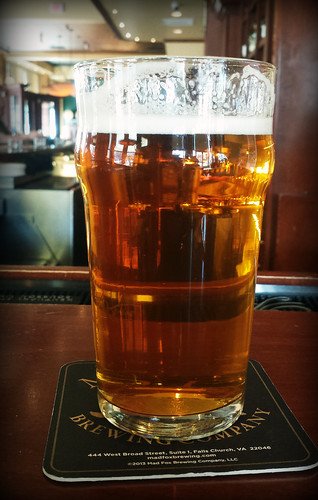
Friday, May 06, 2016

Enjoy the beer; forget the hype. (The Session: Beer Blogging Friday)

Session 111: Surviving a Beer Midlife Crisis The Session is a monthly event for the beer blogging community, begun in March of 2007 by Stan Hieronymus of Appellation Beer and Jay Brooks of the Brookston Beer Bulletin.

On the first Friday of every month, a pre-determined beer blogger hosts The Session: Beer Blogging Friday. He or she chooses a specific, beer-related topic, invites all bloggers to write on it, and posts a roundup of all the responses received. For more information, or to ask to host, go to the home page.


For The Session: Beer Blogging Friday #111, Oliver Gray —of Literature & Libation— is the host. His theme for bloggers: "Surviving a Beer Midlife Crisis." Elucidating, he wrote this:

I don’t work in the beer industry. OK, yes, sometimes I get paid to write about beer, but that money does not my livelihood make. Despite pouring myself into brewing and beer culture for the last 6 years, I remain little more than an overly involved consumer. [...]

Recently, I’ve found my interest in said hobby waning. The brilliant luster of new beers and new breweries looks now, a few pounds heavier and a bunch of dollars lighter, more like dull aluminum oxide.

The thing I have embraced so fully and spent so much time getting to know and love, suddenly seems generally, unequivocally: meh. It’s like I’ve been living a lie, and everything I’ve done is for not. I’m having a beer mid-life crisis, yo.

Maybe it’s the politics of purchasing or selling. Maybe the subculture has peaked. Maybe this is the natural progression of a hobby that has no real tie to the industry behind it. [...]

Do you find it hard to muster the same zeal for beer as you did a few years ago? Are you suffering through a beer-life crisis like I am? If so, how do you deal with it?

****************
Years before the term 'craft' became a 'thing,' in the early days of microbrewing, the New Yorker printed a cartoon of a gentleman, on an airliner, requesting a "microbrew." The flight attendant (who may have been called stewardess or steward back then) returned with a tiny 1.7-ounce micro-bottle of beer, just like a booze miniature. Funny.

Maybe I only imagined this and the New Yorker never actually did publish this cartoon, and I believed that they should have.

Many things have changed since then. The best change is what I call the "main-streeting of good beer." Quoting myself:
Where and when good beer had been seldom seen anywhere, we would work toward taking it everywhere —not simply skulking in subterranean beer-geek grottos or pontificating in haughty beer Xanadus— but by bringing it everywhere, to every corner shop and every pub, to every suburban chain-store restaurant and every urban white-tablecloth foodie haven, to shopping malls and 7-11s, to big-box stores and to independent wine and beer shops. We're not quite there yet, but the times, they are a' changing.

Unlike Mr. Gray, I do work in the beer industry, and have for a quarter-century. And I enjoy beer. Quoting myself again,
I have a love affair with beer: not simply its flavors —as delicious, complex, and varied as they may be— but with its history, science, lore, business, and evolving creation.

I would say to Mr. Gray, and others with 'craft' beer ennui: forget about the 'craft' revolution.
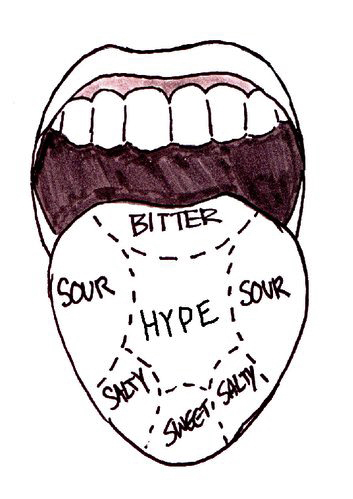
Tongue flavor receptors?

Forget about the solipsistic "I am a craft-brewer" rants. Forget about the superciliousness of the mushrooming beer-expert class. Forget about the [U.S.] Brewers Association's tortuous, moving-goalpost definition of a 'craft' brewery (which curiously omits a definition of 'craft' beer). Forget about badly brewed beers. Forget about badly served beers, and stale beers on store shelves. Forget about 'craft' mergers and acquisitions, and hypocrisy and fevered screeds.

Forget about 'craft.'

Instead, I'd say to Mr. Gray and others suffering from a mid-life beer crisis to meditate on the joyful pleasure implied by the simple phrase: "Let's go grab a beer."
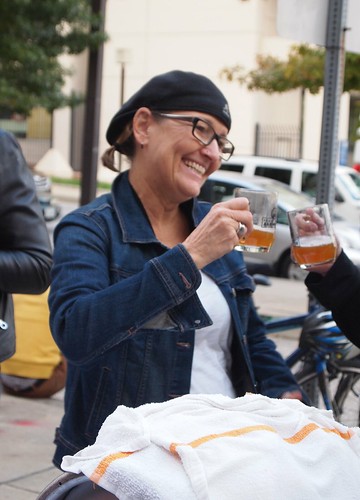
Real ale smilin'

And then to do this. Find a good beer. Enjoy the beer. Forget the hype.

Every lunchtime he would walk all the way across St Albans, passing a dozen or pubs or more, to the one house in the city that sold the Bedford bitter.

His performance never varied.

As he entered the public bar he would raise his finger and Ken the landlord would reach for a pint glass and fill it as David walked to the counter.

He never rushed.

He looked at the pint for a moment or two, waiting for the beer to settle and the head to form. Then he would reach for the glass and fleetingly hold it up to the light, savouring the crystal clarity and tawny colour of the beer.

Then, and only then, would he put the glass to his lips and despatch a good third of its contents. A great explosion of pleasure, a long orgasmic 'Aaaagh!', accompanied the return of the glass to the bar.

David would suck the foam from his moustache and then say to the bar and to the world in general all that needed to be said on the subject of the quality, the pleasure, the unalloyed brilliance of his beer.

"Not bad, that."
—Roger Protz. The Great British Beer Book. 1992.

-----more-----
  • Twitter-er WeirdB created the tongue-in-cheek drawing of the tongue flavor receptors.
  • I've apparently re-quoted myself quoting Roger Protz, and from a prior Beer Blogging Friday. In the May 2014 The Session #85: Why do I drink?, I used the identical quotation from The Great British Beer Book. On that occasion, I observed:
    Why do I drink? I drink beer because I like how it tastes; I like how it makes me feel. Gustation and psychotropics. Pleasure. That, just that, is why I drink beer. All else is froth. I'll have another, please.

  • For more from YFGF:

Thursday, May 05, 2016

#VeggieDag Thursday: a Mother's Day edition. Cold Beet Soup from the kitchen of Mom.

VeggieDag Thursday
VeggieDag Thursday is an occasional Thursday post
on an animal-free diet and ecological issues.

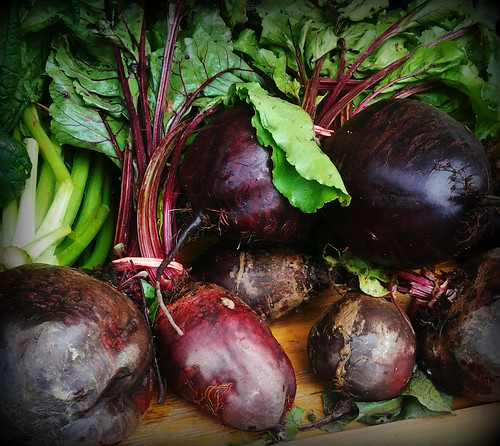
As a child, I disliked all things beet. That's a mighty peculiar preference for a third-generation Lithuanian-American. Those beet-red roots are a Lithuanian culinary staple.

Sweet Beets

But as I've 'matured,' my Baltic roots have begun showing. I've grown to like beets and their sweet, earthy-fruit goodness. And, in particular, that which I abhorred but now thoroughly enjoy: Lietuviški Šaltibarščiai. It's Cold Beet Soup, a Lithuanian every-person, summer's day delicacy. That's as it should be.

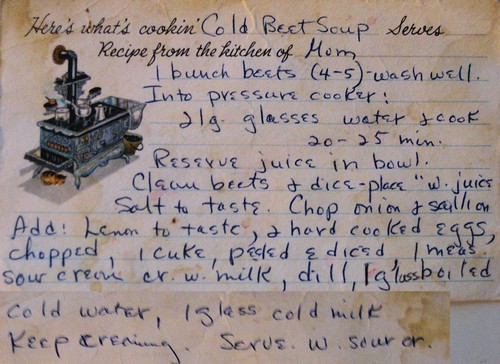
Here's our family Cizauskas recipe, passed down to us from "the kitchen of Mom" (and fed to us by Mom: "oh no, not again!") and given to our mother, in turn, by her mother, our Nana.

Mom's Cold Beet Soup recipe
Recipe from the kitchen of Mom

COLD BEET SOUP
Lietuviški Šaltibarščiai
    1 bunch beets (4-5)
  • 1 small onion, diced.
  • 2 scallions, diced.
  • 2 eggs, hard-boiled and chopped.
  • 1 cucumber, peeled and diced.
  • 1 small bunch dill, finely chopped.
  • milk
  • 2 tablespoons sour cream, plus a dollop.
1) Wash the beets well and cut off their roots and greens. (Reserve the greens for a salad, or, chopped, for a soup garnish.)

2) Cook the beets:
  • In a pressure cooker, in water, for 20-25 minutes.
    • Reserve the cooking liquid, now beet-red.
    • Peel the beets.

  • Alternatively, boil the beets.
    • Place in a large pot, then cover with cold water. Add 1 teaspoon salt.
    • Bring to boil and then reduce heat to medium. Simmer for 45 minutes to an hour, until soft, yet not mushy. Do not overcook.
    • Remove from heat, drain water (reserve it), and then plunge beets into cold water.
    • Remove from cold water. Peel skins.
3) While the beets are cooking, chop the hard boiled eggs, cucumber, onion, and scallions.

4) Chop peeled beets. Wear latex gloves and don't use a wooden cutting board. Beets will stain everything!

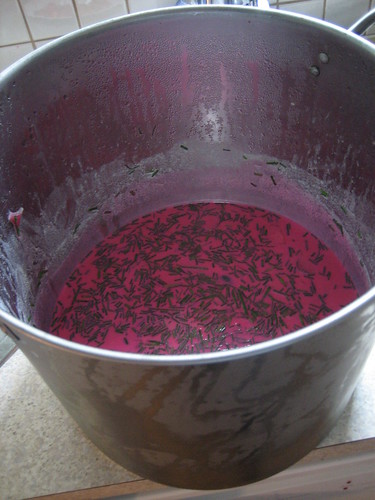
5) Mix 2 cups milk with the sour cream in a large serving bowl. Add chopped beets, eggs, cucumber, onions, scallions, and dill (reserving some sprigs). A little at a time, add more milk and/or reserved beet juice to adjust consistency and color. It'll be pink!

6) Put in refrigerator to chill well.

7) Serve garnished with the reserved chopped dill. (Mom showed me this trick with the dill. Don't chop it; snip it with scissors.) Finish with a dollop of sour cream (and maybe some chopped beet greens).

Rich Cold Beet Soup (01)

Mom, in America, used milk and sour cream as the liquid base. You, to be more properly Lithuanian, might make it with kefir (kefyras, in Lithuanian), a traditional probiotic-cultured milk. If you stay with milk and sour cream, you could add some freshly squeezed lemon juice to get the tangy kick.

Note Mom's admonition to first boil the water. Even today with a filter to remove contaminents and/or chlorine, that's good advice. Think Flint, Michigan.

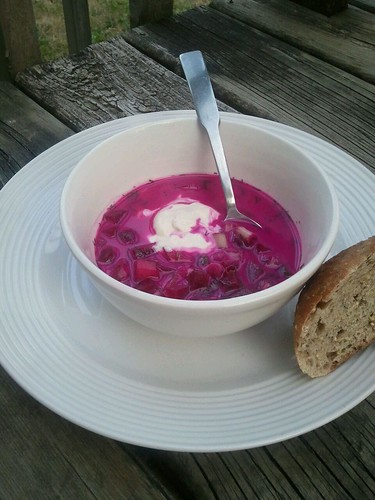
Finally, serve your Šaltibarščiai chilled, with a slice of crusty rye bread on the side. And say: vieną alus, prašom ("a beer, please"). Chilled, with affection.

Rich Cold Beet Soup (02)

-----more-----

Saturday, April 30, 2016

Pic(k) of the Week: Mr. PBR

Mr. PBR (02)

An appropriately hirsute Pabst Blue Ribbon man is beer-bedecked (also appropriately) during a baseball game at AT&T Park in Chattanooga, Tennessee, the home field of the Chattanooga Lookouts, on 28 April 2016.
The Chattanooga Lookouts are a minor league baseball team, founded in 1932. In 2015, the team affiliated with the Minnesota Twins, a Major League team that, as the 1901–1960 edition of the Washington (D.C.) Senators, spent the longest period as the Lookouts' parent team.
Wikipedia.

****************

About Pabst

Pabst Brewing Company was founded in 1844 as the Best Brewing Company of Milwaukee, Wisconsin. Frederick Pabst, son-in-law of the brewery owner, would later join the brewery staff and eventually take control. After stewarding it into becoming the largest brewery in the country, [Pabst renamed the brewery eponymously] in 1889. [...] During the Chicago World's Fair in 1893, Pabst finished 0.3 points ahead of Anheuser-Busch] for its brews. The brewery responded by placing a blue ribbon on its packaging, something that remains to this day.
The Oxford Companion to Beer: Oxford University Press, 2012.

Once the third largest brewing company in the United States, Pabst ceased all brewing operations in the mid-1990s. Since then, under several owners, Pabst has contracted with other breweries to produce its beers, as well as many 'legacy' American beers, such as Schlitz. In 2014, the company was purchased by a San Francisco–based private equity firm.

Although sales of PBR (as Pabst Blue Ribbon is popularly known) are now declining, the beer, inexpensively-priced, experienced an ironic renaiassance among so-called 'hipsters,' during the the aughts and early teens, for a perceived anti-corporate ethic.


Mr. PBR (02)

Is that 'beer' lip balm PBR Man is holding? He looks a bit thirsty without a beer in hand.

-----more-----

Thursday, April 28, 2016

Appreciating a master of malt: Wolfgang Kunze (1926-2016).

Want to be a brewster? Know this man.

Wolfgang Kunze:  “Technology Brewing and Malting”

On January 17, 2016, Wolfgang Kunze died, at 89.

For decades, Mr. Kunze taught brewing, in Communist East Germany. His book, Technology Brewing and Malting, written in his native German — as well as translated into English, Spanish, Polish, Serbian, Hungarian, Chinese, and Russian— has long been a 'textbook' textbook for brewers throughout the world.

Wolfgang Kunze, born on 7 August 1926 in Dresden, made an apprenticeship as “Brewer and Maltster" at the Waldschlößchen Brewery in Dresden (Saxony) from 1947 to 1949. Following he moved to Berlin where he began to study brewing technology at the VLB Berlin and Humboldt University. Against all the odds of the divided postwar Berlin, he graduated as a Diploma Brewing Engineer in 1952. The newly married young father decided - for family reasons - to move back to his home city Dresden which was located in the GDR. There he took a job as a teacher at the Vocational School for brewers and maltsters. What was originally conceived as an interim solution became his professional passion that occupied him for 38 years. So in the course of nearly four decades countless brewers and maltsters from across the GDR went through his classes.

In 1959, he met a request to develop an official textbook for the training of brewers in the GDR. This project was realized in 1961 when the first edition of the book “Technology Brewing and Malting" was published. During the decades the textbook was published in the GDR in six editions, but also became very popular with the brewing trainees in West Germany. Wolfgang Kunzes credo “express complicated matters as simple as possible and in the language of the people” describes one of his key success factors both as a teacher and as an author.

Technology Brewing & Malting

Continuing his career as Director of the Vocational School Dresden, Wolfgang Kunze additionally took over the lessons for brewing technology at the Engineering School for the food industry in Dippoldiswalde (Saxony). However, he refused an offer of the Technical University of Dresden for an unscheduled promotion due to a lack of time. In 1990, Wolfgang Kunze had been replaced by its successor Herwig Bittner, who has been the head of the Vocational School Centre for Agriculture and Food in Dresden until today.

With his retirement in 1991, a new and very active period of his life began. He brought his extensive contacts and experience into the newly founded “VLB Office Dresden”. In this position, he was a respected unifying figure who has rendered great services in the convergence of East and West German brewing industry after the German reunification. In addition, the VLB took over the publishing rights of “Technology Brewing and Malting”, so that the future of this book was secured. In 1994, the 7th revised edition was published by the VLB, later followed by international editions in English, Polish, Chinese, Russian and Spanish as well as three additional German updates. Overall, his work with more than 60,000 printed copies in 7 languages has become one of the most successful textbooks for brewers worldwide.

Wolfgang Kunze was also the initiator of the “Dresdner Brewers’ Day” in 1992. As a joint project of VLB with the Brewers Association of Saxony this meeting devoted mainly to the technical and technological development of the breweries in the new federal states. In its 22nd edition the Dresdner Brewers’ Day takes place on 8 April this year - the first time that Wolfgang Kunze will not be there.

With great dedication, honesty and his Saxon humor, Wolfgang Kunze had accompanied the brewing industry up until old age. He was a regular and welcome guest at numerous trade events and on trade fairs at the stand of the VLB he was always available for an interview, a photo or even for an autograph.

His merits for the brewing industry are documented in numerous awards: He was an honorary member of the VLB Berlin (2001), an honorary member of the German Association of Brewmasters and Maltmasters (DBMB, 2001), an honorary member of the Brewers Association of Saxony (2006), holder of the Bavarian Beer Medal (2008) and awarded with the Golden Badge of Honor of the VLB Berlin (2015).

His withdrawal from public life began two years ago when a serious illness weakened him. Although he temporarily recovered somewhat again, he died on January 17, 2016. Wolfgang Kunze is survived by his wife Christa, with whom he was married since 1948, three children, eight grandchildren, seven great-grandchildren and a dog.
VLB Berlin
17 January 2016.

-----more-----
  • Kunze's obituary was published by the Versuchs- und Lehranstalt für Brauerei (VLB), the organization he captained in Berlin, Germany. I defer to its translation.
    The VLB is a members association and was founded in Berlin in 1883 by German brewers and maltsters. For more than 125 years VLB has been working in the field of research, development and training for the brewing industry. Today, round about 120 people work at the VLB in the fields of research, teaching, information, consulting and service. As a "Registered Association" VLB is an independent institute, which co-operates with Berlin University of Technology in the field of brewing science and has a very close network into the brewing and related industry. Since 2002 VLB is the sole holder of Institut für Gärungsgewerbe und Biotechnologie zu Berlin (IfGB).

  • For more from YFGF:

Wednesday, April 27, 2016

As anthem: Just say no to ugly beer!

'Craft' beer seems to discover a new style or technique every year, if not month. Now it seems it to have discovered how to forget.

Just say no to murky beer!

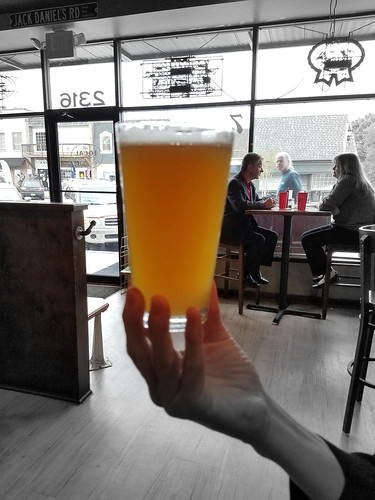
I'm superficial. I'll immediately stipulate to that. I notice beauty before I look for substance. The beer above was a pleasant enough IPA, but remind me again: why must ‪'‎craft' beer‬ appear ugly to taste good?

When I taste a beer, I use all of my senses. First, I see the beer. I look at it and admire it (or not). Muck? Uck! Then I sniff it, then I sip, and only then do I drink it down, luxuriating in the after-effect of the whole exercise.

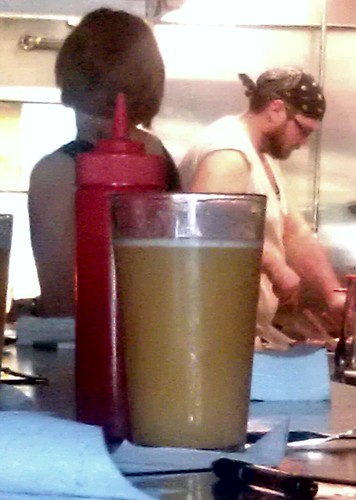
The photo above may not do justice to the turbidity of the beer held, 'photoshopped' as it was. So, here's another beer from another day, unretouched, that I took surreptitiously by phone-camera. This glass of mud had been unabashedly presented by brewery and pub:

Murky beer

And, yes, I taste a beer using the sense of hearing. As the late, great Fred Eckhardt would counsel: "Listen to your beer!" The sound of a bottle cap popping off a bottle, the crack of CO2 as a beer can is pierced, the gurgle as a beer is poured into a glass: these are all cues and pleasures.

Crazy hazy

When I was but a zymurgical pup, I was trained by a brewer to operate a DE filter. He taught me to pour a sample from the post-filtration valve and taste it for organoleptics —tasting for quality control. Beer, which only minutes before, unfiltered, had been brumous and dun, now was beautifully bright and briskly refreshing. He called this magical thing, "the happy valve." We would 'quality control' a number of times. Happy, indeed.


In 1979, Fritz Maytag moved his dilapidated Anchor Brewing to beautiful new digs. Afterward, he appealed to the intrinsic grace of beer: "Don't tell me that good beer can be made in an ugly brewery." Likewise, now, in 2016, don't tell me that my beer must be turbid to be flavorful, unseemly to be ineffable. Hell, no!

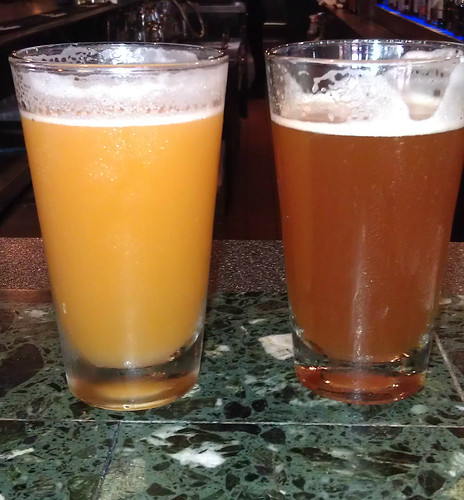
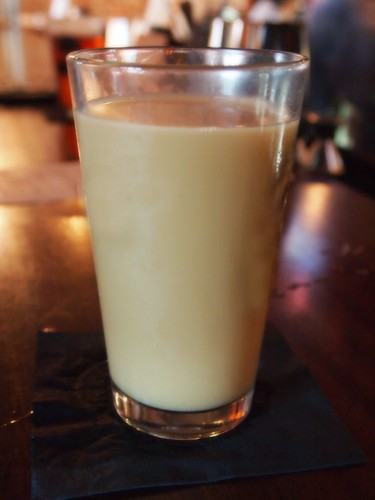
There was a time, not too long ago, that good beer drinkers and 'craft' brewers would demean the macro-breweries for shortening the lagering times of their beers —the weeks, if not months, required for natural clarification and conditioning. Now, criss-cross, many 'craft'-ers consider a deliberate lack of patience to be a badge of honor, and clarity to be disparaged. I gag at beers that appear, forgive me, as baby puke. A slight haziness or wispy cloudiness is one thing, but deliberate avoidance of beautiful brewing seems to be 'craft' beer's unfortunate newest thing.
"Haze" describes inherent dullness that pervades the whole liquid, and can be caused by diverse materials, including yeast and other microorganisms, protein, polyphenols [such as tannins], starch, β-glucan, pentosan [large sugar molecules], and oxalate [e.g., calcium oxalate]. [...]

Chill haze occurs when a beer is chilled below approximately 1.6 ºC (about 35 ºF), and will usually develop into a permanent condition over time. The major components of these aggregates are certain classes of proteins and polyphenols that are derived from brewing raw materials, namely malt and hops.[...] Colloidal haze is generally the result of protein molecules within the beer joining with polyphenols to form molecules large enough to cause turbidity. [...] Hazes caused by dry hopping are also colloidal hazes and are caused by polyphenols [tannins] from the hops combining with protein [from the malt], oxygen, or heavy metals.
The Oxford Companion to Beer: Oxford University Press, 2012.

Proper and skillful brewing — with or without fining agents, with or without filtration— can and will produce exquisitely limpid beers. That's known as Stokes' Law —gravity's gift— and zymurgy —brewing science and know-how.

I stand firmly in this position —saying yes to beauty— if accompanied by a shrinking minority of like-thinking brewers and drinkers, so-called London Murky and New England-style Murky IPAs notwithstanding.

I ask, why drink this...
Cask pour? You must be joking.

...when you could drink this?
Real ale quintessence (02)

We few, we happy few, we band of sisters and brothers, we'll raise the windows, stick our heads out, and we'll say it loud and proud (and encourage more to join in, as anthem):

"Just say no to ugly beer!"

-----more-----