Showing posts with label whisky. Show all posts

Sunday, December 06, 2015

The Whisky Yule Log

The Yule Log was a Christmas Eve broadcast by a New York City television station: a two hour continuously looped video of a yule log burning in a fireplace. Accompanied with Christmas music, that was the program's entire content. The station aired it every Christmas from 1966 to 1989.

Now, Diageo (an England-based alcoholic beverage company), owner of Lagavulin scotch whisky, has produced a follow-up.

For 45 minutes, “Parks and Recreation” actor Nick Offerman sits next to a fireplace and sips a Lagavulin. Neat, naturally. He moves the glass. He looks at the camera. He pours another dram and sips. That's it; that's all. Is anything else needed?


One commenter at YouTube offered this play-by-play of the riveting action:

  • 3:10
    Lifts his glass, looks at it for a second or two, and takes a sip. It is apparently very good.
  • 5:44
    Elegantly slides his hand to the side of the glass. Perhaps to take a sip? No. He patiently waits. Like a gentleman.
  • 10:25
    This time, he looks at the glass THEN lifts it to take a sip. He is truly a master of his art. Yet again, it is delicious.
  • 12:44
    After some contemplation, the glass is moved to the knee as if to suggest a sense of sexual tension. It's working.
  • 15:13
    The glass is moved back to the armrest perhaps to suggest that you have no game with this man. Clearly the knee was just a tease.
  • 20:27
    Yet another look then lift. His technique is clearly spot on... But wait. He has finished the glass! What will he do?! Is this the end of the Yule Log special?! NO! He sets the glass on the table and pours himself some more! Such class and grace can only come from one such as WHAT IS THIS?!? HE HAS CROSSED HIS LEGS? MY GOD. No words can be properly recited for something such as this. Carry on fellow viewers... I need a moment...
  • 23:46
    After a few minutes to let us calm down he teases yet again by looking at his glass as if to take a sip. But he does not. Crafty, Mr. Offerman. Very crafty indeed.
  • 28:22
    Yes, after the tease of last time he lifts the glass again to... Oh Mr. Offerman you sly dog, you. Yet another tease. Bravo.
  • 30:14
    Is he?... An inspection of the glass, a long smell of the aroma, long contemplation aaannnnnddd... Another sip! Good show Mr. Offerman! Good show! applauds
  • 36:15
    I believe we have a repeat performance here of 30:14. Less thrilling this time around but still a great performance nonetheless.
  • 38:32
    Ah an itch just behind the right ear. Nothing much to say here real- HE'S TAKEN A SIP. I nearly missed that one because of the distracting itch! And here I thought you had shown us your entire bag of tricks Mr. Offerman. applauds again
  • 41:07
    Haha, very good. A return to form with a classic sip and nothing more. A move worthy of an Oscar.
  • 44:33
    With one last sip he finishes off the glass and makes his way off camera. Truly, truly one of the greatest performances I have seen all year. Absolutely outstanding. Gives a standing ovation.
-----more-----

Saturday, August 01, 2015

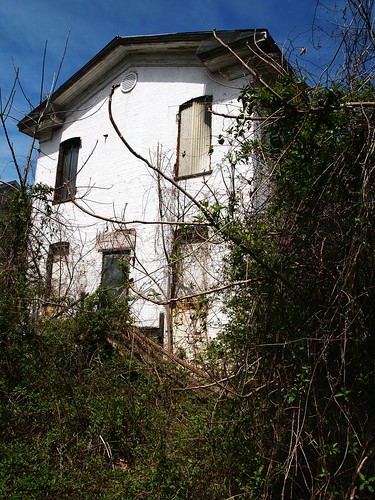
Pic(k) of the Week: Disrepair at historic warehouse of A. Smith Bowman Distillery.

Disrepair at historic A. Smith Bowman Distillery (01)

Dilapidated and overrun with weeds. The original warehouse of the A. Smith Bowman Distillery stands abandoned today in Reston, Virginia.

In February 1988, the A. Smith Bowman Distillery moved its operations from here, where it had operated since 1934, to Spotsylvania County, near Fredericksburg, Virginia, into a large, former cellophane plant, where operations continue today.

A decade later, in 1999, the National Park Service listed the original warehouse on the National Register of Historic Places.
The original building, in what is now Reston, Virginia, was constructed circa 1892 under the guidance of Dr. C.A. Max Wiehle, a physician from Philadelphia, Pennsylvania, who tried to establish a town and farming community known as Wiehle on 3,228 acres of land he purchased in 1882. The first floor served as the Wiehle town hall, and the second floor housed the Wiehle Methodist Episcopal church.

Abram Smith Bowman bought the building in 1927 as part of a 4,000-acre parcel called Sunset Hills. Bowman opened his eponymous distillery in 1934 on the day after Prohibition was repealed, and the building originally served as the warehouse of the distillery. The first bourbon produced by the distillery was shipped from the warehouse in 1937. Between 1934 and some point in the 1950s, Bowman's was the only legal whiskey distillery in the Commonwealth of Virginia. The primary brands were Virginia Gentleman and Fairfax County bourbon whiskeys.
Wikipedia (accessed 26 July 2015).

Photo taken 12 April 2015.

-----more-----

Saturday, November 15, 2014

Pic(k) of the Week: Something (still) about Mary

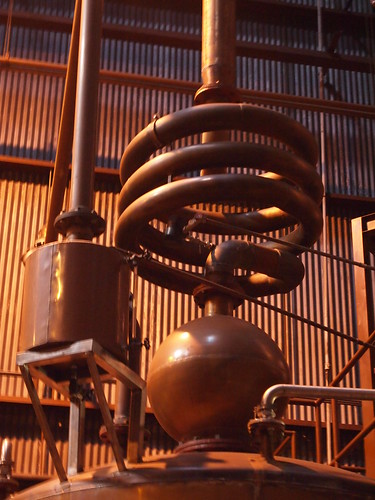
Something (still) About Mary.


This is the thirty-something-year-old, 1,700 gallon, copper double reflux still, given the name "Mary" (after the mother of the first Bowman brothers in Revolutionary War days) which distills the whiskey at the A. Smith Bowman Distillery, in Fredericksburg, Virginia. The very act of distilling the whiskey with distilled water thins the copper. Mary is reaching the end of her lifespan, and will eventually have to be replaced (with Mary II)?

The fermentation, and initial distillation, of the grain mash takes place off-site at the Buffalo Trace Distillery, in Kentucky, and then is shipped to Bowman, where it is distilled again —with Mary— and then aged in first-use charred American oak barrels ... to become bourbon.
A boiler creates distillate vapors. These are then allowed to rise up through the column in the reflux still. At the top of this column, the vapors are condensed. The condensed vapors now run back down the column as a liquid; as they come back down, they pass through other rising vapors. These rising vapors enrich this condensed liquid. Once the condensed liquids reach a lower level in the column, they then become hot enough to boil again. This creates more vapors and the process continues.
Wikipedia

Abram Smith Bowman founded his eponymous distillery soon after the end of Prohibition, in 1934, in the town of Reston, Virginia (then a bucolic region, now a built-up, if planned, suburb of Washington, D.C.). In 1988, the company was moved to Fredericksburg, Virginia, into the capacious site of a former cellophane manufacturing plant. In 2003, the distillery was purchased by Sazerac, an alcoholic beverage company based in Louisiana.

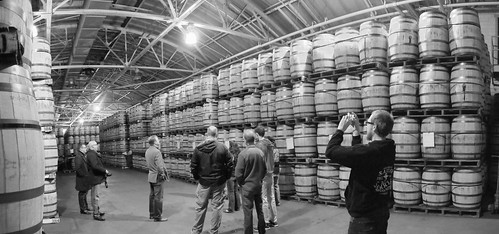
Barrel room @A. Smith Bowman (03)

I took these photos while touring the distillery on a Saturday morning, 8 November 2014. Yes! Sipping bourbon on a crisp autumn morning.

Unique among bourbon-makers, Bowman stores its barrels vertically on pallets, rather than horizontally in rickhouses. Why? "Because, this way," said our tour guide, Ralph, "we don't have to physically roll around any of our seven-thousand barrels!" Each barrel —coopered from Ozark white oak— weighs over 510 pounds when filled with 53 gallons of bourbon.

And what is 'bourbon'? As defined by the U.S. government, it is:
  • Produced in the United States.
  • Made from a grain mixture that is at least 51% corn.
  • Aged in new, charred oak barrels.
  • Distilled to no more than 160 proof (80% alcohol by volume).
  • Entered into the barrel for aging at no more than 125 proof (62.5% alcohol by volume).
  • Bottled at 80 proof or more (40% alcohol by volume).
  • Bourbon has no minimum specified duration for its aging period.
  • Bourbon that meets the above requirements, and has been aged for a minimum of two years, and does not have added coloring, flavoring, or other spirits may (but is not required to) be called straight bourbon.
Bowman's current master distiller, Brian Prewitt, gained his experience at E&J Distilleries (Modesto, California). But he also has valid brewing chops, having worked at New Belgium Brewery (Fort Collins, Colorado), and, as head brewer, at Great Divide (Denver, Colorado). At A. Smith Bowman, he's producing:
  • Virginia Gentleman bourbon
  • Bowman Brothers small batch bourbon
    named for four ancestors of Abram Bowman: 18th-century frontiersmen and American Revolutionary War military officers.
  • Abraham Bowman limited-edition small batch whiskey
    named for Colonel Abraham Bowman (1749–1837), the great grandfather of Abram Bowman
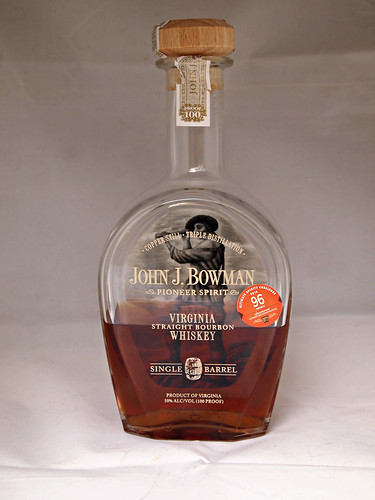
  • John J. Bowman single-barrel bourbon
    named for Colonel John Bowman (1738–1784), the great, great uncle of Abram Bowman.
John J. Bowman bourbon (02)

The distillery also produces vodka and rum, and, in 2015, will be installing an additional 25-gallon still solely to produce gin.

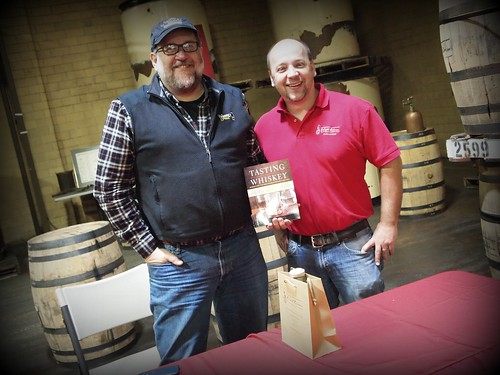
Also there the morning I was there was Lew Bryson. The editor of Whiskey Advocate Magazine, Bryson has just written a book called Tasting Whiskey: An Insider's Guide to the Unique Pleasures of the World's Finest Spirits. A. Smith Bowman was one stop on his book-signing tour. Here he is (on the left) with Brian Prewitt (on the right).

Bryson & Prewitt

I'm reading Bryson's book (and sipping Prewitt's bourbon). Review to follow.

-----more-----

Friday, May 02, 2014

Pic(k) of the Week: Mint Julep & Hat

Mint Julep & Hat

The cold wasn't just beading, it was frosting on the metal shaker.

A Mint Julep of Jim Beam bourbon, fresh mint leaves, simple syrup, a dash of bitters, crushed ice, and a dusting of powdered sugar.

Paul Taylor, the 'mixologist' at Rhodeside Grill —a restaurant and bar in the Court House neighborhood of Arlington, Virginia— created this refreshing thing.

The hat was mine.

1 May 2014.

-----more-----

Saturday, March 23, 2013

Pic(k) of the Week: The Heart(s) of the Run

The Hearts(s) of the Run (04)

Rye whiskey being distilled at Catoctin Creek Distillery, in Purcellville, Virginia.

I visited the facility one Saturday in March, and took the tour, offered by co-owner/distiller Scott Harris. Here's what I learned.

Organic rye malt from Kansas is mashed, and the wort (sweet liquid) is boiled. Cooled to room temperature, it is fermented over a week's time in 310-gallon plastic fermenters. The resultant 'wash' is then distilled, vaporized in a 400-liter still. The distillate is cooled by a tap-water counter flow chiller. Alcohol condenses before water, and is collected as it streams from the still. The initial condensate, or "heads," is 'impure' containing such by-products as acetaldeyde. It is discarded. The end of the distillate, or "tails," consisting of fusel alcohols (such as methanol and acetate) and water, is also considered impure and is discarded.

Which leaves the "hearts" of the run, which is collected, and then aged or bottled. Harris told us that the contents of one fermenter is distilled down to the contents of only one barrel

The rye whiskey is bottled both un-aged as a "white' spirit, at 80 proof, called Mosby's Run, and as Roundstone Rye, which is aged for a minimum of two years in 30-gallon Missouri oak barrels.

Catoctin Creek is currently producing about 40,000 bottles per year: the above two and a gin infused with juniper, coriander, cinnamon and lemon peel. Additionally, the distillery produces brandy, distilled from Virginia grapes, the first ever in Virginia. At present, the spirits are sold primarily in Washington, D.C., Maryland, and Virginia. The volume sold in the District is more than that of the two states combined. Additional shipments go to Pennsylvania, New York City, and, soon, to Georgia.

Harris told us that the distillery has outgrown its digs, and will be moving during the summer months into a much larger building, an historic site in downtown Purcellville. Scott Harris and wife co-owner Becky Harris will bring along their current still, but will add a new one to the production, at three times the size. *******************
  • Photograph taken 9 March 2013. See more: here.
  • Pic(k) of the Week: one in a weekly series of personal photos, often posted on Saturdays, and often, but not always, with a good fermentable as a subject. Camera: Olympus Pen E-PL1.
  • Commercial reproduction requires explicit permission, as per Creative Commons.

  • Sunday, March 25, 2012

    Drinking, Again: 21 year old alchemy from Bruichladdich

    Bruichladdich 1989 (02)


    Bruichladdich 1989 "Black Art" 21.

    An Islay single malt whisky (that's 'Scotch,' here in the U.S), un-peated, and matured —in a wonderful, yet not uncommon cross-seas pollination— in Buffalo Trace bourbon casks. Bottled at 21 years old, at an undiluted 'cask strength' of 49.7% alcohol-by-volume (99.4 proof).

    Tasted 14 March 2012, at a portfolio show for Winebow, an importer and wine (and spirits) distributor, in Washington, D.C.

    This venerable Bruichladdich was the color of sherry, tasting of toffee, burnt sugar, dark berries, and an abundance of sea-weedy iodine. (Maybe oloroso sherry, or is that a visual cue?) And, even as this was at cask strength, it showed little of an expected alcoholic burn. I told an aquaintance afterward: "a life-changing dram." Estimated retail value: $200 +.

    "Please, sir, I want some more."

    Beer reviews

    ***************

    • Drinking , Again: An occasional series of reviews of beer (and wine and spirits). No scores; only descriptions. Graphic created by Mike Licht at NotionsCapital.
    • Pronounce Bruichladdich somewhat like: brook LADdy
    • Buffalo Trace is a bourbon distillery in Kentucky. Photos from a tour: here.
    • Thank you to David Ferguson —Bruichladdich's Business Development Manager in the U.S.— who did indeed give a wee bit more of a taste.

    Saturday, October 02, 2010

    Pic(k) of the Week: Bourbon Wash

    Before there is bourbon, there is beer. At the Woodford Reserve Distillery in Versailles, Kentucky, this is an impressive sight, and wonderfully aromatic: the unhopped wort from a corn mash fermenting in an open vat constructed of Florida cypress wood. Distillers call this beer a wash.

    Bourbon wash - open fermenter

    Corn is deficient in the enzymes necessary to convert its native starches to fermentable sugars during a mash rest. Barley, however, is chock-a-block with the necessary amylases. Thus, there always will be barley malt in an American whiskey grist, although less than 49% and usually much less than that. Scotch whisky (without the 'e'), on the other hand, is distilled from a wash of mostly barley malt.

    Bonus pic: a closeup.

    Bourbon beer


    ***************
    Pic(k) of the Week: one in a weekly series of personal photos, usually posted on a Saturday, and often of a good fermentable as subject.

    Wednesday, January 07, 2009

    How much bourbon would a bourbon maker make?

    One Saturday in October 2008, I followed the Kentucky Bourbon Trail to two distilleries: Buffalo Trace and Woodford Reserve.

    Informative and entertaining tours, wonderful facilities, and delicious liquids.

    But after returning, I realized that there were two questions I hadn't asked. (Or if someone had, the sweet mash may have dulled the memory.)

    • What is the size of a bourbon barrel?
    • Is there a legal volume requirement for the volume?
    Whiskey in the dark


    I asked Lew Bryson, editor for Malt Advocate Magazine, for help. He, in turn, asked Larry Kass of Heaven Hill Distillery, who asked Mike Veach, the 'answer guy' at the Filson Historical Society, a center for the study of the history and culture of the Ohio Valley.

    Mike's full response is published at Lew's blog Seen Through a Glass. The short answer? Here's a visual clue:

    Fill date--November 21, 2001

    Fifty-three gallons, give or take, seems to be the current industry standard. There is no federal legal standard.

    In an email to me, Mike added:
    The main thing determining the size of the barrel is the size of the warehouse ricks. If the barrels get too big or too small for the ricks then the whole system falls apart and the distilleries would have to replace their warehouses.

    The ricks are the wooden supports upon which the full barrels rest as they age. The rickhouse is the warehouse in which the barrels age.

    Buffalo Trace Rickhouse


    Lew added an an update. In 1968, the U.S. Treasury Department rejected a request to set an official whiskey barrel volume. Imagine that. The government turned down the opportunity to regulate.

    Photos from the tour.

    Saturday, October 25, 2008

    Trails of bourbon, wine, and beer

    On my recent birthday weekend, I toured Buffalo Trace and Woodford Reserve, two distilleries in Kentucky. They lie along the Kentucky Bourbon Trail, a collaborative effort between the state of Kentucky and the distilleries and their association. A successful tourism program and business-builder, the 'trail' is a matrix of road signs, glossy brochures, and maps.

    Buffalo Trace rickhouse

    Here in Virginia, the distillery industry is a nascent one. But there is a Virginia Wine Trail and an active wine makers association.
    Sadly for Virginia beer, there is no association (even though there had been one in the 1990s). There is news, however, of a possible beer trail, at least for the central and southwestern regions of the state: Beer Trail hopes to emulate Virginia wine industry.

    My colleague at Musings Over a Pint writes quite often on the Virginia beer scene. I'm certain he'll be posting if the beer trail approaches completion.

    More about my short tour of the Bourbon Trail tour here. Photos here.

    Friday, June 20, 2008

    Enjoyment, not bloviation

    Substitute the wine-words with beer-words, and you might think that the LA Times piece below was about beer, not wine.

    When wine drinkers tell me they taste notes of cherries, tobacco and rose petals, usually all I can detect is a whole lot of jackass. The language of sommeliers, winemakers, sellers and writers has devolved into nothing besides a long list of obscure smells that tells me nothing. I get a lot of cherry and cassis from Manischewitz too, but it would help a lot more if you told me it was cough-syrup-goopy sugar-water.

    I miss the days when we made fun of wine snobs for saying that a wine was "ingratiating without being obsequious." Now wine snobs are too boring to make fun of. Ever since UC Davis professor Ann Noble created the Wine Aroma Wheel more than 20 years ago, people have become obsessed with seeing how many memories they can inhale out of a glass. <...>

    So from now on, wine drinkers, you get to mention three things you smell in a wine, max. Then you have to tell me something more interesting. If that seems too hard, I suggest drinking more wine until it isn't.


    The language of wine snobbery

    Joel Stein
    LA Times
    June 13, 2008


    There's similar silliness in the beer world, whether it's beer styles or beer reviewing.

    And as with better wine reviewing, better beer reviewing begins with homework.
    a clever 'un-pompous' beer review
    Learn to identify the 5 basic tastes (sweet, sour, salty, bitter, umami), the aroma of hops (floral, grassy, citrusy), the aroma of lager fermentation (sulfury), the aroma of ale fermentation (green apple), the taste of malt (bready, toasty, caramel, coffee), and gasp, yes, the off-aromas of beer.

    Be precise.

    A bartender said to me yesterday, "I don't like it. It has an aftertaste." I thought in response, "I hope so!"

    What he meant to say was that he didn't care for that particular aftertaste. But I disagreed, silently, as I took another sip of the Sierra Nevada Summerfest.

    Drink to enjoy, not to impress. It's more rewarding.

    I was alerted to the LA Times column by Kevin Erskine's Scotch Blog, on which there's this hilarious comment:
    Hmm I'd say it's the pretentious twit who reads the original notes and says "Ah yes, I also identified the 'wet dish towel' and '1970 Chevy Malibu interior' notes.

    Wednesday, May 21, 2008

    A beer/whiskey synergy

    Oskar Blues will provide about 100 barrels of wash (3100 gallons) each week [to] Stranahan's [Colorado Whiskey], which has been in business since 2003, [which] will distill that liquid down to about 300 gallons of spirit that will then be aged.

    Stranahan's has been steadily increasing distribution and is now available in about 20 states.

    Part of the benefit for Oskar Blues, besides a steady income for contract brewing the wash, is that the brewery will have access to used Stranahan's barrels that it will use for specialty beer production.

    From Lyke to Drink
    From The Scotchblog

    The wash had been provided by Flying Dog until the brewery moved its brewing operations from Colorado to Maryland. (The wash is the fermented beer, usually with no hops, from which the whiskey is distilled.)

    From co-owner Jess Graber comes this description:
    Bourbon drinkers will find that oak they like at the beginning; Scotch drinkers will like the finish and Canadian whiskey drinkers will get some spice in the middle.


    More, including the distribution area, at The Scotch Blog.

    Monday, February 11, 2008

    Virginia whisky

    From Rick Lyke's blog, Like To Drink:

    Malt Distillery Planned for Virginia

    The Virginia Distillery Co. expects to be selling a Scotch-style malt whiskey not far from the Blue Ridge Mountains within five years.

    Partners Chris Allwood, Joe Hungate and Brian Gray plan to invest $5 million to build the distillery in Lovingston, Va., by the end of the year. In addition to the distillery, the property will have a visitor's center, warehouse, nature trails and a barley farm. In the meantime the trio is importing Eades Whisky from Scotland.

    Located in Nelson County, the distillery will be near several Virginia wineries and breweries.

    The trio has plans to grow barley. Will they malt their own barley as does the Copper Fox Distillery in Sperryville, Virginia? Will they age their whisky in oak barrels or in stainless steel ― tossing in wood chips ― as does Copper Fox?

    UPDATE 2008.02.12:
    I can confirm that we will (eventually) malt our own barley. We will also age in ex-Bourbon first-refill and new American white oak barrels for at least 5 years in a dunnage warehouse.
    -- Chris Allwood, COO, Eades Distillery

    This news calls for a field trip, and a report. Here's more from the Charlottesville Daily Progress.

    Thursday, January 03, 2008

    Whiskipedia

    The Whiskipedia went on-line Tuesday. Here, from the opening page:Whiskipedia.org

    First of all, our thanks are due to Gavin Smith, well-known whisky author, who has kindly provided the overwhelming bulk of the site at launch (1st January 2008) in full recognition that you will probably all mangle it unrecognisably. The launch text is drawn from Gavin's excellent and authoritative book Whisky: A Book of Words (Carcanet Press, 1993),and subsequent paperback edition The A-Z of Whisky (NWP). A new and fully revised edition will be published sometime in 2008.

    ---Ian Buxton
    Site Administrator
    www.thewhiskychannel.com
    1st January 2008

    Opinions?

    I'm no expert on things whisk(e)y — even though I do enjoy a wee dram from time to time — so I'll wait for such as Lew Bryson and John Hansell, and you, to offer comments.

    www.whiskipedia.org

    Sunday, December 09, 2007

    $54K for whisky

    Prohibition may have been repealed 74 years ago, but the state of New York has prohibited auctions of liquor until only this year.

    Yesterday, Christie's autioned off a 1926 vintage Macallan scotch whisky ... for $54,000. Distilled in 1926, it had been bottled in 1986 and rebottled in 2002.

    So we do look for a bottle of 2007 Sam Adams Utopias, already $180, to be auctioned off in 2088 for $??,???

    Thursday, May 17, 2007

    Isle of Jura now Indian

    It's the water!

    The Indian billionaire who brews Kingfisher and Mendocino (well, he owns the breweries which do that) has purchased Whyte and Mackay, the Scottish whisky distiller of Isle of Jura, Dalmore, Whyte and Mackay brands, and others.

    Among many other properties, Vijay Mallya - through his United Breweries Group conglomerate - owns the Mendocino Brewery of Hopland, California.

    Mendocino can lay claim to being the US's first post-Prohibition brewpub. There are, however, equally valid claims for Bert Grant's Yakima brewpub. Its first brewers and founders AND yeast arrived from New Albion of the late 1970s: the first U.S. craft non brewpub0 brewery. (Anchor Brewery was technically not the original US craft brewery; it opened in the late 19th century. Of course, in spirit, one could say, yes it was.)

    A few years back, a great share of Mendocino's production was moved to a United Breweries facility in Saratoga Springs, N.Y. UB also uses the Saratoga Springs facility to produce the North American-sold version of its international-style lager - Kingfisher. Even though Kingfisher is still produced in India, Mallya saw no need to ship a product containing 95% water to the United States. Next time you buy a bottle, check the label! (I believe Kingfisher is also produced in the UK, but there via Scottish and Newcastle.)

    Whyte and Mackay's immediate past owner, Vivian Imerman, said this: "Scotch whisky can only be made in Scotland." But will Mr. Mallya agree, or will he have the same feeling for whisky as he does for beer? Will he distill this mostly water-containing product in out-markets rather than shipping it long distances from Scotland? Mallya has indicated he is interested in purchasing other Scottish distilleries.
    So, is it the water or is it marketing and cost-minimizing?