Showing posts with label moon. Show all posts

Saturday, August 24, 2024

Pic(k) of the Week: Blue sturgeon supermoon

Blue sturgeon supermoon

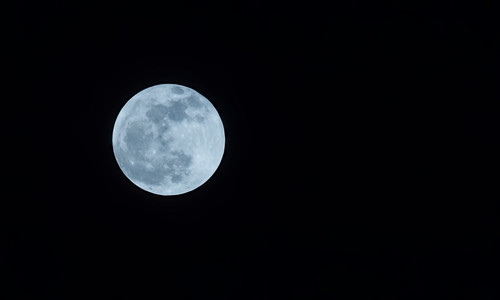
A rare lunar convergence: August's full sturgeon moon was a blue moon AND a supermoon!

As seen over the Columbia Presbyterian Church, in the City of Decatur, Georgia, USA, on the evening of 19 August 2024 at 22:06 EDT.
☞ The name Sturgeon Moon comes from the giant lake sturgeon of the American Great Lakes; this native freshwater fish was readily caught during this part of summer and an important food staple for Native Americans who lived in the region. At one time the lake sturgeon was quite abundant in late summer, though they are rarer today.

☞ The super moon part refers to the moon's orbit, which brings it slightly closer to Earth this month, making it appear bigger and brighter. This occurs since the moon’s orbit around the Earth is elliptical instead of just a circle, and thus there are times when the moon is further and closer to our planet.

☞ A blue moon is not about the color of the moon, but instead the frequency of the full moon. There are two definitions of a blue moon—the first describes when there are two full moons in a single month. Since the moon’s cycle is 29.5 days, and our average calendar month is 30-31 days, this blue moon occurs every two to three years. There are also seasonal blue moons, in which a calendar season contains four full moons instead of the usual three, and the blue moon is the third of the four full moons. August’s full moon is of this variety. The next seasonal blue moon is expected in May 2027.

☞ The combination of the super moon and the blue moon is rare, and the time between their occurrences is quite 'irregular' and could be as much as 20 years, with 10 years between the average. Though we had a super blue moon somewhat recently, in August 2023, the next super blue moon will not occur until January 2037.
Old Farmer's Almanac.
Time Magazine.


***************

-----more-----

Saturday, August 05, 2023

Pic(k) of the Week: St. Augustine Lighthouse, at morning

St. Augustine Lighthouse, at morning

Missed it by thaat much! Only two days earlier, the 'Buck' moon had been a full 'supermoon.'

Here, on 5 July 2023, the now waning gibbous moon sets, at sunrise, near the St. Augustine Lighthouse, in St. Augustine, Florida, USA.
The St. Augustine Light Station is a privately maintained aid to navigation and an active, working lighthouse in St. Augustine, Florida. It stands at the north end of Anastasia Island and was built between 1871 and 1874. The current lighthouse tower, original first-order Fresnel lens and the Light Station grounds are owned by the St. Augustine Lighthouse & Maritime Museum, Inc., a not-for-profit maritime museum.

The St. Augustine Light Station consists of the 165-foot (50 m) 1874 tower, the 1876 Keepers' House, two summer kitchens added in 1886, a 1941 U.S. Coast Guard barracks, and a 1936 garage that was home to a jeep repair facility during World War II. The site is also a National Oceanic and Atmospheric Administration (NOAA) weather station. The lighthouse was placed on the National Register of Historic Places in 1981.

The tower, however is the second lighthouse tower in St. Augustine, the first being lit officially by the American territorial government in May 1824 as Florida's first lighthouse. However, both the Spanish and the British governments operated a major aid to navigation here including a series of wooden watch towers and beacons dating from 1565.
Wikipedia.

-----more-----

Saturday, January 14, 2023

Pic(k) of the Week: Full Wolf Moon

Full Wolf Moon

The setting Full 'Wolf Moon,' waning gibbous (at 99% illumination), on a cloudy, early morning, as seen over Decatur, Georgia, USA, on 7 January 2023 at 6:43 am EDT.
The first full moon of the new year, January's Wolf Moon, rises on Friday night (Jan. 6). The moon will be on the far side of Earth and close to its farthest from the Earth, around 250,000 miles (around 400,000 km), making it a 'micromoon,' the opposite of a 'supermoon,' when the moon is closer to the Earth. The moon's orbit around Earth is a flattened circle, or 'elliptical, ' so there are times when the moon is closer to Earth and times when it is farther away. However, 'supermoons' appear only around 14% larger than 'micromoons,' a difference virtually imperceptible to the naked eye.

The Old Farmer's Almanac states that the name for January's full moon —the Wolf Moon— arises due to the fact it was seen at times of the year when wolves could be howling outside villages as a result of hunger.
Space.com.

-----more-----

Saturday, December 24, 2022

Pic(k) of the Week: Cold Moon rises

Super Cold Moon rises (03)

The Full Cold Moon —or the Full Long Nights Moon— is so named because, during December, the winter cold fastens its grip and nights are at their longest and darkest. It is also sometimes called the Moon before Yule.
Farmer's Almanac.

That's an image of the 'Super' Full Cold Moon * in early December 2017. I'm posting it today —five years later, on Christmas Eve, 24 December 2022— because it's cold!

Even Atlanta, Georgia —deep in the American South— is not immune to the effects of the winter storm gripping much of the United States. The temperature this morning was (a 'balmy') -13 °C or, with the wind chill figured in, -22 °C. That's 8 °F and minus 8 °F, respectively, in degrees Fahrenheit. No blizzard, though, unlike other areas.

Be that as it may, here's a greeting of the season in the Lithuanian language of my forebears:
 
Linksmų Kalėdų!

-----more-----

Saturday, May 21, 2022

Pic(k) of the Week: Blood Moon

Blood Moon (16 May 2022 12:43 am EDT)

Fire up a colortini, sit back, relax, and watch the pictures,
now, as they fly through the air. *

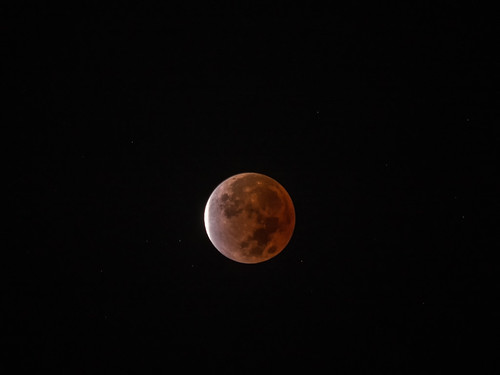
It was a combination of full 'Flower' Moon, supermoon, 'Blood' Moon, and total lunar eclipse, all wrapped into one astronomical wow, as seen over Decatur, Georgia, USA, on 16 May 2022, at 12:43 am EDT.

***************

Blood Moon (aka total lunar eclipse)

A total lunar eclipse happens when the Moon travels through the Earth's umbra and blocks all direct sunlight from illuminating the Moon's surface. However, some sunlight still reaches the lunar surface indirectly, via the Earth's atmosphere, bathing the Moon in a reddish, yellow, or orange glow [thus colloquially called a 'Blood Moon'].

As the Sun's rays pass through the atmosphere, some colors in the light spectrum—those towards the violet spectrum—are filtered out by a phenomenon called Rayleigh scattering. This is the same mechanism that causes colorful sunrises and sunsets. Red wavelengths are least affected by this effect, so the light reaching the Moon's surface has a reddish hue, causing the fully eclipsed Moon to take on a red color.
Time and Date.

***************

Full Flower (Super) Moon

"May’s full Flower Moon name should be no surprise; flowers spring forth across North America in abundance this month. The full Moon names used by The Old Farmer’s Almanac come from a number of places, including Native American, Colonial American, and European sources. 'Flower Moon' has been attributed to Algonquin peoples.

May’s full Moon is the first supermoon of the year. A supermoon is most commonly defined as any full Moon that occurs when the Moon is at at least 90% of perigee (the point in the Moon’s orbit where it is closest to Earth). In 2022, there will be four supermoons.
Old Farmer's Almanac.

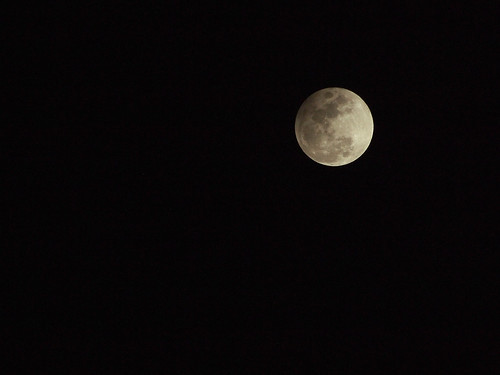
Here was the moon, two hours earlier (at 10:32 pm EDT, on 15 May), only partially eclipsed and yet un-'bloodied.'

Blood Moon (15 May 2022 10:32 pm EDT)

-----more-----

Saturday, May 07, 2022

Pic(k) of the Week: Morning moon (and avian astronaut)

Morning moon (and avian astronaut)

Look up!

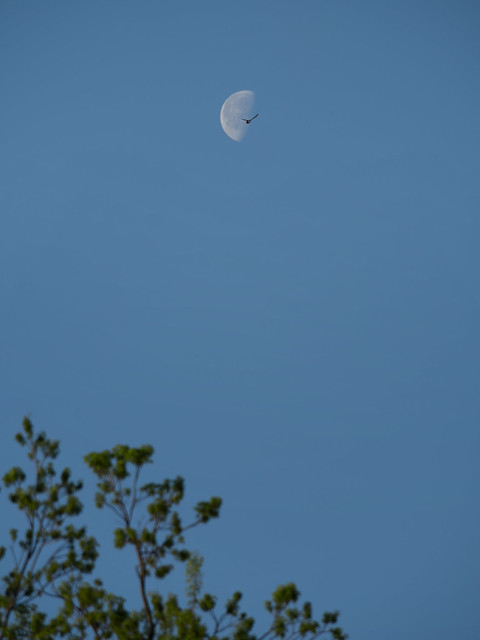
A waning gibbous moon (and an avian astronaut), at morning, over Decatur, Georgia, USA.

22 April 2022.

-----more-----

Saturday, November 20, 2021

Pic(k) of the Week: Full Beaver Moon, eclipsed

Full Beaver Moon, eclipsed

Syzygy!

This was the ruddy, full Beaver Moon, 97% eclipsed, at 4:11 am ET (9:11 UT), 19 November 2021. And, unlike the night sky of a non-eclipsed full moon, on this night the stars were readily visible, surrounding the umbral-shadowed moon.

Pictured above is the maximum point of the nearly partial lunar eclipse. At nearly 6 hours, it was the longest such since the year 1440 and the longest such until the year 2669.

If you were sleeping that night or you'll be unable to wait for the next event, fret not! North America will be witness to not one but two total lunar eclipses next year, on 15 May and 7 November 2022. (Your geographical results may differ. Check your local listings.)

When the damnable alarm went off, the outside temperature was 0 °C and the winds were nippy at 16 kph. Charlie the dog didn't mind; indeed, he thoroughly enjoyed his cuckoo-o'clock constitutional. And me? Afterward, back inside, the coffee seemed somehow tastier and more warming than it had been.

Mira la luna. La bella luna!

-----more-----

Saturday, September 25, 2021

Pic(k) of the Week: Waxing gibbous Harvest Moon

Waxing gibbous Harvest Moon

In the Northern Hemisphere, the Harvest Moon is the full moon closest to the autumn equinox. Depending on the year, the full Harvest Moon can occur anywhere from two weeks before the autumn equinox to two weeks after. Thus, the Harvest Moon is either the last full moon of the summer season or the first full moon in autumn.

In 2021, the Northern Hemisphere autumn equinox comes on September 22. The full moon falls less than two days earlier, on September 20. Thus, for the Northern Hemisphere, this upcoming full moon is the Harvest Moon and the last full moon of summer.
EarthSky.

As it happened, clouds and rain obscured my view of the full harvest moon. But not all was lost.

Six days prior, on 14 September, I looked up at the (only slightly clouded) night sky over Atlanta, Georgia, USA, and saw the moon, beautiful even if it was only 52% illuminated and waxing gibbous, announcing the impending end to summer.

-----more-----

Saturday, September 05, 2020

Pic(k) of the Week: Full Barley Moon

Full Barley Moon

They call it the Full Corn Moon because it marks the days when corn is harvested. Less commonly, it's called the Barley Moon (for the identical reason). For sentimental reasons, I prefer the latter.

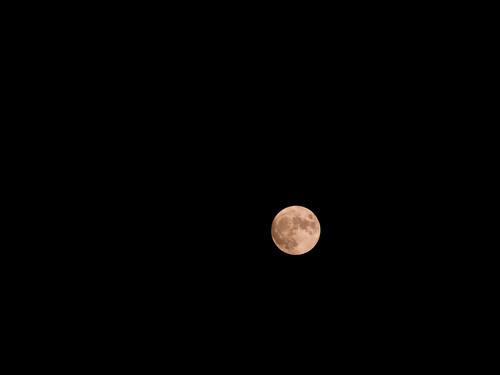
Here: at 99.9% full, as seen rising at 9:33 pm EDT, on 1 September 2020, in the east-south-east over Vista Grove, Georgia, USA.

Actual full fullness (when the ecliptic longitudes of the Sun and Moon differ by exactly 180°) occurred four hours later at 1:22 am EDT, 2 September. I didn't stay up.

According to the Farmer's Almanac, the full moon that occurs the closest to the Autumnal Equinox (this year: 22 September) is called the Harvest Moon. Usually, that's the full moon in September.

This year, however, October's full moon falls on 1 October, only 9 days after the equinox, while September's full moon is 20 days before the equinox. Thus, September's full moon becomes the Corn —or Barley Moon— while October's full moon is christened the Harvest Moon.

Got it?

-----more-----

Saturday, March 23, 2019

Pic(k) of the Week: Pink Spring!

Sycamore Pink (02)

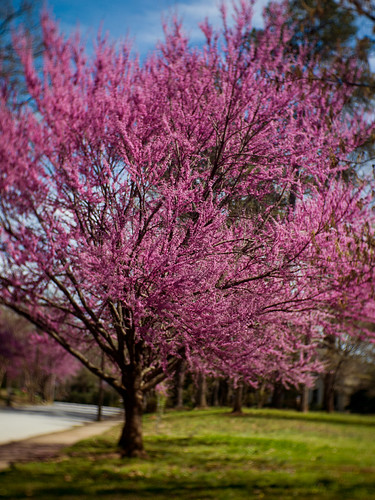
On 17 March 2019, these magnificent dogwoods —in the Sycamore Street neighborhood of Decatur, Georgia— were in the pink, seemingly celebrating the start of spring. They were three days early.

***************

Vernal Equinox

The actual Vernal Equinox —when winter became spring, astronomically— occurred Wednesday at 5:58 pm Eastern Daylight Saving Time. (That's Atlanta, Georgia time. Your time may vary.) At that moment, the Sun crossed, from south to north, directly above the equator. In other words, at that moment there was no tilt of the Earth's axis in regard to the Sun. For our friends south of the equator, the March Equinox marks the end of summer and start of autumn.

Super Worm Full Moon

The moon also rose that evening of the Equinox, full (aka the Worm Moon) and 'super' (its closest approach to the Earth). That's a phenomenon that last occurred in spring 1905 and won’t occur again until 2144.

Not half and half

Year to year, due to the inexactness of the modern calendar and because Earth's elliptical orbit is continually changing its orientation relative to the Sun, the date varies from 19 through 21 March. And, it isn't true that on that day, there are equal amounts of daylight and dark. It's close, but not quite.

Vernal Equinox and Easter

In A.D. 325, the Roman Catholic Council of Nicaea set the date of Easter as the Sunday following the paschal full moon, which is the full moon that falls after the Vernal Equinox. (A full moon —the Worm Moon— did occur Wednesday night, but since it occurred on the same date, it's not technically the first full moon after the Equinox.)

In practice, that means that Easter is always the first Sunday after the first full moon that falls after March 21. Thus, Easter can occur as early as 22 March or as late as 25 April, depending on when the paschal full moon falls.

-----more-----

Saturday, December 29, 2018

Pic(k) of the Week: Midtown crepuscule

Midtown crepuscule

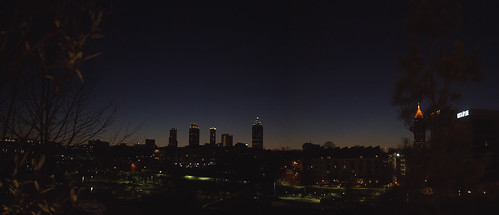
After sunset on 22 December 2018, in Atlanta, Georgia, looking west toward Midtown from the city's Poncey-Highland neighborhood.

The Full Cold Moon had just begun its rise when I snapped this photo, but further to the southeast (out-of-frame, to the left). An hour later, I would see the moon in its full glory.

Full Cold Moon 2018

The day before this, the 2018 winter solstice had occurred. This rare, proximate syzygy (solstice plus full moon) will not be seen again until the winter of 2029.

-----more-----

Saturday, August 04, 2018

Pic(k) of the Week: Full moon; Mars perihelion opposition

Full moon; Mars perihelion opposition

It was a Full Buck Moon on Friday night/Saturday morning, 28/29 July 2018.
July is the month of the Full Buck Moon. At this time, a buck’s antlers are in full growth mode. This Full Moon was also known as the Thunder Moon because thunderstorms are so frequent during this month.
The Old Farmers' Almanac.

In much of the world, that July full moon was also a "blood moon": a total lunar eclipse. At one hour, forty-three minutes, it was the longest total lunar eclipse, so far, of the 21st century. Alas, here in the Northern Hemisphere, the eclipse was not to be seen.

But not to worry. A very visible Mars also rose in the sky that night, in the full glory of a perihelion opposition —that is, completely opposite the Sun in the sky— thus, lit up bright and reddish orange.

Mars' actual perihelion —its closest approach to the Earth— wouldn't occur until a few days later, on Tuesday, 31 July 2018, when it would be 'only' 35,784,481 miles from Earth, something much rarer: its closest embrace of us since 2003. Contrast that with Mars' average distance of four times that, 140 million miles.

As a terrestrially photographic point, I liked the otherwise interceding power line in the shot. It acted as a diagonal divider, if not planned that way. Viewed over Atlanta, Georgia, at one in the morning, on 29 July 2018.

-----more-----

Saturday, February 25, 2017

Pic(k) of the Week: Snow Moon eclipse

Early in the evening of 10 February 2017, the moon was full. The Farmers Almanac calls this full moon, the Snow Moon.

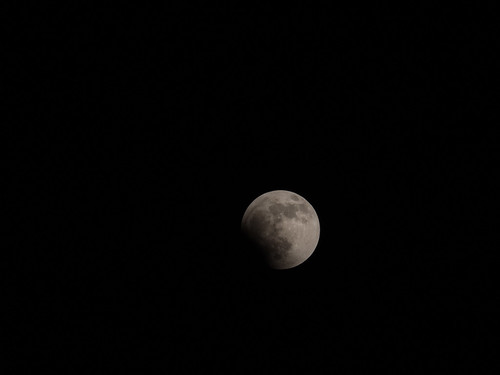
Not only that —as observed over Atlanta, Georgia— there was a partial lunar eclipse that night, a celestial occurrence you could look at it without burning your retinas.

A lunar eclipse occurs when the Moon passes directly behind the Earth into its umbra (shadow). This can occur only when the sun, Earth, and moon are aligned (in "syzygy") exactly, or very closely so, with the Earth in the middle. Hence, a lunar eclipse can occur only the night of a full moon.

And so it was, and so I snapped this photo. Without a telescope. You can see the eclipse-darkening at the 10 o'clock position of the moon's disc.

Snow Moon eclipse (@ 8:30 pm ET)
  • Camera: Olympus Pen E-PL1
  • Lens: Lumix G Vario 45-200mm telephoto zoom
  • ISO: 500
  • Shutter speed: 1/2000
  • Aperture: f/8
  • Focal length: Micro 4/3 200mm
    (equivalent to DSLR range of 400mm)
In no way was this a great lunar portrait. (I'm no photographer; I don't even play one on this blog.) But in my portfolio, it was a personal best. Heck, I even framed the Micro Four Thirds shot with the rule of thirds. Compare that to this one, below, a photo that I took the same evening, but —without forethought of shutter, aperture, and ISO— a luminous blob:

Snow Moon rising (02)

Later in the night, the comet 45P/Honda-Mrkos-Pajdusáková flew within 7,732,000 miles of the Earth. Unfortunately, it was visible only with a telescope.

Maybe next time, five years from now.

-----more-----