Showing posts with label sustainability. Show all posts

Friday, October 27, 2017

Craft Brewery Sustainability

Sustainability Benchmarking Update for Craft Breweries (Brewers Association, October 2017)

In 2015, the [U.S.] Brewers Association (BA) published its first Sustainability Benchmarking Report. Based on data from 2014, the report highlighted best 'craft' brewery practices in utility usage and sustainability. Earlier this week, the BA released its newest Sustainability Benchmarking Update, based on data from 2016.
This document is an update to the inaugural report, and it highlights certain data from 2015. Electricity, natural gas, water, and purchased CO2 were evaluated based on a normalized scale per barrel (bbl) of beer packaged. [...] This update focuses on four environmental attributes as key performance indicators (KPIs): electricity, natural gas, water, and carbon dioxide. In some sections, wastewater costs and greenhouse gas emissions are also discussed. Although there are other KPIs highlighted in the 2015 Sustainability Benchmarking Report, and additional metrics can be entered on the dashboard, KPIs presented in this report capture the primary environmental and economic attributes of concern to the craft brewing industry. [...]

Best-in-class performance from the first two years of submitted data includes:
  • 6.7 kWh electricity/bbl (ranged from 6.7-709)
  • 0.84 therm natural gas/bbl (ranged from 0.84-37.6)
  • 3.31 bbl water/bbl (ranged from 3.31-81.7)
  • 0 lb CO2 purchased/bbl (ranged from 0-78)
    [Appears to mean that a brewery was able to capture and scrub from fermentation any CO2 it needed for other points of operation, an expensive proposition beyond the means of all but larger breweries.]
Sustainability benchmarking and sharing of best practices is not a one-time project. The online benchmarking tools are intended to provide an ongoing platform that constantly refreshes and identifies new best practices through tracking of sustainability-related key performance indicators (KPIs). As benchmarking participation grows, the data will become more robust, and drivers behind those best-in-class performers will be identified and shared.

It is encouraging to see the number of BA members that have recognized business value in continuing to input monthly data through 2016 and into 2017, setting and tracking progress against targets, and sharing best practices. The next benchmarking report will focus on trends and other insights from the analysis of data from 2014, 2015, and 2016. Data presented in this report supersedes [sic] previous studies and should be considered the most up-to-date.
—[U.S.] Brewers Association. 23 October 2017.

A winemaker once told me that he wasn't interested in having his winery certified organic, but in it being sustainable. With many organic practices —best practices for his farm and winery— in the mix for himself and his neighbors, he was woring toward ensuring that his business would be sustained, that is, survive, and maybe thrive, for another year(s). In other words, sustainability is not simply tree-hugging morality but profit-making, good business. I'm sure many brewers would agree.

To accompany its report, the BA provides an online suite of Sustainability Benchmarking Tools to assist breweries in tracking monthly utility bills, identifying opportunities to save energy and money, and benchmarking per-barrel performance.

This is just one example of the great work that the [U.S.] Brewers Association can do for its 'craft' brewery members as opposed to some of the silly stuff it does do.

-----more-----

Thursday, November 06, 2014

#VeggieDag Thursday. Quick Links for October 2014.

VeggieDag Thursday
VeggieDag Thursday is an occasional Thursday post
on an animal-free diet and ecological issues.

*************

Quick links for October 2014

  • 3 November 2014
    Arguments, observations, and science supporting and questioning gluten-intolerance. And, how to make "airy and light" whole wheat bread without adding additional gluten.
    —Via The New Yorker.

  • 1 November 2014
    The Earth is locked on an “irreversible” course of climatic disruption from the buildup of greenhouse gases. According to a report by the United Nations’ Intergovernmental Panel on Climate Change (IPCC), some impacts of climate change will “continue for centuries,” even if all emissions from fossil-fuel burning were to stop. The question facing governments is whether they can act to slow warming to a pace at which humans and natural ecosystems can adapt, or risk “abrupt and irreversible changes” as the atmosphere and oceans absorb ever-greater amounts of thermal energy within a blanket of heat-trapping gases.
    —Via Washington Post.

  • 15 October 2014
    High sugar, high fat diets have long-term impacts on health through heart disease, diabetes, and cancer. Recent research is uncovering neurological impacts from junk food (and childhood obesity): rewiring young brains to deteriorate memory functions and impulse control, and contributing to long-term adult illnesses like dementia and Alzheimer's.
    —Via Kojo Nnamdi Show.

  • 14 October 2014
    “We shun the word ‘vegan’ because it comes with preconceived notions." Vegetable-focused restaurants on the rise in U.S., including those fronted by meat-centric chefs.
    —Via Washington Post.

  • 13 October 2014
    The month of September 2014 was the warmest September on record (since records began being kept in 1880). The average temperature during September was about 1.4°F above the 1951-1980 average temperature for the month, data from NASA’s Goddard Institute for Space Studies (GISS) showed. The warm month makes it even more likely that 2014 will become the warmest year on record.

    —Via Climate Central.


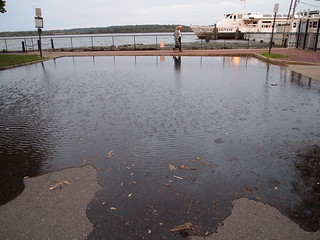
  • Harvest Moon high tide in Alexandria, Va. (02)

  • 8 October 2014
    Scientists with the National Ocean Service of the National Oceanic and Atmospheric Administration (NOAA) say oceans are, on average, 8 inches higher than a century ago. "Sea level rise is expected to accelerate during the next century as the oceans continue to warm and expand, and the ice shelves lose mass as the water melts and enters into the ocean." As a result, coastal flooding will substantially increase in frequency. High tide flooding in some areas has already increased by a factor of 9 over the past 50 years.
    —Via NPR.

  • 6 October 2014
    The science of why tomato juice tastes better on an airplane. Lufthansa Airlines funded research by the Fraunhofer Society, a German research institute.

    "When you're cruising at altitude, cabin pressure is low -- similar to the atmosphere one mile above sea level. That low pressure does several things. Your blood gets less oxygen, which makes your odor and taste receptors less sensitive. Mucus in your nasal cavities also expands in the low pressure environment, which makes it even harder to taste. On top of that, most airlines keep the cabin at about 10 to 15 percent humidity. This dries out your nose and mouth, cutting down your sense of taste even more. Congestion, dehydration -- it feels kind of like having a bad cold. Sweets are less sweet, salty food is less salty, and it's harder to taste certain herbs and spices (curry retains its flavor at altitude, but that's another story). As a result, most airplane food tastes bland, but tomato juice actually tastes better up in the air. It shows more acidity, it has some mineralic taste with it, and it's very refreshing." Also, crowd-influence. Folk observe others drinking tomato juice, and follow suit.
    —Via NBC.

  • 1 October 2014
    Lack of "water is a major reason craft beer behemoths such as Sierra Nevada and New Belgium opened plants in Asheville, on the western edge of North Carolina. It's no coincidence that big brewers are congregating around the Smoky Mountains' substantial water supply," according to Harry Schuhmacher, publisher of trade journal Beer Business Daily.
    —Via LA Times. [Story originally published 29 July 2014.]

  • 29 September 2014
    The world’s population of mammals, birds, reptiles, amphibians, and fish has declined 53% since 1970, according to the Living Planet Report 2014, released by World Wildlife Fund. Principal causes have been habitat loss and degradation, hunting (and fishing), and climate change. During the same time, the world's human population has doubled. The report's “One Planet Perspective” has recommendations for world-wide "footprint that doesn't outpace Earth's ability to renew."
    —Via World Wildlife Fund.


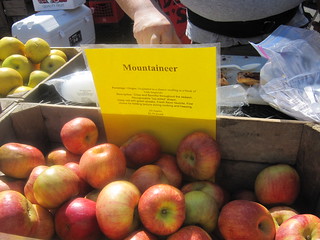
  • Sunnyside Farm & Orchard

  • 19 September 2014
    Preserving heirloom apples is "sort of like a chain letter, and I like that connection," says Ezekiel Goodband, orchard manager at Scott Farm in Dummerston, Vermont, where he grows over one-hundred heirloom varieties. To keep the exact DNA of these apples alive, Goodband collects cuttings, and grafts them to root stock.
    —Via NPR.


************

RECIPES

  • Four tips for preparing winter squash, via Washington Post's Food Editor, Joe Yonan.


  • Ribollita
    In Tuscany region of Italy, the way to transform leftover bean and vegetable soup into the ultimate comfort food is to reheat the soup with dry or toasted bread, then blend it into a thick, comforting pap. This is called ribollita, which means “reboiled.”
    —Via New York Times.

  • Fried Green Tomatoes ... not southern?
    "The first published recipe I've been able to find for fried green tomatoes appears in the The Daily Inter Ocean, a Chicago newspaper, in 1877. The instructions are simple: 'Cut a thin slice from top and bottom and throw them away, then cut the remainder in slices, roll in flour, sprinkle with pepper and salt, and fry brown in butter.' I'm not claiming that before 1992 [the date of the nationwide release of Fried Green Tomatoes, the Universal Pictures film version of Fannie Flagg's novel Fried Green Tomatoes at the Whistle Stop Café] no one in the South was eating fried green tomatoes—some people undoubtedly were. But, there was nothing particularly Southern about the dish."
    —Via Serious Eats.
    —Recipe for vegan Fried Green Tomatoes, via The Southern Vegan.

  • What the heck is "vegan flavor?"
    What ... is 'vegan flavor?

  • Rosemary-herbed roasted blue potatoes.
    —Via The Well Seasoned Cook.

  • Fluffy vegan mashed potatoes. Don't boil; simmer.
    —Via Post Punk Kitchen.

  • Vegan Shepherd’s Pie with parsnip and and potato mash topping.
    —Via Food 52.
-----more-----

Thursday, January 23, 2014

VeggieDag Thursday: Hello, again (and Quick Links for January 2014).

VeggieDag Thursday
VeggieDag Thursday is an occasional Thursday post
on an animal-free diet and ecological issues.


When asked if I'm a 'vegetarian' or 'vegan,' I don't reply with an answer sure to be laden with labels and agendas. So, I'll say: "No, but I don't eat animals." It's never meat, fish, fowl, or eggs for me, but it's always vegetables, legumes, grains, nuts, and fruits, and, occasionally, artisinal cheeses, although no other dairy.

Re-introducing VeggieDag Thursday for 2014, this is an occasional Thursday post, at which I write 'meatless' on matters of an animal-free diet and issues of the ecology. I might even inveigle beer (or wine or spirits) into the posts. Beer is, after all, in most cases, a fine vegetarian foodstuff. It's liquid bread, made from barley malt, hops (an herb), yeast, and water.

I call this column VeggieDag Thursday in solidarity with the city of Ghent, in Belgium, which first declared a weekly, city-wide "VeggieDag Donderdag" on Thursday, 14 May 2009. More: here.

*************
Quick links for January 2014:
  • Industrial agriculture could be hitting fundamental limits in its capacity to produce sufficient crops to feed an expanding global population according to new research by scientists at the University of Nebraska-Lincoln. Via The Guardian.

  • Researchers at U.S. Department of Energy's Pacific Northwest National Laboratory have discovered a way to turn a small mixture of algae and water into a kind of crude oil in less than an hour, with net-positive energy gain, and potentially cost-competitively. Via Smithsonian Magazine.

  • The Daily Beast examines top 10 diets of 2013. Finds them all "useless."

  • The "101 Organizations to Watch in 2014" which play "a vital part in creating a better food system." Via Food Tank. [List includes Arcadia: "a nonprofit organization dedicated to creating a more equitable and sustainable local food system in the Washington, D.C. area."]

  • "Ingesting a warm chocolate-chip cookie offered the eaters a brief respite from their quotidian woe." A history of the chocolate=chip cookie. Via New Yorker.

  • FDA launching pilot testing program for raw-milk cheese. Via Gourmet Retailer.

  • Cheesemonger at Arlington, Virginia, wine shop Arrowine wins title of title of America’s Best Cheesemonger at U.S. Cheesemonger Invitational. Via Cheese & Champagne.

  • Domino's Pizza retailer offering a vegan pizza .... but only in Israel. Via NPR.

  • Go vegan! The price of choice-grade U.S. beef at wholesale set a new record, due to short supply. (Via Yahoo Finance.) The great goat's cheese shortage of 2014 in Europe and the U.K. (Via The Guardian.) Velveeta shortage seen in U.S. (Via USA Today.)

    Players on the championship NBA team, the Miami Heat, visit the White House and promote eating well. Host Michelle Obama dunks (sort of)!

************
RECIPES
-----more-----

Monday, August 10, 2009

BAM! Emeril cooks with homebrew(er), organically

Jason Nuzzo lives in the Washington, D.C. area. He also happens to be a good beer fan, a homebrewer, and a home cook.

In December of 2008, he got the chance to combine all three interests with chef Emeril Lagasse. He won the opportunity to cook with the chef —and, at least with one dish, to use his own homebrew as an ingredient.

It all airs Monday evening, tonight (10 August 2009), on Discovery Channel's Planet Green. The 30-minute program will air several times, but initially at 8PM. The segment is called "What's Brewing".

Emeril Green
The show's premise is on cooking within parameters of the green movement, but by using easily purchased ingredients.

Jason took it one step further.

When open casting was announced, he informed the producers that he often entertains large groups at his house and would like to learn more about cooking with beer, that is, cuisine de la biere. (YFGF wonders how to inveigle an invitation to Jason's house, now that he's received his Emeril training!)

Jason did a screen test, and succeeded against the other contestants. " I didn't come across as too goofy," he laughed.

The segment was shot 7 December 2008 at the Whole Foods in the Fair Lakes region of Fairfax, Virginia. It features Jason, Chef Emeril, and Chef Sal, a corporate chef for the Whole Foods chain. Jason was also assisted by his friend Yong, who may or may not have made the final cut. "We'll wait and see," Jason said. Other parts of the program were shot at Clipper City Brewing Company in Baltimore, Maryland.

Jason, Chef Emeril, & Chef Sal


Emeril prepares four different dishes, which could, together in one evening, comprise a great dinner:
  • A salad with a dressing prepared with Oxford Organic Raspberry Wheat (from Clipper City Brewing of Baltimore, Maryland.)
  • Asian Style Mussels Meuniere. cooked in an organic India Pale Ale (from Wolaver's of Vermont.)
  • A choucroute, (a stew of sausage, sausage, sausage ... and some sauerkraut) prepared with Jason' own homebrew, a porter (dark ale) infused with coriander, allspice, cinnamon, and cloves.
  • Espresso ice cream, churned with Peak Organic Espresso Ale. (Emeril emphatically adds an "x" to espresso, almost as if he's defying you to correct his pronunciation. Jason, being the invited gracious guest, demurs.
Three short clips are available for viewing on the website:
  • Chef Emeril discusses organic beers with Lee Hitchins, the beer manager for the Whole Foods Market in Fairfax, Virginia.
  • Emeril cooking the choucroute.
  • Emeril making the stout/espresso ice cream. (Emeril emphatically adds an "x" to espresso, almost as if he's defies you to correct his pronunciation. Jason doesn't. After all, it IS Emeril's show and Jason is a gracious guest.
Jason currently resides in the Washington, D.C. area, but he hails from Maine. In fact, his hometown paper —The Kennebec Journal— ran a story about him:
"It was a great time," Nuzzo said. "It was nice because the whole premise of the show was to support the green movement. The products are grown organically and locally. It's trying to cut down on the carbon footprint."

He said his home brew proved particularly popular with show staff.

"They took it out back and drank the rest of it," he said.

"Anything else," I asked?

Other than saying "okay" once too often, Jason thought the experience was "a blast." He found Emeril to be gracious and laid-back, but, befitting teh chef's skill and celebrity status, he was "definitely intense." (After all, Emeril is known to spontaneously exclaim, "BAM!)

"I would do it again," said Jason. "Considering that some stories about beer only emphasize stupid drinking tricks, programs like this will be beneficial for the craft brewing scene."

More photos from the day of the shoot: here.

Sunday, March 08, 2009

Wine award, beer quote, and more

Some bits and pieces this weekend.
American Wine Blog Awards 2009
One of my daily blog reads is a wine blog: Bigger Than Your Head.

Are you a beer drinker who is willing to learn more about wine? Then read this blog. Not willing? Read it anyway. You may expand your beverage palate. Fredrik Koeppel has just won Best Wine Reviews from the American Wine Blog Awards 2009.

Our beer blogger abroad, Evan Rail, recently watched as a lot of his blog writing disappeared into an e-wormhole. Fortunate for him and us, he's found a trans-warp drive to retrieve much of it, such as this interview with Jean-Pierre Van Roy of Brasserie Cantillon. It's worth reading if only for this bon mot:

Beer is not made for judging nor for looking at. It’s made for drinking.

Yes, yes, and if you've missed my point, YES!

BeerNews.org reports that Philly Beer Week is in high gear. Other cities, such as Asheville, North Carolina and Baltimore, Maryland may soon follow.

The BeerActivist reports that US acreage of organic hops is increasing. Colorado is at the forefront.

Sunday, January 18, 2009

Drink Fresh, Drink Local

A component of my job is to train restaurant staffs about beer and wine. I did so recently at a northern Virginia tapas restaurant.

I showed the staff hops and barley malts. I talked to them about the history of a local brewery. I described the flavors of the new beer they were placing on tap.
Drink Local
I asked for questions. A bartender raised his hand, and asked, "Why should my customers choose that beer?"

My answer (other than how wonderful the beer tasted, its quality, blah, blah, blah):

"Beer is a foodstuff, liquid bread. Consume it fresh. If you were to bake a loaf of bread tonight, would you wait six months to eat it?"

Beer coming from a brewery local to you, at least in its transportation, should be fresh.

Buy Fresh, Buy LocalThe FoodRoutes Network, and one of its local partners in the mid-Atlantic area, the Piedmont Environmental Council, advocate for local, fresh, food and farming. Many of their points could easily be applied to local beer.

Buy Locally Grown, It's Thousands of Miles Fresher
  • There are many reasons to buy locally grown food
  • You'll get exceptional taste and freshness - Local food is fresher and tastes better than food shipped long distances from other states or countries.
  • You'll strengthen your local economy - Buying local food keeps your dollars circulating in your community. Getting to know the farmers who grow your food builds relationships based on understanding and trust.
The Best Tasting Food Ripens Close to Home
  • Food travels on average 1,300 miles from farm to table.
  • Most fresh fruits and vegetables produced in the U.S. are shipped from California, Florida, and Washington.
  • Fruits and vegetables shipped from distant states and countries can spend as many as seven to fourteen days in transit before they arrive in the supermarket.
Plant Your Dollars Close to Home and Watch Your Community Grow

Friday, January 02, 2009

Beer, Music, & Art

Good beer is like good music: with an introduction, an exposition, and a coda, it tells a story.

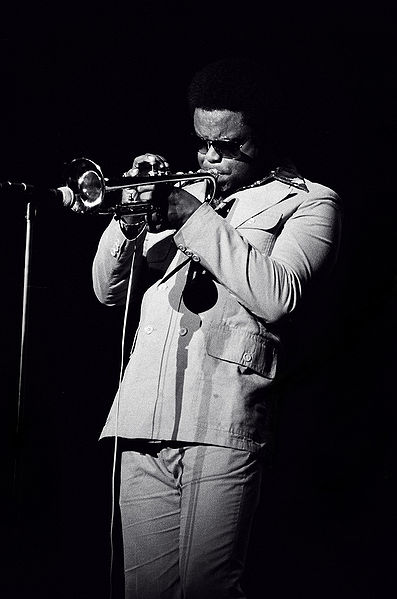
Freddie Hubbard was one such storyteller, arguably the greatest jazz trumpet (and flugelhorn) player to follow after Miles Davis, and the most influential to jazz trumpeters to follow.

Freddie Hubbard
Where Davis was introspective (until his fusion days, and even then, his lines were spare), Hubbard was pyrotechnical. On an NPR interview, he said that he played the trumpet as if it were a saxophone, gliding and whooping through the notes rather than just hitting them.

Hubbard had an evocatively lyrical side. And he was a composer, contributing several standards to the oeuvre, that, while not instantly recognizable to casual listeners, are favorites of jazz musicians.

When Hubbard split his lip in 1992, his prodigious technique became hindered to an extent. I was fortunate to hear him live, two years before that happened, in 1990, at Washington D.C.'s intimate One Step Down. His final set that night, and into the morning, consisted of extended variations on his gorgeous tune Little Sunflower.

If you're not familiar with Mr. Hubbard's music, I'd suggest his albums Red Clay, Bolivia, and Hub Cap; Wayne Shorter's album Speak No Evil; Herbie Hancock's album Maiden Voyage; and Oliver Nelson's Blues and the Abstract Truth.

God's jazz orchestra grew larger on Monday 29 December 2008. Freddie Hubbard passed away.

---------------------------------
Now playing: Cedar Walton, Freddie Hubbard, Ralph Moore, Vincent Herring - Bolivia


---------------------------------

FullSteam in Durham, North Carolina is a brewery in progress. As founder Sean Wilson states, FullSteam, when open
will experiment with local farmed ingredients and heirloom grains to develop a distinctly Southern style of beer. [The brewery uses a dot ag address to emphasize the local agricultural roots of beer.]

In early December, Sean invited folk in the good beer world to identify their favorite music album purchases of 2008. Charlie Papazian, Greg Koch, Marty Jones, Stan Hieronymus, Garrett Oliver, and some 20 in all wrote about their choices.

YFGF's selection was an out-of-print album from 34 years ago, purchased in 2008 on eBay.


Vocalist Cleo Laine somehow manages to humanize the stark lines of Arnold Shoenber's song cycle Pierrot Lunaire. Her gorgeous treatment of the final song makes it almost jazz-like.

A treasure from my college radio days, this is an amazing record that has never been re-released on CD or digital download.

Its liquid mirror: Albert Le Coq Imperial Stout.

Read the full list: Beer People Rock!

---------------------------------

Beer blogger Jay Brooks has twin passions for beer and art. Once a week at his Brookston Beer Bulletin, he posts an image of an artwork whose subject is beer, primarily or tangentially.

Jay began the series in early November 2008. My favorite, to this point, is Still Life With A Beer Mug, by Fernand Léger, circa 1921.

Leger_Still life with Beer

Sunday, December 14, 2008

Green eggs and beer? Emeril in DMV.

It was lights, cameras, action, at Clipper City Brewing Company.

Crew from Discovery Channel's Emeril Green visited the Baltimore, Md. brewery to take video for an upcoming feature on organic and local beer, and cooking with it.

The series ...

is set in Whole Foods Market, where Chef [Emeril] Lagasse and the store’s team help average people shop for the freshest ingredients while explaining the benefits of organic, locally grown and seasonal produce. After shopping for ingredients, Chef Lagasse prepares a meal with each individual that demonstrates the ease of using organic and locally grown foods in everyday meals.

[UPDATE] The actual cooking segment with Chef Lagasse was shot in Fairfax, Virginia at the Whole Foods Market in Fair Lakes, on Wednesday, 7 January 2009.

Jason, Chef Emeril, Chef Sal


Among the segments was DC homebrewer and homecook Jason Nuzzo cooking with Chef Lagasse using organic beer, including Oxford Raspberry Wheat Ale from local brewery Clipper City of Baltimore, Maryland. Other organic beers were Wolavers, Peak, and Lakefront. Also listed as a show favorite was Orlio from Magic Hat Brewing of Vermont, a beer that has since been discontinued, even though the brewery continues to thrive. (Two amusing typos at the site: Otter Creek as "Otto Creek" and Clipper City as "Cider City".)

Clipper City's website announced the air date as April 2009.

Thursday, October 16, 2008

Sustainable irony

At Busboys and Poets yesterday evening, the guest speaker was running late.

Organic Beer Tasting

Chris O'Brien —the author of Fermenting Revolution. How To Drink Beer and Save the World— was scheduled to speak on organic, local, and sustainable beer at the Arlington, Va. bar/coffeeshop/bookstore.

But patrons were happy to wait, sipping on organic beers from Clipper City/Oxford and Otter Creek/Wolavers. Representatives from both breweries were there to discuss their beers.

Chris did soon arrive (only a few minutes off schedule), and a small but appreciative group listened.

He was late because of that bane of modern urban life: traffic. In a way ironic, that was indeed one point of his talk (and book) that evening.

Chris O'Brien

Wednesday, October 08, 2008

Beer and a car-free diet

car-free dietThere was a a "car-free diet" booth Saturday at the Mid-Atlantic Oktoberfest.

Set up by the County of Arlington, the program has a companion website at www.CommuterPage.com. Subtitled "Transportation options for the Washington, DC area", it's a trove of public transportation schedules, maps, links, 'how-to advice', and other resources.

I'm a beer and wine salesman. I transport beer and wine and kegs. Thus, I may not be able to go 100% car-free at work. But a side-consequence of my recent job change should be the reduction of my annual car mileage by 2/3. At the least, that's a start.

There's another way to be kind to Mother Earth.

Drink beer, be it local, sustainable, or organic!

Fermenting RevolutionAward-winning author and local businessman Chris O'Brien has written the book on that topic —literally. On Wednesday, 15 October (5-7 pm), Chris will be at Busboys and Poets @Shirlington in Arlington, Va. to present a short lecture on organic beer and to sign copies of his book — Fermenting Revolution: How to Drink Beer and Save the World.

Representatives from Clipper City Brewing of Baltimore, Md. and Wolaver's of Middlebury, Vt. will be on hand as well to discuss their respective breweries' organic beers. The beers will be priced 'Happy Hour'.

There's more information at Beer Activist.

[UPDATE 2008.10.15: Photos here.]

In the spirit of Vegan Mofo —Vegan Month of Food— I'll add that beer is a wonderful foodstuff. And, except for some cask-conditioned ales, it's vegan.

Thursday, September 04, 2008

Change the World

Washingtonian.com recently interviewed Chris O'Brien: beer blogger and author, and environmental activist.

Chris traveled all over the world researching local brewing traditions, even working for a time as a brewer at the Zululand Brewing Company in Eshowe, South Africa. His conclusion: You can change the world by having a (locally brewed, organic) beer.
Have your beer, and drink it too!

Chris gave a shout-out to this blog, Yours For Good Fermentables.com. Many thanks!
Favorite local food or drink blog besides your own:

Tom Cizauskas, formerly the southern-region salesman for Clipper City and now representing Select Wines in the Northern Virginia area writes an entertaining blog called Yours for Good Fermentables.

Visit Chris O'Brien's blog: Beer Activist.

Monday, August 25, 2008

a sustainable paradigm for hops?

Hops grown outside a Wheaton, Md. restaurant.
A hop bine grows in Wheaton
Organic hops has taken a foothold as a nascent new industry in Colorado. Years of state wide interest and research by Colorado State University culminated last weekend in the first “Sustainable Hops Growing Workshop” held in Hotchkiss, Colorado. Put on by Dr. Ed Page of CSU Extension and Ron Godin of the Agricultural Experiment Station at Rogers Mesa, the workshop saw over 70 attendees
<...>

Lead by Dr. Ron Godin, Researcher at the Rogers Mesa Experiment Station, and Ali Hamm, Masters Student at the Fort Collins campus, CSU has shown that hops grow quite well under organic conditions in the western Colorado climate. Colorado’s high and dry climate aids in reducing pest and disease pressure on the hops, and our plentiful sunshine and cool nights lends excellent growth and quality.


More from Chris O'Brien's Beer Activist blog:
Organic Hops Catch On in Colorado


My previous post looking at sustainable wine methods, with comments about applicability to hops.

Sunday, August 10, 2008

Bio-hops?

TreeHugger.com has posted an article on growing organic grapes for wine: How Does Organic Winemaking Work? PART I. The title of the piece implies another section to come on organic vinification. Bullet points:

  • leaf-removal (walking through and pulling off leaves) is the best way to avoid “powdery mildew” over any pesticide you can buy.
  • several cover crops, [such as] Queen Anne’s Lace, [would attract] predator bugs, all of which eat bugs [attracted to vines], thus keeping these bugs off of the vines.
  • Wild pigs come down from the hills each fall into the property, but the farmers at Bonterra [bottled by Fetzer] actually welcome them. The pigs completely ignore the grapes but will go row by row and eat all of the weeds, as well as, leave fertilizer all around the vineyard. [E coli issue here?]
  • A special mixture of cover crops, such as wheat, barley, oats, clover, beans, seeds and other plants are planted between the rows of vines to improve soil qualities, attract pests, and encourage biodiversity on the property. The cover crops help to change the rate at which the vines grow, for example, if a vine is growing too fast and becoming stressed out, the winemakers can add cover crops to slow the plants down. Predators like spider mites and leaf hoppers like fast growing, stressed plants, thus if you can keep plants growing at a slower, sustainable pace, you will also cut down on bugs.

Hmmmm. Why not, then, with hops?

Why couldn't hop farming return to the East Coast, to the Finger Lakes and Cooperstown areas, formerly viable hop-growing regions, or even to here in the mid-Atlantic region?

In the short run, sustainable methods would be less efficient than the current model of mass-produced mono-culture practiced in the Pacific Northwest. But as that industrial model itself becomes inefficient -- infestation, climate disruption, etc.-- might not smaller-scale, sustainable, crop-alternating methods become increasingly economically viable?

The price of hops may have risen enough to make this a possibility.
[UPDATE 2008.08.25: Colorado State University.]

Sunday, July 13, 2008

The stinkier, the better

As a representative for the Clipper City Brewing Company, I was invited to conduct a tasting of organic cheeses and organic beers at My Organic Market (MOM's) in Alexandria, Virginia on Saturday, 12 July.

One of the cheeses was Grayson.

Grayson and Loose Cannon
Grayson, one of my favorite east coast cheeses, is from the Meadow Creek Dairy of southwestern Virginia in the town of Galax, just a few miles north of the border with North Carolina.

Grayson is unpasteurized, or in foodie parlance, a raw cow's-milk cheese. It also is a washed-rind cheese. From the American Cheese Society's website:

“Washed rind” is used to describe those cheeses that are surface-ripened by washing the cheese throughout the ripening/aging process with brine, beer, wine, brandy, or a mixture of ingredients, which encourages the growth of bacteria. The exterior rind of washed rind cheeses may vary from bright orange to brown, with flavor and aroma profiles that are quite pungent, yet the interior of these cheeses is most often semi-soft and, sometimes, very creamy. Washed rind cheeses may be made from both pasteurized and raw milk, depending on the style of the cheese and the cheesemaker producing them. Cheeses in this category include some tomme-style cheeses, triple-crème, and semi-soft cheeses, similar to Epoisses, Livarot and Taleggio.

Grayson is very pungent. If this weren't polite company, we might label it a stinky cheese. The entire area surrounding my table at MOM's was indeed redolent of the cheese. Think barnyard, stinky socks. You'll either love it or hate it. And that in fact was the case with the folks who tasted the cheeses and beers on Saturday.

Loose Cannon Hop3 Ale was paired with the Grayson (as it was recently at SAVOR -- the national beer with food event recently held in Washington, D.C.). The American hop bounty of this India Pale Ale (I.P.A.) provided an pungent aromatic complement to the cheese.

Loose Cannon is not an organic beer but the other two Clipper City beers poured on Saturday are.

Oxford Organic Ale Raspberry Wheat was served with an organic brie. Subtly redolent of fruit, the beer finishes tangy and wine-like, characters that cut through the gentle butterfat of the brie.

Oxford Organic Amber Ale was served with a Gruyere cheese (not organic). The nut-brown character of the beer's toasted malts paired well with the nutty flavor of the cheese.

As a beer and cheese fan mentioned at the table, organic is important, but 'beer-miles' matter as well. If a food, such as beer, is created from organic ingredients, but shipped thousands of miles, environmental harm from carbon fuel emission may outweigh the original good.

In other words, drink locally. As Charlie Papazian, president of the Brewers Association put it on his blog, Beer Examiner:
The average American lives within 10 miles of a brewery. Taking the effort to locate the brewery that’s beyond the glass at the end of your arm is an accessible endeavor.

Monday, June 02, 2008

Drink local, says Garrett

Another extract from Garrett Oliver's recent interview at DCist:

Recently the hop shortage has been driving beer prices up, and other economic factors like higher fuel costs and higher grain costs (barley) will probably compound that price increase. Do you think the economic situation will start to inspire more people to drink even more local beer, similar to the locavore movement in food? And further, do you think local breweries will start brewing more Belgian or German styles to supplant the fact that those imported beers are going to be skyrocketing in price?

What you're going to find, I think, is upward pressure on all beer prices. That's coming from overseas and from, like you said, the hop shortage: hops costing 600-700 percent what they cost this time last year. It's pretty crazy. So I think food miles, as they call it, is definitely an issue as well. However, on the east coast and on the west coast, for more than 100 years, we've gotten our grain from the middle of the country. So it's been a long time since anyone in D.C. was very close to a field of barley. And I don't remember if there were ever hops grown down here, although I doubt it, since it's very humid. So you're going to have some of those issues regardless. I do think that, independently of the economic pressures, people are going to look to eat things and drink things that come from their local breweries. And look at us: we're in 22 states, but I always say 'Support your local brewery first. If you've got a Brooklyn tap on, that's great that you're getting our beer. But if your local brewery is making good beer, get your first pint from them. I'll take the third pint.' [emphasis mine]

With the rediscovery of local food in terms of supporting your neighbors, promoting less pollution/fuel per mile, sustainability, and FRESHNESS, let's tranfer that zietgeist to beer. Drink local, drink local, drink local (and its corollary, buy local) with, of course, the occasional out-of-state spice.

But I can only hope that that ugly neologism "locavore" vanishes ignominiously, and soon, from the lexicon.

Wednesday, May 07, 2008

What is organic beer? (Washington Post)

Parrot, Organic, and Loose Cannon PirateThe Washington Post has an article today (6 May 2008) on organic beers, written by Beer columnist Greg Kitsock.

Some interesting points:

  • According to the Organic Trade Association, 2006 sales of organic beers (1% of the craft beer segment) were $25 million, up 32% over 2005.
  • Organic malt, according to Hugh Sisson of Clipper City Brewing (Baltimore, Maryland), costs double that of 'regular' malt.
  • Until recently, most organic hops came from New Zealand. That is changing.
  • According to the USDA, 95% of the dry weight of an organic beer, excluding the hops, must be certified organic.

The rest of the piece: There's a Tinge of Green in the Glass.


-----more-----

Tuesday, March 18, 2008

Green beer in D.C., naturally

If you live in the Washington, D.C. area, you'll be able to see Wendy Rieger—anchor of the 5pm news broadcast on the NBC affiliate, WRC-TV Channel 4—reporting, this evening, on brewers going 'green'.

She won't be describing the silly US practice of dying beers green on Saint Patrick's Day. Rather, she'll be delineating some of the environmentally-concerned actions taken by the brewing industry.

'Green' isn't merely 'organic'. Sustainability, re-use and cycling, energy-efficiency, low-pollution, and locally-sourced are issues of equivalent importance. In the aired promotional tease, Mike McCarthy—executive brewer of Capitol City Brewing Company—can be heard saying, "I think every brewer can do his part."

'Green' isn't necessarily expansive or expensive.

Bill Madden, brewer at Vintage 50 in Leesburg, Virginia, recently posted this comment to DC-Beer (a listserve for beer lovers in this area)


At Vintage 50 the spent grains from brewing are picked up by a local farmer that feeds it to his cows. The cows eat it and, of course, produce manure, which is aged and then brought back by the farmer for our garden behind the restaurant. Our chef, Aaron McCloud, is planning a garden of tomatoes, squash, herbs, etc., and I plan on growing Cinderella pumpkins for brewing Punkinator this Fall. The vegetable scraps from the kitchen are composted next to the garden and will be tilled into the soil when they break down.

Elegantly simple and potentially delicious.